Featured

The Myth of Progress

Tulsa’s Greenwood District, known as Black Wall Street on June 1, 1921.

Today is Juneteenth, a celebration of the end of slavery in the United States. Well, except for slaves kept by the Five Tribes (Cherokee, Choctaw, Chickasaw, Creek, and Seminole) in what is today the state of Oklahoma. They weren’t freed until the summer of 1866. We should honor Juneteenth and what it means for the Black community, as well as the fact that its promise is still unfulfilled. Black Americans are more likely to die at the hands of the police officers who are supposed to protect them, more likely to be fined into oblivion and more likely to be incarcerated.

I live in Tulsa, which, as I hope you know, has a dark history of racial oppression. Almost 100 years after the Tulsa Race Massacre, we have yet to make reparations, adequately address the events of 1921 and after in our schools, or even find the graves of the dead. The protests in Minneapolis, Louisville, Atlanta, and across the country and globe have engendered hope that things will change. I’ve seen a flurry of memes and quotes espousing the idea that the social progress promised by our forward trajectory in history is finally happening. So, today, I want to address the dangers of the rhetoric of inevitable progress. Full rights, fair treatment and equal opportunity will not be simply granted to African Americans. We must actively seek to bring them into being. Because history shows us that things could get worse.

Here is where starting the study of Black history before American slavery is important. Firstly, the peoples living in Africa had a rich a vibrant history. Secondly (and the focus of today’s blog), the idea of an enslaved black body is a modern one. Slavery was a feature of the ancient Mediterranean: ancient Egyptians, Greeks and Romans traded in slaves, who could be any conquered or subject peoples. In the ancient world slavery was not tied to skin color, but instead revolved around issues of social status, warfare and profit.

Slavery continued in the medieval era. Norse peoples engaged in slave trading, often taking people into slavery during raids and military conquests. And the Muslim Mamluk Empire based in North Africa was actually ruled by former slaves, many descended from Turkic peoples. Mediterranean people kept slaves of all colors and religions. In fact, they did not perceive race in the same way that we do. They made distinctions based on social status, religion and gender. The mobility of persons across the ancient and medieval Mediterranean meant that people exhibited and recognized a range of skin colors, rather than just two. The situation began to change in the 1440s, when Portuguese sea-faring vessels reached sub-Saharan Africa. Previous European trade with sub-Saharan Africa had been mediated through North African Muslim empires, but Portuguese trading missions opened up the region for exploitation. The presence of slaves from sub-Saharan Africa in mainland Europe exploded.

Yet, attitudes towards persons from Africa were still unfixed. That is, the black body was not necessarily an enslaved body, not necessarily an object on which white bodies could work. Alongside images that depict black slaves were also images of black saints, diplomats and princes.

In Titian’s Portrait of Laura Dianti and a Young Boy (above left), the European mistress of Alfonso d’Este poses with a young boy, probably a slave from Africa. As I discussed in my last blog, she lays her hand on him possessively, and he looks up at her adoringly. This painting set the stage for a long history of visual representation in which white women were paired with young black slaves. The youth of the depicted black persons painted all Africans as child-like and in need of white guidance, while their adoring, even reverent gazes depicted their supposed acceptance of slavery. In contrast, a portrait from some 75 years later (that is, at least 100 years after the beginning of the trans-Atlantic slave trade) depicts a Black African person as a diplomat or ambassador, as indicated by the packet of letters next to his right hand. He is dressed in European clothes, but retains a sash and short sword worn in several regions of North and sub-Saharan Africa.

So, yes, slavery was a feature of European contact with Africa beginning in the ancient world, if not before. And, yes, medieval and Renaissance Europeans did have negative stereotypes concerning black or sub-Saharan Africans, including, for example, the belief that they were well-suited for physical labor and uncivilized. But, European reactions to black Africans had more to do with perceived social status and religion than skin color. Europeans believed that sub-Saharan Africans were uncivilized because their clothing differed so greatly from that of Europeans, and clothing was a primary way that Europeans identified social and religious groups. In the 15th and 16th centuries, Europeans treated Africans who were Catholic or Christian quite differently than those who were Muslim or who practiced animistic religions. For example, the rulers of the Kingdom of Kongo were largely able to protect their citizens from slavery due to their conversion to Catholicism (and the fact that they provided Portuguese slave traders with a steady supply of foreign slaves).

This multi-faceted representation of black Africans began to change in the late seventeenth and eighteen centuries. In 1684 the French physician François Bernier published “Nouvelle Division de la terre, par les différentes Espèces ou Races d’hommes qui l’habitent” (“New Division of the Earth, by the different Species or Breeds of humans who inhabit it”), the first known publication to separate humans based on skin color. By 1784 Thomas Jefferson could write that white skin was preferable to black skin due to the former’s beauty, a fact supposedly acknowledged even by those with black skin. It’s no coincidence that in the intervening century larger numbers of African persons were being enslaved on sugar, tobacco and other plantations throughout the Americas. Ideas of race were mobilized to license slavery, moving from an idea of division based on skin color to hierarchies based on skin color.

While European and American-produced images of free black Africans still existed, images of black persons as slaves were ubiquitous. The superior morality and culture of whiteness, especially the whiteness of Euro-American women, was starkly contrasted with its rhetorical opposite, blackness. In the image to the left the artist John Raphael Smith depicts a white woman holding a mask of a black man or woman with stereotypically large lips. The portrait relates to the popularity of masquerades in late 18th-century Britain, where attendees would wear costumes that crossed boundaries of class, gender and race. Here, the sitter performs whiteness as anti-blackness by proposing to cover her marble white skin and small features with their caricatured opposite.

From the 15th century to the 18th century circumstances became demonstrably worse for black Africans and their descendants. Yes, black slavery existed before 1440, but after the arrival of Portuguese slave traders, the enslavement of sub-Saharan Africans increased exponentially. Through both text and image Europeans and Americans crafted the idea of race as something based on skin color, and they set up hierarchies in which whiteness became superior to blackness. The black body was codified as an inferior object that was to be possessed and shaped by the white body. This is not a history of progress, but one of devolution. Modernity didn’t progress for people of color; it regressed.

So, if, like me, you were raised to believe that things would naturally ‘get better’ as we progressed forward, I hope you will take the lessons of history. Freedom isn’t given; it is taken. Progress doesn’t just happen; we must work for it.

I’m deeply indebted to the work of scholars working on the history of color, race and racism. This is a field that still needs much attention, particularly in the Renaissance and early modern eras. I found the following resources to be helpful: T.F. Earle and Kate J.P. Lowe, Black Africans in Renaissance Europe (Cambridge, 2005); Kim Hall, Things of Darkness: Economies of Race and Gender in Early Modern England (Cornell University Press, 2005); Anne Lafont, “How Skin Color Became a Racial Marker: Art Historical Perspectives on Race,” Eighteenth-Century Studies 51 (2017): 89-113; Agnes Lugo-Ortiz and Angela Rosenthal (eds.), Slave Portraiture in the Atlantic World (Cambridge, 2015); Joaneath Spicer, Revealing the African Presence in Renaissance Europe (Walters Art Museum, 2012).

Featured

Building Renaissance Monsters

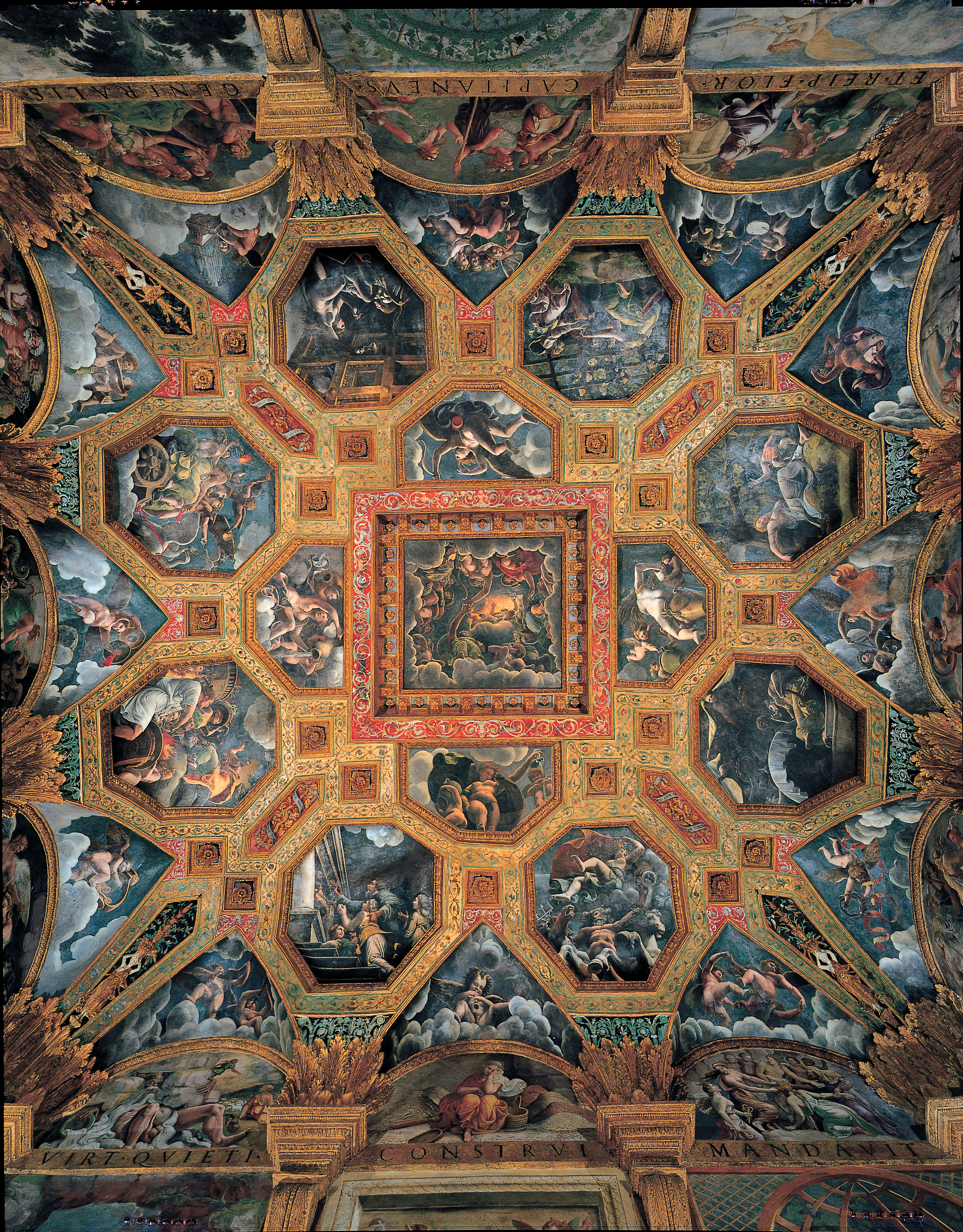
Giulio Romano and assistants, Hall of the Giants, 1530-35. Palazzo Te, Mantua.

May is monster month, so I thought we’d take a break from the pandemic and look at the relationships between gender, monsters and buildings in the Renaissance. I’ll focus on the Hall of the Giants at the Palazzo Te, the subject of my book, Gender, Space and Experience at the Renaissance Court: Performance and Practice at the Palazzo Te. I highly recommend that you take the virtual tour of the Palazzo Te via the Google Arts & Culture app on your phone – the gyroscope will allow you to look up at the ceiling frescoes, rather than just seeing them on a computer screen in front of you.

Renaissance monsters were both Nature’s creation and its antithesis. Mythical creatures such as giants, strangely birthed and deformed humans or animals, and the monstrous races, so-called for their exotic origins and non-Christian religions, defined the outer limits of what it meant to be incorporated and whole, whether that meant being part of the human race or part of the body of Christ. In their role as boundary markers, monsters appear on the margins at the edges of maps or as inhabitants of some distant or unknown realm. For example, the Carta Marina depicts a variety of sea monsters populating the coast off of Scandinavia.

Olaus Magnus, Carta marina et descriptio septentrionalium terrarum, 1539 (detail).

Monstrosity was used to define what it meant to be human, and could also be used to police the borders of gender. In his book of manners, La civil conversazione (1574), the courtier Stefano Guazzo denounces a girl who has the gestures, speech, and manner of a man as “una cosa mostruosa” -a monstrous thing. The monster is therefore the ultimate Other that seeks to establish clear categories of identity, gender, and place even as it defies them. Guazzo’s monster is neither feminine nor masculine. No longer even a person, but a thing, the gender-bending monster cannot be classified by sex or gender. The monster refuses binary distinctions and stable categories: it is both inside and outside, neither masculine nor feminine, and thus it challenges the idea of a unified subject, whether that subject is a person or a building.

Monsters were creatures of the body, and their bodies mattered. The fear and pleasure inspired by the giant’s ability to swallow the beholder whole was a threat to and an awakening of the beholder’s body, for it recalled both the body’s mortality and its material corporeality. With voracious appetites and grotesque bodies that bled, vomited and defecated, the monster’s body was open and unfinished as well as transgressive and unbounded; it was a body always caught up in the act of becoming. The monster’s flesh points to its problematic, unstable body, a body that is often depicted as male, but which is feminine in its sensuous corporeality, its porousness, and its Otherness.

Similarly, Giulio Romano’s Hall of the Giants (1530-35) at the Palazzo Te in Mantua was a space where identity was constructed even as it was ripped asunder; it revealed the subject to be fragmentary and lacking in clear boundaries and definitions. The palace asked beholders to identify with the monstrous and the disorderly, to become the Other. It was also a place of play, wherein normative performances of masculinity and femininity were called forth only to be toyed with, reassembled, and subverted.

Unlike every other room in the Palazzo Te, the decoration of the Hall of the Giants covers every surface. The walls are painted away. Panoramic scenes stretch into seeming infinity, while figures above are steeply foreshortened so that they appear to tower above us. The frescoes are seamless: corners are not visually indicated and the transition from the square base of the room to the sail vault above is difficult to locate. The Renaissance art critic Giorgio Vasari also tells us that the doors and window shutters were painted and that the floor of the room was composed of river stones that continued the painted illusion of the walls.

In the Hall of the Giants the boundary between the physical space of the room and the fictive spaces of the frescoes disappears; beholders become an integral part of the space, and subject and object coalesce. The inhabitant is no longer simply a disinterested viewer, but is an object to be gazed at and acted upon. The room thus transforms the beholder into the beheld. Visitors experience their own imminent destruction, for, as Giorgio Vasari wrote: “Whoever enters that rooms and sees the windows, doors, and other suchlike things all awry, and as it were, on the point of falling, and the mountains and buildings hurtling down, cannot help by fear that everything will fall down upon him.” In the sixteenth century the disquieting effect of the frescoes would have been completed by the rounded stones of the floor. The stones were a continuation of the rocky environment of the frescoes and, like a cobblestone street, they would also have been physically unsettling, creating an uneven surface on which inhabitants could never find equilibrium.

 In addition to the visual and physical sensations produced by room, Giulio Romano also designed it as an echo chamber. Visitors can hold covert discussions by whispering in opposite corners of the room (link to a video of my friends whispering in the corners), an auditory trick which caused sixteenth-century commentators to marvel that they could converse “by means of echoes.” When musicians played, the vault doubled the harmonies of the instruments, to the delight of listeners. In addition to this playful aspect of the room’s auditory impact, the room can also sonically assail the visitor. Whenever visitors speak above a whisper the Hall rings with sound (another video). The effect is disquieting and confusing, for individual voices cannot be separated from the din.

The Hall of the Giants is a monstrous space that lures its inhabitants in and consumes them. From the neighboring Chamber of the Emperors beholders can make out pieces of colossal forms that beckon them forward, and once inside the insistent linear perspective of the sail vault pulls the beholder in from the doorway to the center of the room. The room is relatively dark, and light from the fireplace would have flickered in changing patterns across its surface, illuminating some aspects of the beasts within while obscuring others. With the doors and windows closed, a fire blazing in the fireplace, and cacophonous voices rebounding off the walls, the beholder would have been completely immersed in Giulio’s horrific fantasy realm. Giants were notoriously voracious, yet here we have not images of devouring monsters, but a room that devours. The Hall of the Giants invited its visitors to enter the maw of the giant and to willingly become its victims.

The visitor is not only surrounded by the terrifying events on the walls, but an emotional and physical participant in them. The all-encompassing program of the Sala dei Giganti constructs the visitor as the focus of the room’s action and sets up an uneasy relationship between the beholder and the frescoed figures. Jupiter heaves thunderbolts not at the giants on the walls, but at the beholder-cum-giant. The tumult depicted in the frescoes is re-enacted by beholders, who are also physically unbalanced by the stone floor and assailed from all sides by the thunderous sounds of their compatriots.

Surrounded by images of death and destruction, physically unbalanced, smelling the whiff of ashes and brimstone, and assailed by thunderous sound, the beholder becomes one of the giants. The Hall of the Giants presents the bodies of the giants as forever caught up in the process of being made and unmade. The giant’s flesh points to its problematic, unstable body. In asking beholders to identify with the gigantic bodies that engulfed them, the Hall of the Giants revealed that gender was similarly open and flexible.

This blog is an excerpt from the fourth chapter of my book, Gender, Space and Experience at the Renaissance Court: Performance and Practice at the Palazzo Te (Amsterdam University Press, 2019).

Featured

Miracle Cure? Quack Medicine in the Renaissance

Ever since President Trump suggested using disinfectant to treat Covid-19 I’ve been thinking about history of using poisonous materials to treat disease. The President’s remarks concerning disinfectant can be traced to so-called chlorine dioxide (read, industrial-strength bleach) treatments, in which parents attempt to cure their autistic children by bathing them in the chemical, feeding it to them, or using it in enemas. I hope it goes without saying that no living being should be subjected to internal or external use of bleach or other cleaning chemicals. What strikes me as both alarming and interesting about these misuses of bleach are the links to Renaissance treatments for skin and venereal diseases, particularly syphilis.

In what is probably the first representation of a person with syphilis (1496), Albrecht Dürer depicts a lone standing man in the pose of Jesus, palms turned outward to display his syphilitic sores like the stigmata. Though such a Christ-like pose would seem to heroicize the sufferer, this positive association is mitigated by the man’s long hair, foppish hat with its large feather, and voluminous cloak.

For a Renaissance beholder, Dürer’s syphilitic would have been easily recognizable as a Frenchman, a group associated with uncontrolled sexuality. While the broadsheet and woodcut locate the origins of the disease in the ill-fated conjunction of the planets in 1484, syphilis was also known as the morbus gallicus or malfrancese, that is, the French disease, as it was sometimes believed to have been spread by the troops of French king Charles VIII. In other circles, syphilis was believed to derive from the Americas. Then as now, much ink was spilled over locating the origins of the disease among foreigners and in stigmatizing those who were seen to spread it.

Because syphilis was characterized by sores, it was treated like a skin disease, meaning that medical practitioners often prescribed mercury. In a strange parallel to modern misuses of bleach, Renaissance medical practitioners prescribed mercury baths, ointments and enemas. This 16th-century apothecary jar likely held mercury ointment, suggesting the popularity and wide-spread availability of the treatment.

Mercury was not commonly used internally until the 18th century, when mercury tablets became a popular remedy. Physicians knew that mercury could be poisonous, but because it often made the sores disappear it was believed to be the most efficacious treatment. As with Covid-19 a host of other so-called treatments for syphilis popped up, many of them less damaging than mercury, but no more effective in curing the disease. Guaiacum, a wood from the island of Hispanola, was used by those who believed that syphilis had spread from the Americas. Other substances such as root of China (a type of sarsaparilla) and wild pansy might also be used. Laxatives, enemas and sweat baths were recommended to purge, or clean, the body. Urethral syringes (think large, blunt hypodermic needles) were used to inject substances from mercury to water directly into the urethral opening of the penis. Ow!

Some physicians clearly believed in the treatments they prescribed. Others were charlatans, taking advantage of their patients’ desperation. Today’s list of fake Covid-19 treatments includes wearing a “virus shut out” pendant, drinking cow or camel urine, or being “vaccinated by proxy” by touching your television when Kenneth Copeland is on. Renaissance physicians sold watered down or fake mercury, advocated visiting religious shrines, and, when in doubt, bled their patients. Thus arose the caricature of the quack doctor, a medical professional who claimed to be able to cure a disease using questionable methods.

William Hogarth, Marriage a la Mode, Plate III – The Quack, 1745.

One of the plates from William Hogarth’s Marriage a la Mode, a series of images in which the Earl of Squander seeks a wealthy and non-noble bride to fund his excesses, the wayward earl visits a doctor with his mistress in tow. Both the earl and his young mistress hold small tins of mercury pills, and the earl sports a sore on his neck, while his mistress dabs her lips with a handkerchief, perhaps a sign of excess saliva produced by mercury poisoning. The doctor’s female assistant also has two prominent sores, and the physician himself polishes his glasses in ecstatic anticipation of such a wealthy and gullible client.

I’m heartened that our own medical establishment seems to be following evidence-based science in its search for Covid-19 treatments. I say seems, because after President Trump’s false touting of chloroquine and hydroxychloroquine as treatments for the virus, the number of prescriptions for the two drugs skyrocketed as medical professionals sought to create stockpiles for themselves and their families. If the history of syphilis can teach us anything in this moment, it is that bad actors can erode trust in the medical establishment and that the search for quick miracle cures is ultimately more harmful than the disease.

Interested in the visual culture of syphilis and its treatment? Check out Bruce Thomas Boehrer, “Early Modern Syphilis,” Journal of the History of Sexuality 1 (1990): 197-214 and Sander L. Gilman, “AIDS and Syphilis: The Iconography of a Disease,” October 43 (Winter, 1987): 87-107.

Featured

Back Off: Touch, Contamination and Social Distance

A woman rushes forward, her arms thrown wide as if the embrace the man in front of her. He pulls back, twisting dramatically to escape her grasp and holds up a cautionary hand to two women in the middle ground. In the time of Covid-19 such images resonate strongly. While we may not have pulled away so forcefully, many of us have been strongly enforcing an enlarged area of personal space.

Agnolo Bronzino, Noli me tangere, 1560-62. Louvre, Paris.

Those of you familiar with the story might have recognized this painting as a Noli me tangere, Latin for “touch me not,” or “stop clinging to me.” This is a scene from John 20:17 in which Mary Magdalene recognizes Jesus after his resurrection, rushes toward him, and is cautioned him to back off “because I have not yet ascended to the Father.” Jesus then instructs Mary to go tell the disciples of his return, making her, in effect, the first evangelist.

But the sharp torsion in Bronzino’s Christ figure, his backward step, and his outflung hand tells us nothing of Mary Magdalene’s apostolic mission. Instead, Bronzino, and the artistic tradition of the Renaissance, chose to emphasize Jesus’s rebuke to his female follower, and the dangers of touch. This painting allows us to probe the relationship between touch, gender and distance, themes that are at the forefront of our current predicament. As governments around the world start to reopen their countries, how will social norms surrounding touch change? How will the politics of gender play into concepts of touch and contamination?

In Renaissance hierarchies of the senses touches ranked near or at the bottom. Touch required physical contact. In a society in which the corporeal body was seen as the site of sin, touch was often depicted as painful. In the painting to the left, Peter Paul Rubens and Jan Brueghel the Elder gave visual form to the sense of touch using a forge and a collection of weapons and armor (left) and an array of gruesome medical instruments (on the table to the right.)

Touch can often be seen as contaminating. For me to exist as a separate entity, I must be physically separate from you. I must police the borders of my own body so that ‘I’ am a distinct entity. Thus, touch is also incredibly intimate, a quality that Rubens and Brueghel depict via the erotic embrace between Venus and Cupid.

Christ’s admonition to Mary Magdalene can then be seen as an attempt to avoid the contamination of his resurrected, but not yet ascended, body. Church theologians such as Augustine and Thomas Aquinas described Mary’s need to touch as something that limited her understanding of and access to the Divine. She needed to experience him using her body, rather than through a higher, non tactile sense, such as sight. The relationship between touch and doubt is further clarified by the story of Thomas, located just a few verses later, in which the apostle does not believe Jesus has returned until he probes the wounds of the nails and spear for himself. Interestingly, however, Christ refers not to touch in his reprimand to Thomas. Instead, Jesus says: “Blessed are those who have not seen and have believed.”

At the same time, both female nuns and male monks were enjoined to emulate the Magdalene in her devotion to Christ and longing for union with him. At the Dominican monastery of San Marco in Florence, Fra Angelico depicted Saint Dominic, found of the order, and the Magdalene in similar poses: both kneel at the foot of the cross, grasping it longingly and gazing upon the wounds in Christ’s feet.

Clerics still enjoined women to contemplate the Magdalene’ devotion and penitence, while men were instructed to emulate her preaching and role as witness to the resurrection, these multi-layered depictions of Mary Magdalene suggest that touch could be a powerful way to create unity, sympathy and understanding.

In our present circumstances, touch is contaminating. We wear masks and gloves in public, opt for touchless grocery shopping, and avoid contact with public surfaces. A hug, a handshake, even a simple tap on the shoulder has become jarring, both because of the possible dangers of infection and the current scarcity of such actions. At the same time, many of us long for touch. Like the Magdalene, we want to rush toward our loved ones, yet are held off by an upraised hand and a verbal admonition.

Touch is closely associated with the body, and, as I’ve discussed here and in in previous posts, women’s bodies could be sites of ecstatic spiritual union, erotic fantasy, and sinful temptation. I worry that as we stigmatize touch we will stigmatize those associated with it. Already, political figures such as Vice President Mike Pence, won’t be alone with women. The implication is that women are creatures whose bodies are always (and only) sexually charged. Their touch is erotic, tempting, contaminating, and should thus be spurned.

Yet, perhaps we will choose the path of Dominican friars, seeing touch as a way to create connection. Perhaps the body will take on positive valence, as a site where we demonstrate openness to others and affection, as well as a place to create community.

For more on the sense of touch and Mary Magdalene, see Erin E. Benay and Lisa M. Rafanelli, Faith, Gender and the Senses in Italian Renaissance and Baroque Art: Interpreting the Noli me tangere and Doubting Thomas (Ashgate, 2015); Andrea Pearson, “Gendered Subject, Gendered Spectator: Mary Magdalen in the Gaze of Margaret of York,” Gesta 44 (2005): 47-66; Rose Marie San Juan, “The Horror of Touch: Anna Morandi’s Wax Models of Hands,” Oxford Art Journal 34 (2011): 433-447.

Featured

Gender in Time of Pandemic

Master of the Griselda Story, Story of Griselda: Marriage, c. 1494. National Gallery, London.

In 1348 the Black Death came to Europe. Known as the bubonic plague in modern parlance, the Black Death ravaged the continent, killing anywhere from a quarter to half of the population. The plague devastated the economy, up-ended the political system and struck at the heart of ideas of faith, family and community. Sound familiar? During the onslaught of Covid-19, the 1348 plague, arguably the first global pandemic, has become relevant again. We’re still in the midst of lock-down lite here in Oklahoma, but now is the time to start asking about the relationship between gender, class and global disaster. What do people do during a pandemic, and how does that change what happens afterward?

The Florentine writer Giovanni Boccaccio recorded that in 1348 many of the healthy “formed communities in houses where there were no sick, and lived a separate and secluded life.” In the 14th-century version of social isolation, wealthy friends and family members retreated to country houses where they hoped to avoid contact with the urban poor, who died in the thousands. Lacking the printing press, much less Netflix, these men and women occupied “their minds with music and such other delights as they could devise.” Boccaccio’s Decameron is purportedly a record of these entertainments. Framed as the discussions of ten young men and women hoping to escape the plague, the book consists of 100 stories (one daily tale told by each participant over ten days).

The very last tale is that of Griselda, a young peasant woman who marries Gualtieri, the Marquis of Saluzzo. Griselda’s low social station means that her virtue and character are suspect, so her husband decides to test the depth of her devotion to him. Gualtieri orders his wife to surrender first a daughter and then a son to be put to death, although he secretly whisks them away to be raised elsewhere. She quietly acquiesces. He then informs his wife that their marriage has been annulled and sends Griselda back to her parents’ household in disgrace. She does not complain. As a final test, the Marquis proposes to marry a beautiful young girl and orders Griselda to prepare the household to receive his new bride. Griselda wishes them happiness. Finally convinced of her loyalty, the Marquis reveals that the supposed bride is Griselda’s daughter, and that their annulment was a ruse. The two live happily ever after.

Not exactly the stuff of a modern rom-com. Perhaps even more strangely to 21st-century observers, the story appears in Renaissance marriage painting. At least three sets of images survive, all of which were either part of chests or independent paintings commissioned by the groom to decorate the nuptial chamber. While today these would be hideously inappropriate, Renaissance wedding chambers often contained images of failed marriages: Dido and Lucrezia commit suicide, the Sabines are raped, and Virginia is stabbed by her own father to prevent her enslavement. Griselda’s travails pale in comparison.

Apollonio di Giovanni, Story of Griselda, c. 1440. Galleria Estense, Modena.

Unsurprisingly, artistic representations of Griselda focus on the couple’s marriage, and employ imagery and themes derived from contemporary nuptial rituals. For example, in all three known panel paintings, Griselda and Gualtieri exchange rings. In the Renaissance marriage did not have to be solemnized by a priest. In fact, in order to be valid, a marriage needed only to consist of vows, an exchange of rings and consummation. While witnesses were not necessary, Griselda’s wedding prominently features many guests. The center of Apollonio di Giovanni’s panel (above), ostensibly depicts the hunting expedition where Gualtieri met Griselda, yet the cavalcade of richly dressed men also doubles as a wedding procession, another feature of noble marriages. The participation of guests and inclusion of a lavish procession not only demonstrated the grooms’s largess, they also publicized the wedding in the days before newspapers and engraved invitations.

Each image also contains another curious feature: the bride is naked.

In the Decameron, Griselda’s nuptial nudity is the first of the humiliations her husband visits upon her. It is also an opportunity for Gualtieri to highlight the economic disparity between them; after she is stripped (probably to her shift, and not completely nude) before the wedding party, she is dressed in a magnificent gown and jewels provided by her husband. In fact, Renaissance grooms and their families spent vast sums clothing the young women who married into the family. Even after the financial collapse occasioned by the Black Death, families continued to spend lavishly in order to secure the best spouse possible and to demonstrate their social standing. The drastic social upheaval caused by the plague increased social mobility, meaning that previously non-noble families could buy their way into ancient bloodlines through marriage. It is probably no accident that dowries and other wedding costs rose precipitously in the late fourteenth and fifteenth centuries.

The bride’s family would provide a dowry, usually comprising a mixture of cash and land. The groom’s family was responsible for decorating the marriage chamber and clothing the bride. In fact, the cash portion of the dowry was often paid before the marriage ceremony took place so that the groom could pay to outfit his household and his future wife. When the middle-class social climber Agnolo Bandini married the noble Nana Tornaquinci in 1453, his father-in-law promised to pay almost sixty percent of the dowry up front, which Bandini tells us was “so that I can dress her and make my chamber.”

On the one hand, Griselda’s nudity represents the important role of clothing in making a Renaissance marriage. The change of clothing represented a change of household, and of familial allegiance. In the Master of Griselda panel (above, right), the bride divests herself of her meager shift and prepares to don the luxurious dress of a marquess that she wears in the wedding scene to the immediate left. When the marriage is annulled, Griselda takes off her golden brocade and returns to her family in her original shift, leaving behind all the goods bestowed upon her by Gualtieri (left).

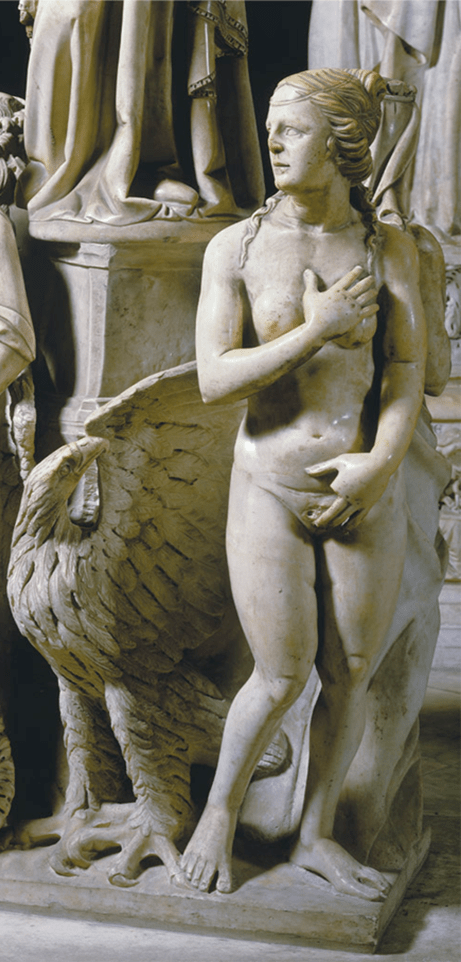
On the other hand, Griselda’s nudity represents what she brings to the wedding: nothing. She has no property, no money and no illustrious lineage. Gualtieri marries her in order to silence the chorus of voices begging him to wed and produce and heir. There is no suggestion that Gualtieri loves her, nor she him. In fact, Griselda’s body is her only asset. Boccaccio describes her as beautiful, a characteristic that artists represented using the Renaissance tropes of pale, white skin, blond hair, high forehead and elegant limbs. Apollonio di Giovanni and the Master of the Griselda Story even represent her in a pose taken from Classical Roman images of Venus (below, left). Like the goddess of love and beauty, Griselda sways gracefully on one leg with one hand over her genitals and the other gesturing towards her breasts. Griselda’s body also proves to be fertile, producing first a daughter, and then the longed for male heir.

Depicting Griselda nude allowed artists to make connections to contemporary marriage practices, display her legendary beauty and fertility, and demonstrate their knowledge of ancient Roman prototypes. But what does it tell us about gender and sexuality during a pandemic? Is Griselda part of a larger sisterhood of women who are forced back into patriarchal roles after an apocalypse?

Mostly. Griselda is psychologically tortured by her husband, and must suffer it because she is of a lower social and economic class. Indeed, our own pandemic moment has seen a rise in domestic violence, precisely because victims (usually women and children) lack the resources to shelter apart from their abusers. Griselda’s story ends the Decameron, providing the transition back to post-pandemic normalcy, in which women are subservient to and dependent upon their husbands.

Yet, the bare, white skin of Griselda stands in stark contrast to the opulent clothing of those around her, a difference that is particularly apparent in the images by Apollonio di Giovanni and the Griselda Master, who used large amounts of gold leaf on the clothing of figures. In this period, female nudity was paradoxically associated with sexual enticement and shame as well as allegorical truth and even divinity. Griselda’s nudity marks her out, and focuses our attention on both her corporeal beauty and her spiritual purity. Unlike her richly clothed husband, Griselda hides nothing.

While it’s hard to find a feminist message in Griselda’s calm obedience, both image and text suggest that she is a prudent woman who can calmly confront the travails of life and use judgement to follow the virtuous path. In fact, while Griselda’s pose is taken from a well-known statue of the goddess Venus, it was also used to personify Prudence on a 14th-century baptismal font in nearby Pisa (below).

While Griselda ostensibly preaches obedience to patriarchal authority, her visual similarities to Venus and Prudence suggest that virtue and sexuality are not incompatible. She also hints at the kind of social mobility that occurred in post-plague Italy. While the extreme economic disparity between Griselda and Gualtieri was unheard of, the Black Death did free peasants from their previous ties to the land. Due to the shortage of labor, landowners had to bargain with workers, who could move more freely between employers. If Griselda suggests a return to the status quo, she also disrupts it.

For further reading on Griselda and marriage painting, see Cristelle Baskins, “Griselda, or the Renaissance Bride Stripped Bare by Her Bachelors in Tuscan Cassone Painting,” Stanford Italian Review X:2 (1991): 153-175. For Griselda, marriage rites, and Renaissance dowries, see Christine Klapisch-Zuber, “The Griselda Complex: Dowry and Marriage Gifts in the Quattrocento,” in Women, Family and Ritual in Renaissance Italy, 213-246 (University of Chicago Press, 1985).

Featured

Building Women

The Mausoleum of Tuman Aqa, c. 1404. Samarkand (modern-day Uzebekistan).

What do buildings tell us about the women who built them? For, despite political, religious and social structures meant to keep them from power, women throughout the early modern built big. Today, I’ll focus on women in the Islamic world, a squishy term that for my purposes refers to modern-day Arabia, the eastern Mediterranean, North Africa, Central Eurasia, and the Indian subcontinent, and I’ll look at the ways that buildings both commemorate and obscure individual agency.

We tend to think of architecture as a particularly public form of art patronage. And, after teaching undergraduates for years, I can say that our educational system tends to elide histories of gender and space before the modern era. What I mean is that my students (and perhaps many of my readers) tend to think that early modern women, especially Muslim women, had no access to public life. Instead, they were immured in their homes, hidden behind veils and devoid of any role in public life. This is patently false. Boundaries between “public” and “private” were much more porous in the Renaissance. While many Muslim homes of this period had a harem, it was hardly full of scantily clad concubines. Rather, the harem was (and remains) the place reserved for the family; visitors and even strangers could often access other areas of the house.

Access to architectural patronage was more a matter of class than gender. In both the Muslim and European arenas, architectural patrons were elite individuals with access to social, political and financial capital. Muslim women were active as builders of tombs, religious shrines and lodges, mosques and public works projects such as markets and baths. These women builders did not hold political power in their own right. Instead, female architectural patrons derived their social and political power from their male family members, usually fathers, brothers or husbands. But, Muslim women could own property and amass wealth. Unlike in much of Europe where Salic Law prohibited most forms of female inheritance, the Qur’an guaranteed women a share of family property.

Let’s look at the example of Tuman Aqa, one of the many wives of Timur, a Muslim ruler who conquered most of central Eurasia. Timur and Tuman Aqa were quite close: he built her a vast complex of gardens known as Bagh-i Bihisht, and she accompanied her husband several of his military campaigns. During her time as Timur’s wife, Tuman Aqa (also speleld Tuman Agha) paid for the construction of a mosque, a Sufi lodge, and the bazaar of hat sellers, all in Samarkand. After Timur’s death, Tuman Aqa eventually ruled the town of Kuhsan as a fiefdom in the name of her son, where she built another Sufi lodge, a madrasa, and an inn for the traveling traders responsible for most of the commerce in the region.

Many of these buildings exist only in ruins, but Tuman Aqa’s two mausolea still stand. Tuman Aqa’s mausoleum in Samarkand (above), which she built around 1404, consists of a commanding turquoise dome sitting on top of a drum decorated with geometric patterns and inscriptions created with glazed tiles. Inside, the dome is supported by luminous muqarnas that glisten in the pale light. Inscriptions at the mausoleum and its attached mosque laud Tuman Aqa’s dynastic connections and praise her merits. The building is located within a larger funerary precinct known as Shah-i-Zinda, which houses a shrine to Kusam ibn Abbas, a cousin of the Prophet Muhammad who lived in the 7th century CE. Thus, Tuman Aqa was able to place her own mausoleum near that of a revered early Muslim, ensuring that later generations would visit her tomb while on pilgrimage to Shah-i-Zinda.

Yet, this building and others like it bring me to a series of questions. How do buildings facilitate memory? And what memories do they construct of women? Perhaps most importantly for me, what is the relationship between memory and agency? Studies of women’s architectural patronage tend to focus on the fact of the buildings – their very existence and location – rather than visual and architectural elements, such as the placement of domes, the arrangement of the plan, the choice of ceramic tiles or the kind of brickwork used. This is because it is unclear what role patrons, whether male or female, played in the actual form and decoration of the building. To be fair, this is largely true in Europe as well. We know that a few female patrons, such as Isabella d’Este in Italy or Turhan Sultan in Turkey, actively participated in the planning and execution of their building projects. But, for the most part, it is unlikely that Muslim caliphs, shahs and princesses, or Christian kings, queens and dukes dictated the use of specific architectural elements. They wanted grand mosques and churches, magnificent palaces and impressive tombs. They left many of the details up to architects and advisers.

I don’t mean to say that Tuman Aqa had no agency. She was clearly a very powerful woman (though she still lacks a Wikipedia page). But I don’t think we can infer much about her personal tastes or style from this building, or even about individual self-representation. Tuman Aqa’s mausoleum celebrates her familial connections to her father, Amir Musa, and her husband, Timur. The rather generic inscriptions tell us nothing about her personality or her role at court. The style of the mausoleum is also steadfastly Timurid. The building therefore commemorates Tuman Aqa, not as an individual, but as a member of the Timurid dynasty. What I’m saying is that Tuman Aqa’s mausoleum is as much about establishing her family’s control of an important religious shrine as it is about her individual agency. Perhaps it is more accurate to refer to such buildings as examples of a patron using her (or his) personal agency to promote dynastic unity and continuity.

The academic year is upon us! I will only be blogging every other week during this time. So, check back on September 18th for a blog on Renaissance monsters and their gender-bending abilities!

Want to know more about the architectural patronage of Muslim women? Check out the online database Women Builders of the Islamic World. Note that, as of August 2019, there was no entry for Tuman Aqa. I also consulted the following resources for this blog: Roya Marefat, “Timurid Women: Patronage and Power.” Asian Art 6 (1993): 28-49; D. Fairchild Ruggles (ed.), Women, Patronage, and Self-Representation in Islamic Societies (State University of New York Press, 2000). All images courtesy of ArchNet.

Featured

In and Out of the Habit

Renaissance Nuns and Their Bodies.

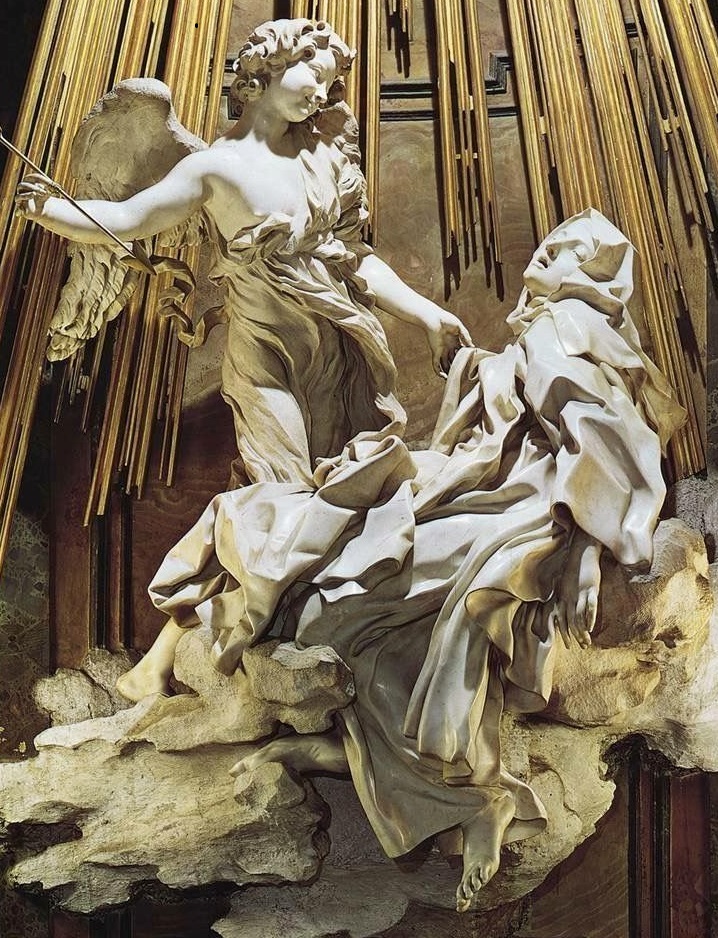
Gianlorenzo Berninin, detail of Ecstasy of St. Teresa, 1647-1652.

Sexuality isn’t normally something we attribute to nuns. But, of course, the sexuality of Renaissance nuns was vitally important. Their lack of sex is precisely what made them effective mediators between the Renaissance faithful and Christ, who was, himself, celibate. While we tend to think of nuns as shrouded in habits and confined to convents, they were highly visible in Renaissance culture. Their buildings were centers of prayer and pilgrimage, and while some nuns were cloistered, many received visitors and left the convent to visit family and friends. Religious works of art often depicted nuns, either as female saints, or as witnesses or donors. Whether corporeal, architectural or pictorial, representations of nuns were an integral part of Renaissance visual and sensual culture.

Renaissance nuns were urged to renounce their worldly bodies in favor of a spiritual union with Christ. Some nuns, such as Catherine of Siena, experienced visions in which they wed Christ in a heavenly ceremony known as a mystic marriage. The small panel shown below depicts Catherine, who was a member of the Dominican order, in her habit with her hand outstretched. A heavenly scene bursts forth in the room, and Christ reaches to take Catherine’s hand while the Virgin Mary blesses the union. Saints and angels watch as Catherine becomes the bride of Christ. This panel was once part of a larger altarpiece, probably the first commissioned to illustrate Catherine’s life after her canonization in 1460 (for more on this important early work, check out the Met’s catalogue entry).

Giovanni di Paolo, Mystical Marriage of St. Catherine of Siena, after 1460. The Metropolitan Museum of Art.

What’s interesting to me is the way that the relative spatial logic of the room, which is laid out (more or less) according to the precepts of linear perspective, is disrupted by the heavenly host. Christ and the Virgin Mary are slightly off-center, and the golden rays that invade the room do not follow the perspectival lines. Moreover, the rays were created using gold leaf, meaning that they sparkle and shine on the surface of the painting, further belying the illusion that a three-dimensional space recedes into the painting. While the mystical union is represented using bodies, the painting tries to insist that this is not a messy, corporeal marriage. Instead, this is something beyond reason: a union of faith and spirit.

As you might expect, most of the women who experienced these visions of mystical, non-sexual marriage were nuns. Yet, the nun’s body was not so easily effaced. As we have already seen, Renaissance modes of representation relied upon naturalistic depictions of the human body. Catherine’s body is swathed in heavy draperies with no hint of cleavage, much less tantalizing shoulders or ankles, which has sometimes been interpreted as a denial of her physicality. Her veil also obscures traditional Renaissance markers of feminine beauty, such as golden hair or a high, plucked forehead. Yet, we do see a body, depicted within the confines of worldly linear perspective. At the same time, philosophical ideas regarding the relationship of the soul and the body meant that spiritual beauty manifested itself on the outward body. In other words, a virtuous woman was a beautiful woman.

In this detail from a late fifteenth-century Mystic Marriage by a rather obscure artist known as Lorenzo d’Alessandro of Sanseverino, Catherine has the alabaster skin, high, arched eyebrows, vermilion lips, and long, graceful fingers associated with feminine beauty. To paraphrase the feminist philosopher Judith Butler, her body matters. Her beautiful body signifies Catherine’s sanctity, and her desirability makes her a more effective role model for girls and young women. As today, Renaissance teens were more likely to seek pristine skin and perfectly shaped brows than spiritual perfection.

The association between the beautiful bodies of nuns and spiritual union finds its fullest expression in Gianlorenzo Bernini’s Ecstasy of St. Teresa.

Gianlorenzo Bernini, Ecstasy of St. Teresa, 1647-1652. Cornaro Chapel, Santa Maria della Vittoria, Rome.

Bernini depicts the Carmelite nun Teresa of Ávila in the midst of one her mystic visions. Teresa described a vision of an angel who thrust an arrow into her heart that left her “all on fire with a great love of God.” The pain she experienced during this vision “was so great, that it made me utter several moans; and yet so surpassing was the sweetness of this excessive pain, that I could not wish to be rid of it, nor is my soul then content with anything but God.” Teresa describes her experience in corporeal, sensual, and even sexual terms, and Bernini’s sculpture follows suit.

Teresa’s body is swathed in heavy drapery that seems to writhe and swirl, seeming to engulf her in voluminous folds. Yet, her body is feather light; the angel lifts her up with no effort at all. Teresa’s head is thrown back, her eyes half closed, her mouth slightly open. A delicate hand emerges from beneath her habit and a tantalizing foot slips into view as her body surrenders to exquisite pain. Bernini has rendered spiritual ecstasy as physical ecstasy, and is thereby employing lived, corporeal experience in order to communicate a spiritual experience that few of his beholders would have had.

Far from being hidden behind high cloister walls and heavy habits, nuns’ bodies were highly visibly and meaningful. Their inviolate hymens testified to a spiritual purity and religious devotion that they could confer upon the communities where they lived. Depicted in altarpieces, sculptures and smaller devotional paintings, nuns’ beautiful bodies testified to their virtue and served as role models for other women, promising a beauty of soul that would outshine the beauty of the body. At the same time, their union with Christ was often described in sensual terms, especially by female mystics. They experienced God as a corporeal, bodily presence, and thus images of nuns often depicted ecstatic spiritual experience as a physical pleasure.

Next week we’ll leave Europe behind and take a look at the architectural patronage of Muslim women during the early modern period. You thought only men had the wealth and clout to build big? Women throughout the Muslim world ensured that their names and legacies would be honored by erecting religious, funereal and charitable institutions.

For more on nuns, sensuality and mystic marriage, see: Giancarla Periti, In the Courts of Religious Ladies: Art, Vision, and Pleasure in Italian Renaissance Convents (Yale University Press, 2016); Marcia B. Hall and Tracy E. Cooper (eds.), The Sensuous in the Counter-Reformation Church (Cambridge University Press, 2013); Carolyn Diskant Muir, Saintly Brides and Bridegrooms: The Mystic Marriage in Northern Renaissance Art (Harvey Miller: 2012).
Featured

Women on Top

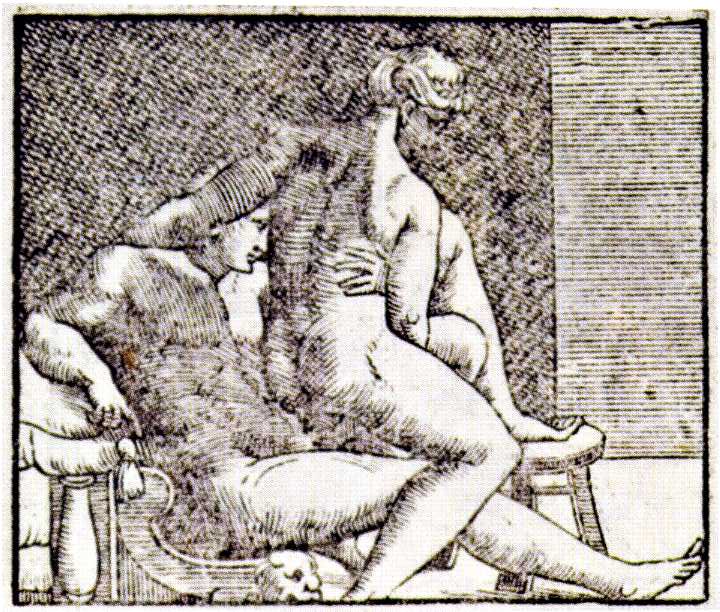
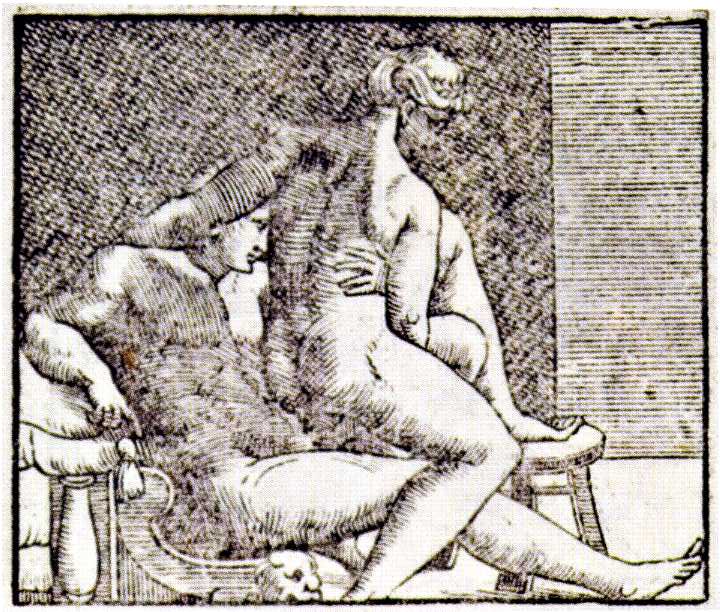
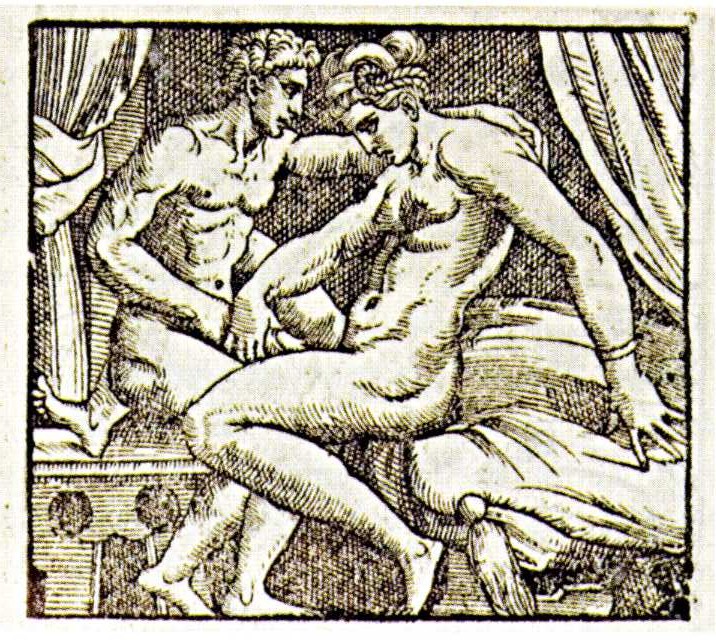
Position 10, from the so-called Toscanini Volume, ca. 1555-1560. After I Modi by Giulio Romano and Marcantonio Raimondi.

In my last post I examined the connections between technology and erotica and emerging discourses of art and pornography through the creation of the Modi, a series of racy prints. I argued that early modern conceptions of art were closely tied to the (male) artist’s ability to depict a beautiful, nude female body. In such a formulation, women were objects either of artistic production or the viewer’s gaze. Today I’d like to suggest that objectification was not the only way in which women might have experienced the Modi. In fact, in both their visual and textual content the series opened up spaces for women’s active participation and pleasure in sexual intercourse.

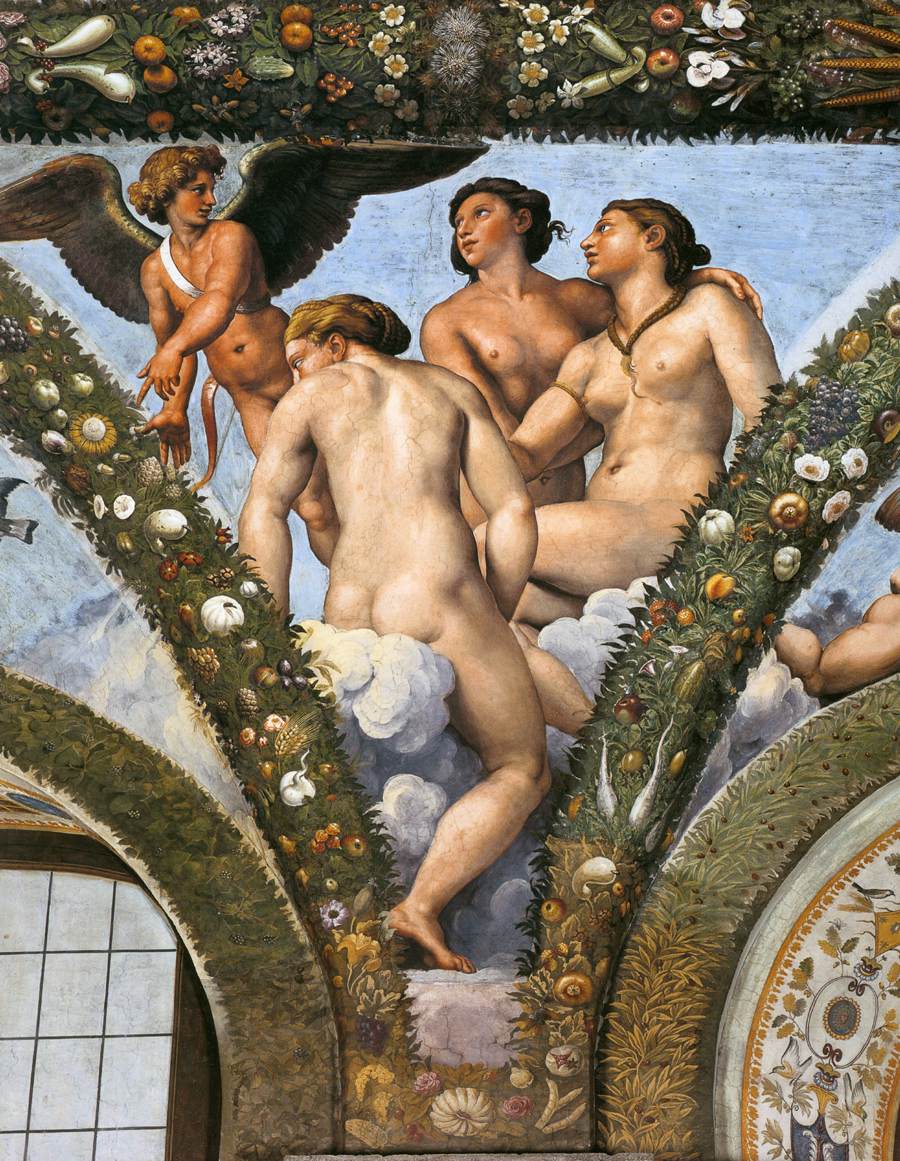
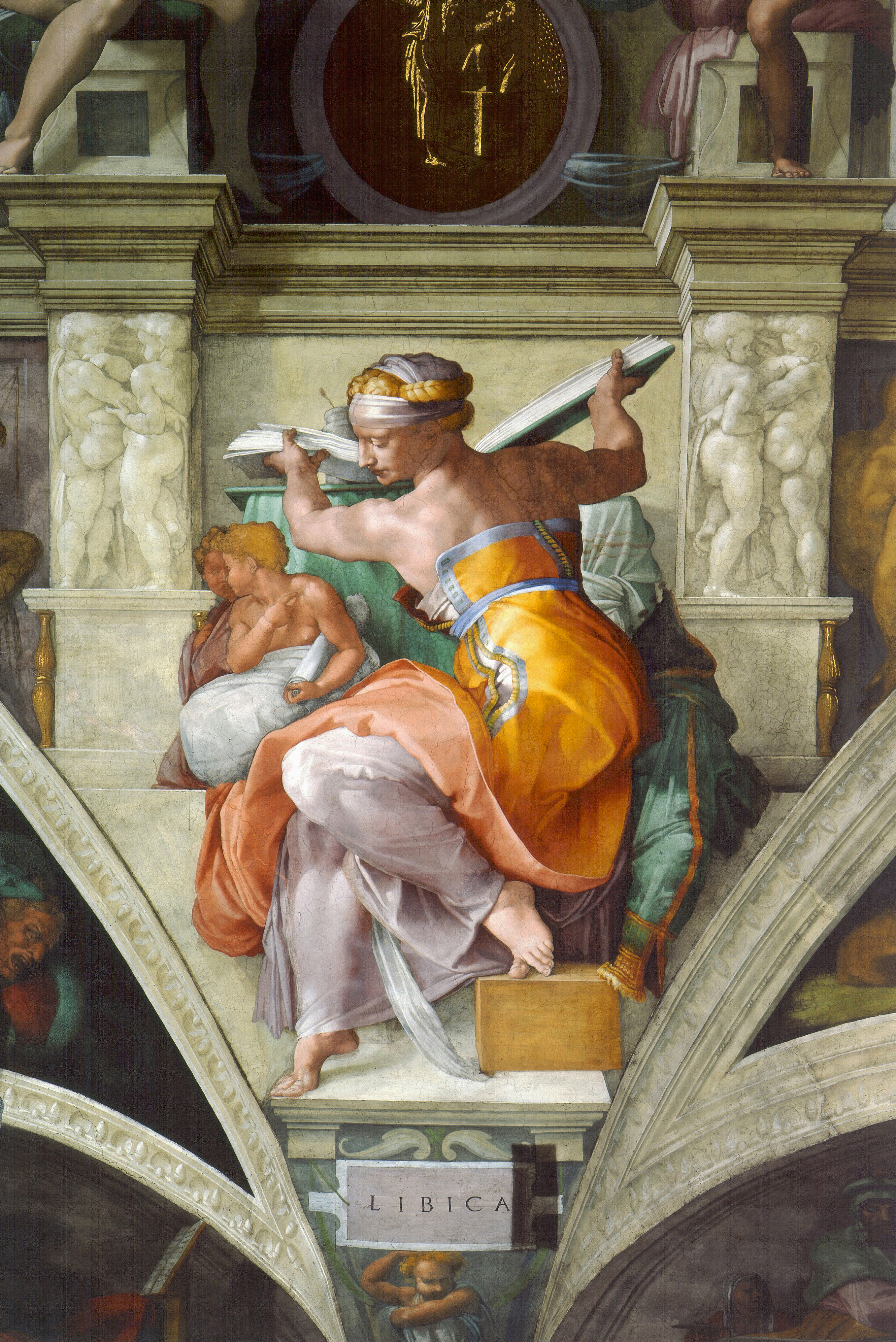
The image above is a case in point. Here, a woman sits atop her male partner in what we might today call a reverse cowgirl position. The couple is a graceful tangle of limbs and twisted bodies, allowing us both frontal and rear views of the sex act. The precariously balanced woman reaches between her legs, guiding her partner’s penis to its proper place. The relatively low quality of this woodcut copy might obscure that fact that the composition is realized in high Renaissance style. The couple have idealized and toned physiques; and their straight noses, long, slender limbs and hairstyles are all based upon ancient Roman and Greek types, as is the furniture in the room. The interwoven body parts of the pair and slight torsion of the female figure are also reminiscent of the latest developments in Rome, including Raphael’s work at the Villa Chigi (below left) and Michelangelo’s frescoes for the Sistine Chapel ceiling (below right).
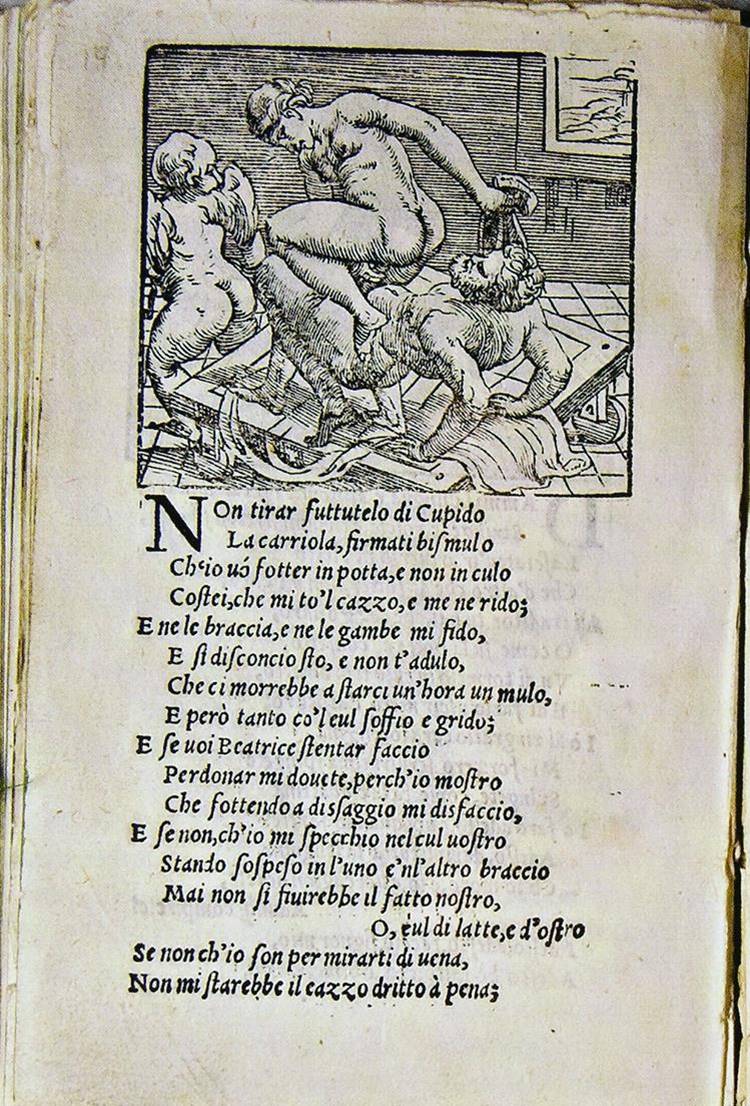
Coupled with each of the images in this woodcut edition of the Modi are sonnets written by Pietro Aretino, who is perhaps best known for his lascivious poetry, books and plays. Like the printed images, the form of the sonnet is decidedly high brow. But in his Sonetti lussuriosi (Licentious Sonnets) Aretino’s word choice is purposefully coarse and vulgar: words like cazzo (dick), potta (pussy) and cul or culo (usually ass, but also pussy or perhaps snatch) feature in nearly every poem. I often read these sonnets aloud to my students, and even I, serious scholar that I am, struggle not to giggle at the titillating language.

What’s interesting here, though, it that women are often the primary speakers, exhorting their partners to take and give pleasure. The tenth sonnet, that which accompanies the image above, begins, “You’ll pardon me, I want it up my ass.” The male partner protests that such a position is sinful. She explains that while the two could have sex in potta “it’s far more agreeable to have a cock in behind that in front.” As her partner joins in by eagerly acceding to her wishes, she further commands “push it from the side, over more, down farther, there.” In other sonnets women describe orgasm, request specific positions or actions, and generally describe their affection for the male member.

Perhaps it goes without saying that few other visual or textual representations from this period show women in such an active sexual role. Church authorities dictated that couples assume the “missionary position.” Nor do Renaissance depictions focus on sexual pleasure as the primary goal of intercourse. Believing that both men and women contributed “seed,” some medical treatises recommended that couples seeking to conceive achieve both male and female orgasm. The role of orgasm was procreative in such texts. While Renaissance satiric poetry and literature described the pleasures of sexual intercourse, meaning was sometimes veiled by the use of fruits or flowers as stand-ins for sensual delight.

What is remarkable about the Modi and the accompanying Sonetti lussuriosi is the leading role they give to female partners. The sonnets do uphold masculine superiority, for the women almost universally declare their desire for, and even reliance upon, the male cazzo. Women are thus placed in a dependent position. At the same time, men often place themselves under the command of their female partners, or declare their dependence upon the female body. In Sonnet 14 (left) the man speaks a brief ode to his partner’s rump: “O, ass of milk white, and iridescent oyster, if I weren’t looking at you with such pleasure, my cock wouldn’t hold up worth a measure.” We know that women purchased copies like the one above, for a sixteenth-century French book-seller complained of all the ladies who flooded his shop looking for the lascivious images and poems.

Together, the Modi and the Sonetti created a discourse in which women could direct their sexual experiences, either by physical manipulation or by asking for specific positions or actions. While it’s hard to gauge what impact the Modi had the sexual practices of actual couples, I do think that the prints opened a space in which women could acknowledge pleasure and partners could discuss their sexual preferences. While some men might have seen women on top as threatening to social order, the success of the Modi suggests that many men and women were interested in exploring alternatives in the realm of fantasy if not in the realm of flesh.

The past few weeks have been pretty racy, and it is literally getting hot down here (a high of 95 in Tulsa today, with 100 degrees or more forecast over the weekend). Time to cool things down. Next week we’ll look at Renaissance nuns and the art that they produced.

Translations from the Modi above are based upon those in Appendix B of Bette Talvacchia’s Taking Positions: On the Erotic in Renaissance Culture (Princeton University Press, 1999. Out of print.). I have made slight changes to the translation of Sonnet 10. The Modi and the Sonetti lussuriosi have also been discussed at length in a series of publications by James Grantham Turner, including his recent book Eros Visible (Yale University Press, 2017).

Featured

Erotic Technologies

Printing, Piracy and Porn

Attributed to Agostino Veneziano, after Marcantonio Raimondi and Giulio Romano, Nine Fragments from I modi, before 1531. Pieces cut from seven engravings. London: The British Museum.

New technologies have played an active role in the form and dissemination of modern pornography. In the 19th century photography allowed for the production of supposedly ‘real’ images. Advances in media technologies such as color printing and moving pictures similarly facilitated the spread of erotic imagery. The advent of streaming video in the early 21st century changed the pornography industry as we know it, making the material more accessible and interactive, while also obscuring the relationships between sex, money and exploitation. Technology also played a key role in the birth of erotica in the sixteenth century.

As I’ve written before, the concept of pornography did not exist during the period commonly known as the Renaissance (c. 1300-1580 for art historians). Yet, it is precisely during this time that we begin to see something akin to modern pornography: mass-produced content aimed at sexual stimulation with a side of social taboo. And, it should come as no surprise that the production of such content was facilitated by a new technology: the printing press.

Movable type existed in what are today South Korea and China as early as the 9th century, and woodblock prints were made throughout the medieval world in Africa, Asia and Europe. But the printing press wasn’t born until around 1450 when it was invented by Johannes Gutenberg. The printing press enabled writers and artists to quickly and (somewhat) more cheaply produce and sell their work. It also facilitated a process known as engraving, whereby the print-maker uses a burin to create lines on the surface of a copper plate. In contrast to woodblock printing, which relies on a subtractive process, engraving allows for a greater range of tones and textures in the finished print. In terms of rendering flesh, engraving allowed artists like Marcantonio Raimondi to create voluptuous folds, muscles gleaming with the sheen of sweat, and light and shadow that could conceal or reveal parts of the body.

Marcantonio Raimond, after Raphael, The Judgement of Paris, c. 1510-1520. Engraving. The Metropolitan Museum of Art.

In the early 1520s Raimondi and the artist Giulio Romano collaborated on a project known as I modi (‘the ways’ or ‘the positions’). Giulio Romano, Raphael’s star pupil and heir, had taken over part of his master’s workshop, which included a fruitful partnership with the engraver Marcantonio Raimondi. Raphael had an early appreciation of print’s ability to facilitate the spread of his compositions (and his fame) throughout Europe, and routinely provided Raimondi with drawings and designs. The Raphael-Raimondi partnership included the production of many male and female nudes, often based on Greek and Roman mythology. In The Judgement of Paris (above), Marcantonio’s controlled, fine lines give form to bare flesh, creating sculpted male muscles and remarkably buoyant female breasts.

But the prints engraved by Raimondi after Giulio Romano’s designs were quite another thing. Explicit, licentious, and fully human, the Modi quickly stirred the passions of Renaissance viewers.

Unknown engraver, after Marcantonio Raimondi, reversed copy of Position 2. Engraving. Vienna, Albertina.

Not all of those passions were erotic. The Catholic Church moved quickly to suppress I modi. Giulio Romano had already left Rome to take up a position in Mantua, but Marcantonio was jailed for his role in the production and sale of the prints. These were not the first, or even the most lewd, images produced in Renaissance Italy, and it seems that all involved were quite shocked at the speed and severity of the negative response. So, why the Modi? Firstly, the use of print played a large role. Unlike earlier drawings, paintings or sculptures, print was meant to be replicated and sold to a large audience. And that audience could not be regulated by the Church, or even by the artists who produced the work. Erotica was no longer restricted to a small audience of elite men. Now working class men, foreigners and even women could purchase these images. It probably didn’t help that the prints were produced in Rome, the seat of the Catholic Church, and that many of the series’ earliest clients were likely churchmen.

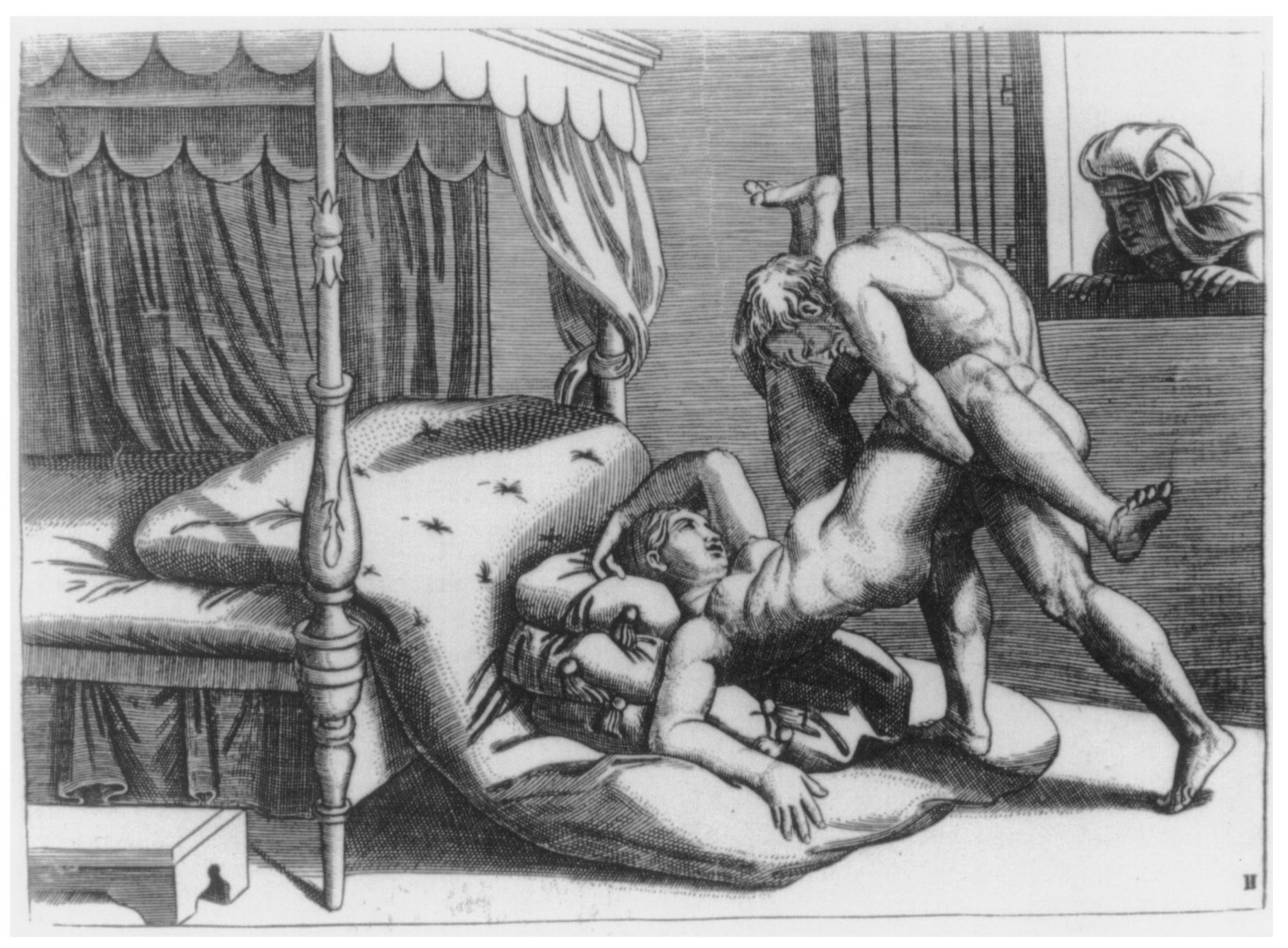
And, contrary to previous erotica, the Modi do not purport to depict gods, goddesses or historical figures. Instead, we see mere mortals engaged in (and enjoying) sex. These acts do not lead to the birth of gods or kings. They lead only to physical pleasure. The prints flagrantly flout sexual mores by eschewing the Church-approved ‘missionary position’ in favor of a series of acrobatic postures. They also depict women as active, even eager, partners. In this woodcut copy of to the left the woman reaches out, guiding her partner toward coitus.

A few original prints survive in fragments, but most of what we know about the prints comes from copies, appropriations and downright theft. And this brings me back to the modern pornography industry. Piracy is one of the primary ways that current porn tube sites generate profit, a practice made even easier by streaming video capabilities. The printing press also led to piracy: the first case of copyright infringement was brought by Albrecht Dürer against our very own Marcantonio Raimondi.

On the left we have Dürer’s Anna and Joachim at the Golden Gate (1504); on the right is Raimondi’s copy of several years later. The sticking point seems to have been Raimondi’s use of Dürer’s AD monogram, visible on a tablet in the lower left of each print. Compositions could be easily copied by oiling or pricking an original print or drawing, and then transferring it to a copper plate. All the engraver needed to do was follow the lines or dots produced during the transfer, and, voila – a perfect copy.

I’m not saying that the Modi should be categorized as pornography, especially since the word didn’t exist in the 16th century. But, a lot of scholarly ink has been spilled in order to demonstrate that the Modi were art, despite the fact that modern conceptions of art didn’t exist at this time either. When Giorgio Vasari, the great-great grandfather of modern art history, wrote his collection of artistic biographies in 1550 he called it The Lives of the Most Excellent Painters, Sculptors and Architects, not, as it is sometimes mistranslated, The Lives of the Artists. Vasari was describing practices and works that would later be recognized as Art, but that were mostly categorized by use and medium during the Renaissance.

I modi are not easily labeled precisely because they are the product of a radically new technology, and thus the germs of what would become new ways of thinking about images. They are not pornography or art, but they are the precursors of both. The concept of art, as it developed during the Renaissance, involved the skillful rendering of nude flesh along with varied, appealing compositions that nodded toward Greek and Roman antiquity. The rendering of a beautiful female nude was synonymous with artistic ability. Erotica and nudity, especially female nudity, are caught up in the idea of what art is.

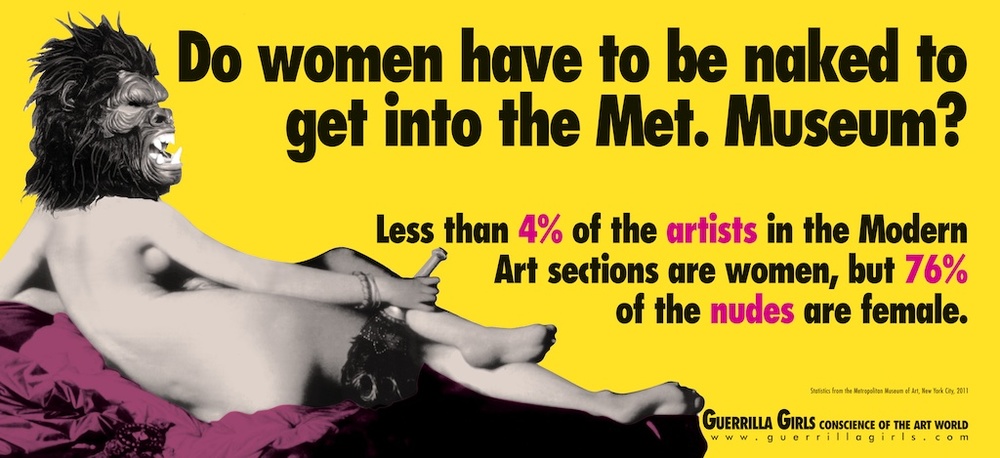
Guerrilla Girls, Do Women Have to Be Naked to Get into the Met. Museum? 2012. https://www.guerrillagirls.com/naked-through-the-ages

It is, thus, not surprising that one can still find more nude women hanging on the walls of the Metropolitan Museum of Art than works of art by women artists. I don’t think we can change the way in which women and their bodies are represented until we acknowledge and work through the very definition of what qualifies as art.

Like the Modi? I’m not done yet. This week focused on ideas of technology and nudity, with some not so nice consequences for representations of women. Next week I’ll investigate ways in which the Modi might have been experienced and used by women in more productive ways.

For more on I modi and pornography, see: Bette Talvacchia, Taking Positions: On the Erotic in Renaissance Culture (Princeton University Press, 1999); James Grantham Turner, Eros Visible: Art, Sexuality and Antiquity in Renaissance Italy (Yale University Press, 2017); Shirra Turrant, The Pornography Industry (Oxford University Press, 2016).

Featured

Full Frontal

What did Renaissance people see when they looked at nude bodies, voluptuous flesh and sexual acts?

This question is more complex than you might think. Today, we would label images of the eroticized body and coitus as pornography, but in the early 16th century the modern pornography industry had not yet been born. The word pornography didn’t even exist until the 18th century.

I don’t mean to say that images such as the one above didn’t sexually arouse their viewers, but that was not their only purpose. Instead, sexually explicit imagery allowed artists and beholders to explore the relationship between images and their viewers, and the consequences of looking.

So, just what is it that we’re looking at here? This is the eastern wall of the Chamber of Psyche, just one of over twenty frescoed rooms at the Palazzo Te, a villa located in Mantua, Italy. The palace was constructed by Giulio Romano for his patron, Federico II Gonzaga, in the mid-sixteenth century. This particular room is named after the ceiling frescoes, which depict the story of Cupid and Psyche.

Giulio Romano and assistants, Labors of Psyche, c. 1526. Chamber of Psyche, Palazzo Te, Mantua.

After falling in love with the beautiful mortal, Cupid hides his true identity, coming to her bed only after nightfall. When Psyche has the temerity to sneak a peek at her lover, he flees (upper left octagon). Psyche then undertakes a series of dangerous tasks in order to win him back. She is ultimately successful, and the central scene in the image above depicts Jupiter blessing their union and deifying Psyche. While the story has a happy ending, the lesson here is that looking can be dangerous, especially for a woman.

Located just below the images of Cupid and Psyche, Giulio Romano’s Jupiter and Olympia similarly investigates the role of looking in Renaissance art and culture. The fresco doesn’t leave much to the imagination. This is one of the most explicit images from the sixteenth century, and certainly the most explicit painting from the period. A fully erect Jupiter turns Olympia’s head towards himself, as he prepares to have sex with Olympia, the act that supposedly fathered Alexander the Great. Olympia obligingly hooks her left leg around his torso. Her body is turned outward toward the viewer, and she grips the fictive frame of the painting, perhaps in the throes of ecstasy. Jupiter sports a snake’s tale – he was in the habit of donning various disguises in a vain attempt to hide his adulterous liaisons from his wife, Juno. To the right Olympia’s husband, Philip of Macedon, spies on the couple. For the offense of daring to look upon a god Philip’s eyes are put out by Jupiter’s eagle.

Giulio Romano and assistants, Jupiter and Olympia, c. 1526. Chamber of Psyche, Palazzo Te, Mantua.

What’s interesting to me here is the way that the image solicits the very act it punishes. It asks us to gaze upon a god in the flesh, as it were. The figures are incredibly sculptural, and the presence of Olympia’s hand on the painted frame only strengthens the feeling that this scene is taking place in the space of the room, right in front of us. In looking at the fresco, we commit the same voyeuristic act as Philip, and we might, therefore, expect to be punished for it. Well, perhaps only if we were men. Jupiter himself seems to license the feminine erotic gaze by turning Olympia’s head so that she looks up at him.

Pietro Bertelli (attributed to),

Olympia’s upward gaze counters Renaissance advice to married women and girls, who were admonished to keep their eyes lowered, especially in the company of men. In contrast, Renaissance prostitutes and courtesans were characterized by their bold, inviting gazes. Pietro Bertelli’s Roman courtesan is part of a series of prints depicting the costumes of Roman women. Unlike his images of a maiden, matron or widow, the courtesan gazes enticingly out of the print, acknowledging her beholders. In Bertelli’s print, the courtesan’s visual contact with her beholders licenses their own voyeuristic and erotic looking.

In contrast, Jupiter and Olympia punishes the male gaze, potentially upending the gender norms of the Renaissance. Giulio Romano and Federico II Gonzaga were far from championing women’s rights or equality, but, in practice, the fresco facilitated women’s erotic gazing. Scholars have generally assumed that the viewers of these and other erotic works of art were men, but letters and accounts demonstrate that women were frequent visitors to the Palazzo Te throughout the sixteenth and seventeenth centuries. So, while Olympia is certainly objectified in this image – her nude body is laid bare for the viewer – she also engages in erotic viewing. Her gaze positions Jupiter as sexually alluring, perhaps encouraging Renaissance women to take up a little erotic peeking of their own.

Like this post? If so, check out my book, Gender, Space and Experience at the Renaissance Court. Performance and Practice at the Palazzo Te published with Amsterdam University Press.

You can also sign-up for email notifications. Next week, we’ll probe the Renaissance fascination with the male phallus. Che cazzo!

A Woman’s Body

Today the United States Supreme Court overturned the landmark 1973 Roe v. Wade decision that granted women the right to an abortion. In his majority opinion Justice Samuel Alito used increasingly dismissive language, calling Roe v. Wade “egregiously wrong.” We are in the midst of a sea change concerning the rights of women as well as trans, gender fluid and gender non-conforming and other persons with uteri, and not for the better. The future is uncertain, but the past has some dark lessons.

Rome was founded on rape, or so the historian Livy tells us. The earliest Roman settlers were men, and in order to ensure the continuity of their society they needed offspring. Perhaps unsurprisingly, no one wanted to marry them. So, they invited the neighboring Sabines to a festival, abducted the women, “enticed” them into marriage, and forced them to bear the children of their rapists. Thus Rome flourished.

Nicolas Poussin, Rape of the Sabine Women, probably 1633-34. Metropolitan Museum of Art.

The Renaissance, with its penchant for ancient Roman history and imagery, seized upon this story as an illustration of the necessity of marriage and offspring to a civilization. It appears on furniture and paintings related to marriage as well as independent paintings, such as the canvas above painted during the Baroque period. We see a scene of furious action with theatrically broad gestures and overwrought facial expressions that clearly communicate the violent actions of the Romans. At the same time, Poussin utilizes poses from ancient Roman sculpture, particularly the outflung hand, to move us slowly and inexorably through the painting. The bloodlessness of the scene contributes to the sense that this is a staged abduction from which we can distance ourselves. Moreover, works depicting the Sabines are often titled Abduction of the Sabine Women, and you will see various apologies for this title amongst scholars and curators.

Yet, the sexual history of early modern Europe is full of rape and forced childbirth, suggesting that Renaissance people knew exactly what they were looking at. While men and women practiced various forms of birth control, including coitus interruptus, the use of sponges, and the uses of various acidic substances such as lemon juice, they could not be relied upon with any certainty. Though illegal, abortion also existed, and could take the form of purgatives such as artemisia, jarring physical exercise, and bloodletting, all prescribed or performed by a physician, as well as the use of various herbal remedies or the insertion of a sharpened object into the womb which might be done by a person with no formal medical training. Renaissance childbirth was dangerous and maternal mortality was as high as 1 out of every 20 women, compared to 8 in 100,000 in Europe today. Yet, abortion was similarly perilous, unreliable and difficult to obtain. The circumstances of forced childbirth were dire: social stigma, poverty, and desperation.

Earlier this summer while conducting research on mistresses and illegitimate children I found two remarkable letters detailing the rape and forced childbirth of a widow named Magdalena by Francesco I Sforza, the duke of Milan. They met when she approached the duke for a letter of safe conduct. Francesco invited her to his rooms where he locked the door, pushed her against a table, told her she could not have the letter unless she succumbed, and, in Magdalena’s words, “carnally knew” her. Afterward Francesco gave her the letter of safe conduct and four ducats, and brushed off her concerns of pregnancy and social shame.

Nine months later Magdalena gave birth to a girl, but by that time she had been disowned by her family. Soon after she appears to have been swindled out of her remaining funds by a man claiming he could persuade Francesco to recognize the baby, and thus provide for it. Magdalena paid a peasant family to care for the child and attempted to find work as a servant, but was unsuccessful. She had apparently taken to begging at the doorways of churches and hints that she may have to take up sex work in order to provide for her child. She begs Francesco to provide for his daughter, but defiantly reminds him that he “only won this body, and not this spirit.” She signs the letter as Buona femina Magdalena, which roughly translates as “Magdalena, a good woman.”

Buona femina Magdalena

I don’t know what happened to Magdalena or her daughter. I’ll probably never know. I do know that Magdalena was enmeshed in legal and social systems which denied her control over her body. She was raped with impunity, forced to give birth, repudiated by her family and robbed of her inheritance, yet she was the one at the brink of starvation. If asked, the princes, judges and clergymen who created and benefited from this system would have said they acted in the best interests of Magdalena and her child because, as women, they could not be expected nor even trusted to act for themselves. I can’t help thinking that not much has changed.

For more on maternal mortality with a compelling statistical analysis of available data, consult Rachel Podd’s “Reconsidering maternal mortality in medieval England: aristocratic Englishwomen, c. 1236-1503,” Continuity and Change 35 (2020): 115-137. For the legal, medical and social attitudes towards early modern abortion, I suggest Elizabeth Cohen’s illuminating article, “Open City: An Introduction to Gender in Early Modern Rome,” I Tatti Studies in the Italian Renaissance 17 (2014): 35-54 and P. Renée Baernstein and John Christopoulos, “Interpreting the Body in Early Modern Italy: Pregnancy, Abortion and Adulthood,” Past & Present 223 (2014): 41-75.

Queer Bodies in the Renaissance

I’ve been thinking a lot about the relationship between gender and the sexed body this month. No wonder. Not only is it Pride month, but on June 12th the President signed an executive order erasing healthcare protections for transgender persons, and only a few days later, the US Supreme Court ruled that the 1964 Civil Rights Act protects LGTBQ people. All month I’ve wrestled with how to celebrate Pride on this blog, as well as how best to explain history of sexuality during the early modern period. When asserting that people should be treated according to the sex assigned them at birth, politicians and pundits often harken to some ill-defined European or biblical past when men were men and women were women. Sorry to burst your bubble, but sex and gender have never been so easy to pin down. There have always been disputed, ambiguous, queer bodies, just as there have always been those who have attempted to reduce them to simple binaries.

Take the case of bearded women, of which several portraits and many prints and pamphlets exist. At one level, these images demonstrate the instability of early modern sex and gender, for beards were regarded as important signifiers of maleness. On another level, however, religious and medical authorities often attempted to fit these queer bodies into existing categories of male and female. That said, we’ll see that a plethora of responses to bearded women existed, some of which acknowledge the possibility of a third sex.

In Giuseppe Ribera’s Magdalena Ventura and her Son (1631), we see a family grouping. Magdalena stands at the center dressed in women’s clothes, but sporting a long beard and rugged, masculine facial features. One bared breast and the infant suckling it are starkly lit. Magdalena’s husband has a shorter beard than his wife, and stands behind her in the shadows. To the right Ribera included a spindle and a snail atop a stone marker bearing an inscription which refers to Magdalena as a “wonder of nature.”

The inscription situates Magdalena within the Renaissance conception of marvels and even monsters, beings whose physical differences defined the very limits of what was natural. As I argued last month, beings such as harpies and giants were also used to police the borders of gender, as those who transgressed gender norms might be referred to as monsters, marvels or wonders – that is, as beyond the norms of human existence. Visually, the painting participates in constructing Magdalena’s body as non-normative, but it also carries religious overtones that complicate easy understandings of the painting as an early example of “freak portrait photography,”* that is, 19th and 20th-century images of freak show performers that often juxtapose normative bodies with those of the freak show performers.

Renaissance physicians, who had a humoral theory of the body, attributed female beards to an excess of heat and dryness, both male characteristics that caused the sprouting forth of hair. Women were supposed to be cool and moist, a humoral situation that inhibited the growth of facial hair. Thus, women who grew beards had literally contravened nature, and were often accused of acting inappropriately. Men were advised to control their wives, as masculine behaviors such as “boldness” might produce a beard. In contrast to our modern view of the body as alterable to reflect gender identity, in the early modern period the performance of gender could reshape the bodyzz.

While art historians often praise Ribera for his extreme naturalism, there’s something a little off in this painting. Magdalena’s masculine features, clothing, and rugged hands are all carefully described, and her bared breast is even pendulous with milk. Yet, she seems to have only one breast that springs from her collar bone and sits almost at the center of her chest. Ribera is consciously evoking the image of the Madona lactans (lactating Madonna). Images of the breast-feeding Virgin such as that from the workshop of Joos van Cleve (below, left) often dislocate her single breast, a strategy that was likely intended to guard against lascivious thoughts on the part of the beholder. Images of a more naturalistic Madonna with two breasts exist, as do images of the Virgin accompanied by her husband, Joseph (below, center), but these are rare. Even Leonardo da Vinci depicted the Virgin Mary with one, highly placed breast (below, right).

Magdalena’s body is both freakish and sanctified, a “wonder of nature” created by God. But it is a body that physicians and theologians labeled as female – this was precisely the source of her fame. Other women who grew beards might transform into men, for example the Spanish nun María Muñoz, who developed male genitalia after heavy physical labor, then developed a beard and deepened voice. She was determined to be a man and sent home from the convent. What we see, then, is that authorities attempted to label queer bodies as male or female, and that the persons themselves often accepted such binaries. Elena/o de Céspedes, a freed slave born a woman, but who developed male genitalia, argued that s/he was a hermaphrodite, having characteristics of both sexes. Yet, a surgeon’s cut had freed Eleona/o’s male member, making her a man whose dress, profession and sexual relations were all masculine.

Yet, a tantalizing hint of a third way exists in an emblem book from early 17th-century Spain. In an image titled”Neither and both” (right) Sebastián de Covarrubias depicted a woman with a curly, bushy beard. The text declares her a “monster, horrendous and strange,” which tracks with the common approach to such women. But Covarrubias also writes, “I am a man, I am a woman, I am a third party,” which suggests that early modern people recognized the possibility of a third, if monstrous, gender.

It is impossible to know the bodies of these women and men. In fact, trying to know their bodies smacks of contemporary fixations on the surgeries and genitals of trans people. What we can know is that Renaissance people (including the Catholic Church) acknowledged the possibility of sex change. While they were predominantly interested in fitting queer bodies into normative labels, there were also those who recognized a third way that was both man and woman, and neither. So, for those who say that gender and sex are the same thing as ordained by nature or God or whoever, and that ideas of ambiguity and non-conforming genders and sexes are new, we have only to look at the Renaissance to see the long history of queerness.

Truthfully, a lot of the literature on Ribera’s portrait is by non-art historians who tend to miss the visual complexity of the work. Similarly, much of the work on bearded women tends to assume either fluidity or fixedness, without, I believe, examining the nuances of early modern attitudes towards these persons. That said, I looked at the following when writing this blog: Karin Lesnik-Oberstein, The Last Taboo: Women and Body Hair (Manchester University Press, 2006); Sherry Velasco, “Hairy Women on Display in Textual and Visual Culture in Early Modern Spain,” South Atlantic Review 72 (2007): 62-75.

*This term comes from Rachel Adams’s Sideshow USA: Freaks and the American Cultural Imagination (University of Chicago Press, 2001). It appears in most of the English-language literature on Ribera’s portrait.

Gender, Race and Representation in the Renaissance

Andrea Mantegna, Oculus, Camera Picta, 1465-1474. Palazzo Ducale, Mantua.

Unless you’ve been living under a rock, you’ve heard about the disturbing killings of Ahmaud Arbery, Breona Taylor and George Floyd. While the details of each incident differ, they are part of a much larger system of institutionalized racism and white supremacy in the United States. I’m a white woman, thus part of the system. But I’m also an educator, and I hope that this post will help readers think through the ways in which the representation of people of color can both reinforce and upend stereotypes. I hope it helps us think about the long history of racism and why black lives and black history matters.

Before I begin: I think it is important to note that fifteenth-century nomenclature differed quite a bit from our own modern ways of approaching race and geographic origin. Color was the primary means of defining African Otherness, but early modern descriptions of persons from the African continent were by no means standardized. Renaissance Italians used words like “moro” (Moor) and “nero” (black) to refer to Muslim persons, peoples from North Africa, regardless of their faith, to persons from Sub-Saharan Africa, to persons of color born in Italy, and to dark or olive-skinned Italians. To complicate matters further, persons with black skin could also be described as Ethiopian, Guinean or even Indian. As today, the unfortunate blanket term “from African” could also be applied. By employing these terms white Europeans elided differences in skin color, religion, phenotype, language and geographic origin.

I’m going to examine the issues of gender and race in the Renaissance through looking closely at the figure of the African woman in Andrea Mantegna’s Oculus (above), an image located in the Camera Picta, a frescoed chamber completed between 1464 and 1475 for Lodovico Gonzaga, Marchese of Mantua. This room is well known to art historians. It appears in general survey and more specialized textbooks where it is celebrated for its naturalistic depictions of members of the Gonzaga court, its bravura use of perspective and foreshortening, and its calm classicism. As a discipline we have probed the varied identities the room constructs for its artist, patrons, and beholders, and investigated the ways in which its oculus represents the ever-watchful eyes of the court and playfully upends gender roles. We have even identified most of the figures depicted on the walls, including the dog, who is probably the marchese’s beloved pet, Rubino.

A black African woman and a white court lady.

Yet, little attention has been paid to the African woman. At best, she has been treated as a reality effect, a detail whose inclusion attests to the presence of slaves at the Gonzaga court. At worst, her gender and status have been deemed unknowable and, in any event, of little interest. Like the nearby peacock, the African woman has become an object who symbolizes the wealth and cosmopolitanism of the court. I propose, instead, that the status and gender of this figure can and should be analyzed, and that these questions are central to the way in which the oculus makes meaning.

As much as we would like to believe that she is a paid servant or a foreign prince or visitor, as other art historians have suggested, I think we need to admit that Mantegna’s black African woman represents a slave. Depicted in close proximity to the court lady and almost seeming to grow out of the lady, the African slave becomes an appendage of her owner. Like many European depictions of slaves and their masters, Mantegna’s oculus constructs a visual regime of white supremacy wherein the black body is merged with that of its putative owner. At times the black body is corporeally dominated, as in Titian’s Laura Dianti (left), where the white owner grasps the young African boy, both indicating her possession of him and physically directing his attention toward herself. While no such physical restraint occurs in the oculus, the African woman is pictorially hemmed in by the white bodies around her.

While we cannot ascertain whether this figure represents a portrait of an actual woman at the Gonzaga court, she does participate in creating and maintaining the fiction of black slavery in Mantua. Black Africans has been pressed into slavery and service as early as the thirteenth century, but they only began appearing with greater frequency after the return of Portuguese traders from Sub-Saharan Africa in the 1440s. In the 1460s, however, black African slaves would still have been something of a rarity in Italy.

At the court of Milan, Ludovico “il Moro” Sforza used depictions of black Africans as a kind of pun on his Moorish nickname. In the procession depicted on this cassone Ludovico is followed by a black page, despite the fact Ludovico kept few, if any, black African slaves. The woman in the oculus therefore participates in an established visual tradition of representing Africans as courtly ornaments, even in the absence of actual persons of African descent.

Cassone of the Three Dukes, ca. 1479-1497. Castello Sforzesco, Milan.
Lodovico “il Moro” and his black page located at the left end.

Now that we’ve established who she represents, I’d like to turn to what the black African woman is doing. She stands just to the right and behind the court lady, yet leans so far forward that her profile almost obscures the lady’s veil. When art historians have remarked upon the black woman’s gaze, they have generally assumed that she looks at her putative owner. Yet, upon closer examination it is clear that the African woman is craning her neck in order to look at something beyond the white face next to her. She may be looking at the surreptitious hand on the balustrade or trying to catch a glimpse of the three girls on the other side of the tub. However, if we follow her eyes carefully, she actually appears to be gazing out of the oculus all-together at something indiscernible to our eyes.

Three white ladies in waiting.

Alone of all the figures in the oculus, the African woman refuses to acknowledge the beholder below. Across from her a white girl holds a comb up for our inspection while two other white figures with identical hair styles also glance down, one almost completely hidden by her twin. The three young women gaze analytically at the beholder, exhorting courtiers to perform to the best of their abilities, while their smiles suggest that the performance has already been found lacking. At the same time, the girls acknowledge the necessity of a beholder to call them into being. They exist to peer down into the room, and must, perforce, have something, or someone, to peer at.

For beholders, standing or seated below, craning their necks to look up, even turning and twisting about in an effort to see all of the figures, the African woman is immediately marked out as different by her skin color, dress, and open-mouthed expression. Her obvious difference might be said to deny identification or mergence between beholders and beheld – that is, she does not seem to function as a model or type for the Italian Renaissance courtier, and thus signifies by her very difference from those who would have gazed up at her. The African woman therefore suggests the gulf between white European courtiers and black African slaves.

Located within an oculus, an ever-present eye gazing downward into the court, the African woman is one of the only figures who does not interact with the viewer below. She does not require a beholder in the same way that the white women and mischievous putti do. Her actions and attentions are not directed toward those below, and thus, I would suggest, she powerfully subverts power relations at court. Whether as an actual slave who lived in Mantua or as a representation of the court’s exotic acquisitions, her very existence should be predicated on serving those who look up at her. Of all the figures in the oculus, we might therefore expect her to be the most attentive. By refusing to acknowledge her beholders, she slips out of scopic control and becomes as acting subject. She therefore upends the subject-object relationship and suggests that it is the courtier below whose actions and behaviors are dictated and dominated by forces outside his control, while she remains the master of her own body. 

I’m not suggesting that Mantegna is critiquing slavery. Rather, he is using black slavery as a way to draw attention to power relations at court. In so doing, Mantegna imbues the African woman with scopic and rhetorical control, but this only works because these are the very persons with so little control at court. His aim is not social change. Rather, Mantegna makes a witty comment upon the functioning of court society, and one that is all the less threatening because it is inscribed upon the bodies of women and people of color. What strikes me is that over 500 years later, we (white America) still view the black body as an object onto which we can graft power relations of our own making, and to our own benefit. Thanks to generations of black artists, representations of black persons are changing, but this sordid history lurks in the images we admire most. It haunts Renaissance art history, and art history as a field. We must confront it, pull it apart, and reveal the power dynamics of representation so that we can see history anew and use it to make a better future.

Paul Kaplan is the acknowledged authority on representations of African persons in Italian Renaissance art. See, especially, his “Isabella d’Este and Black African Women,” in Black Africans in Renaissance Europe (Cambridge, 2005). I am also indebted to an article by Peter Erickson, “Invisibility Speaks: Servants and Portraits in Early Modern Visual Culture,” Journal for Early Modern Cultural Studies 9 (2009): 23-61. Finally, to my regret, I must admit that I didn’t start working seriously on race in the Renaissance until 2018 after a plenary roundtable at the Renaissance Society of America on the representation of race in the Renaissance. I am particularly grateful for the comments of Professor Herman Bennett (The Graduate Center, CUNY) and Professor Ayanna Thompson (Arizona State University).

Pandemic Watch: Medici, The Magnificent

You’ve finished binging Tiger King (even the sad ‘wrap up’ episode). Outlander just had its season finale on Starz. What is a cooped up fan of soapy, historical, problematic dramas to do? Well, there’s always season three of “Medici: Masters of Florence,” now streaming on Netflix. I just finished watching it and while some of the ways in which it represented women were more historically accurate than in seasons one or two, the closing message repeats many of the most trite ideas about the Renaissance and its patriarchal origins without any sense of critical reflection.

Warning: spoilers ahead. If you haven’t yet watched season three, you might want to do that before reading on. That said, it’s hard for me to actually recommend it. In the end, the final season still plays fast and loose with historical events while being less interesting than either of the previous seasons. It turns out, that, for me anyway, the misrepresentations of Renaissance women and gender were what made hatewatching the show fun. Trying to actually watch it was painful.

Season one looked at the rise of the Medici from modest money lenders to one of Europe’s preeminent banking families and power brokers, as well as their patronage of the Florence’s Duomo. Season two covered the Pazzi conspiracy, in which Lorenzo “the Magnificent” de’ Medici and his brother, Giuliano, were targeted for assassination by their Florentine rivals. Giuliano was murdered while attending mass at the Duomo; Lorenzo escaped, rallied the city, and ultimately emerged from the trial stronger than before. Season three attempts to deal with the aftermath: Lorenzo’s drive to punish those who killed his brother and secure his family’s position in Florence and Italy, as well as his troubled relationship with the Dominican friar and reformer, Girolamo Savonarola.

Season three is comprised primarily of political maneuvering, with chance encounters between Lorenzo and youthful artists such as Leonardo da Vinci and Michelangelo. Women, such as Lorenzo’s wife, Clarice Orisini, his mother, Lucrezia Tornoabuoni, his previous amorous encounters, Lucrezia Donati and Ippolita Maria Sforza, and even his enemy, Caterina Sforza Riario, all serve to enact his desires and commands. On the one hand, women are shown as powerful political actors whom Lorenzo needs to pursue his machinations on the Italian peninsula. For example, Lorenzo is able to push forward his candidate for the papacy only after Caterina Sforza betrays her own husband and offers key information to Clarice.* In some ways, this mirrors historical experience, wherein women rarely ruled in their own right, but were often instrumental in the success of their male family members.

On the other hand, living women are unable to alter Lorenzo’s course of action. Clarice cannot convince him to allow a clean papal election, and his sister, Bianca, is unable to turn him aside from the planned assassination of Savonarola. Only the shade of Clarice – dead, untouchable, and idealized – convinces Lorenzo to leave off murdering a priest. The female characters, mostly charmed by and/or sexually attracted to Lorenzo, do his bidding without him even having to ask.

In the final episode, Lorenzo lies dying and calls the artist Botticelli to his bedside. He reminisces with Botticelli about the great works they have created and says, “You were right. Beauty does bring us closer to God.” Images of Florentine “masterpieces” such as the Duomo and Botticelli’s Birth of Venus and Mars and Venus flash across the screen.

Lorenzo’s supposed last lines resonated strongly with the closing thoughts of a book I had just finished reading, Jill Burke’s The Italian Renaissance Nude (Yale University Press, 2018). In the book, Burke analyzes the use and representation of male and female nudes in Renaissance art, demonstrating that the nude is hardly a timeless or innovative form, but historically contingent and conservative. Both female and male nudes reify patriarchal authority by holding up the white male body as the superior form in both art and life.

Burke touches upon a problem that has long plagued me, especially when I teach Italian Renaissance art: what am I teaching when I praise the beauty of a Renaissance painting, especially a painting like Correggio’s Jupiter and Io (left)? This is one of my favorite paintings. The rendering of gleaming, soft, tactile flesh contrasts with the dark, insubstantial form of the cloud, that nevertheless embraces and kisses Io. The complex, even contorted pose of Io, whose back is towards us, one leg propped up and her head thrown back in ecstasy, is also incredibly graceful. Yet, this is a scene of rape: Io had spurned the advances of the god Jupiter, and so he transformed into a cloud and had his way with her.

Discussing the beauty of this painting brings me (and my students) pleasure. It is a delight to behold. But, as Burke notes, “the evocation of pleasure is in itself a hugely effective tool for disseminating ideology.” My praise of this painting’s beauty, and the invitation to praise Lorenzo’s co-creations with Botticelli in “Medici: The Magnificent” involve assumptions about the (male) sources of creativity and cultural power that are grafted onto the female nude. Io, Venus and their many unclothed sisters depict idealized women who could be shaped, owned and circulated among the men who created them. As I argued in my assessment of season two of “Medici,” these figures are not based on real women, but on unattainable ideals. The pleasure inspired by these paintings is far from benign; it is purposefully cultivated in order to elicit our sympathy with a patriarchal, and even misogynist, project of political and cultural control.

So, if, as you watch “Medici: The Magnificent” you wonder at the colored marble facade of the Duomo, Botticelli’s ability to depict the glowing white skin of Venus, or Michelangelo’s precocious skill in sculpting nude male bodies, you are not alone. I, too, have been struck dumb by these works. That is part of the reason I am an Italian Renaissance art historian. But, I also recognize that we need to examine the sources of our wonder, and to pick apart the ways in which our pleasure is anticipated and co-opted. If, in the Renaissance mind, beauty brought one closer to God, it was a particular type of beauty: white, artificial, and, ultimately male, whether in its form or its creative conception.

*Historical note: while Lorenzo certainly played a role in the election of Giovanni Battista Cybo as Pope Innocent VIII, there is no evidence that Caterina gave information to the Medici, or that she arranged her husband’s assassination. Also, please note that there are so many historical flaws in this season that I cannot debunk them all.

Design a site like this with WordPress.com
Get started