In and Out of the Habit

Renaissance Nuns and Their Bodies.

Gianlorenzo Berninin, detail of Ecstasy of St. Teresa, 1647-1652.

Sexuality isn’t normally something we attribute to nuns. But, of course, the sexuality of Renaissance nuns was vitally important. Their lack of sex is precisely what made them effective mediators between the Renaissance faithful and Christ, who was, himself, celibate. While we tend to think of nuns as shrouded in habits and confined to convents, they were highly visible in Renaissance culture. Their buildings were centers of prayer and pilgrimage, and while some nuns were cloistered, many received visitors and left the convent to visit family and friends. Religious works of art often depicted nuns, either as female saints, or as witnesses or donors. Whether corporeal, architectural or pictorial, representations of nuns were an integral part of Renaissance visual and sensual culture.

Renaissance nuns were urged to renounce their worldly bodies in favor of a spiritual union with Christ. Some nuns, such as Catherine of Siena, experienced visions in which they wed Christ in a heavenly ceremony known as a mystic marriage. The small panel shown below depicts Catherine, who was a member of the Dominican order, in her habit with her hand outstretched. A heavenly scene bursts forth in the room, and Christ reaches to take Catherine’s hand while the Virgin Mary blesses the union. Saints and angels watch as Catherine becomes the bride of Christ. This panel was once part of a larger altarpiece, probably the first commissioned to illustrate Catherine’s life after her canonization in 1460 (for more on this important early work, check out the Met’s catalogue entry).

Giovanni di Paolo, Mystical Marriage of St. Catherine of Siena, after 1460. The Metropolitan Museum of Art.

What’s interesting to me is the way that the relative spatial logic of the room, which is laid out (more or less) according to the precepts of linear perspective, is disrupted by the heavenly host. Christ and the Virgin Mary are slightly off-center, and the golden rays that invade the room do not follow the perspectival lines. Moreover, the rays were created using gold leaf, meaning that they sparkle and shine on the surface of the painting, further belying the illusion that a three-dimensional space recedes into the painting. While the mystical union is represented using bodies, the painting tries to insist that this is not a messy, corporeal marriage. Instead, this is something beyond reason: a union of faith and spirit.

As you might expect, most of the women who experienced these visions of mystical, non-sexual marriage were nuns. Yet, the nun’s body was not so easily effaced. As we have already seen, Renaissance modes of representation relied upon naturalistic depictions of the human body. Catherine’s body is swathed in heavy draperies with no hint of cleavage, much less tantalizing shoulders or ankles, which has sometimes been interpreted as a denial of her physicality. Her veil also obscures traditional Renaissance markers of feminine beauty, such as golden hair or a high, plucked forehead. Yet, we do see a body, depicted within the confines of worldly linear perspective. At the same time, philosophical ideas regarding the relationship of the soul and the body meant that spiritual beauty manifested itself on the outward body. In other words, a virtuous woman was a beautiful woman.

In this detail from a late fifteenth-century Mystic Marriage by a rather obscure artist known as Lorenzo d’Alessandro of Sanseverino, Catherine has the alabaster skin, high, arched eyebrows, vermilion lips, and long, graceful fingers associated with feminine beauty. To paraphrase the feminist philosopher Judith Butler, her body matters. Her beautiful body signifies Catherine’s sanctity, and her desirability makes her a more effective role model for girls and young women. As today, Renaissance teens were more likely to seek pristine skin and perfectly shaped brows than spiritual perfection.

The association between the beautiful bodies of nuns and spiritual union finds its fullest expression in Gianlorenzo Bernini’s Ecstasy of St. Teresa.
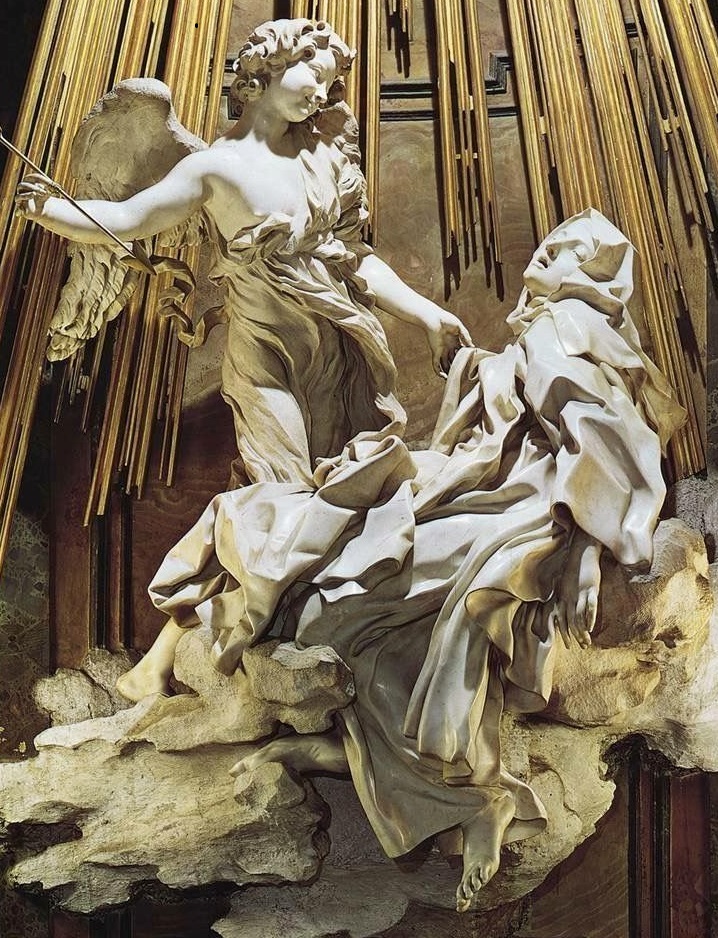
Gianlorenzo Bernini, Ecstasy of St. Teresa, 1647-1652. Cornaro Chapel, Santa Maria della Vittoria, Rome.

Bernini depicts the Carmelite nun Teresa of Ávila in the midst of one her mystic visions. Teresa described a vision of an angel who thrust an arrow into her heart that left her “all on fire with a great love of God.” The pain she experienced during this vision “was so great, that it made me utter several moans; and yet so surpassing was the sweetness of this excessive pain, that I could not wish to be rid of it, nor is my soul then content with anything but God.” Teresa describes her experience in corporeal, sensual, and even sexual terms, and Bernini’s sculpture follows suit.

Teresa’s body is swathed in heavy drapery that seems to writhe and swirl, seeming to engulf her in voluminous folds. Yet, her body is feather light; the angel lifts her up with no effort at all. Teresa’s head is thrown back, her eyes half closed, her mouth slightly open. A delicate hand emerges from beneath her habit and a tantalizing foot slips into view as her body surrenders to exquisite pain. Bernini has rendered spiritual ecstasy as physical ecstasy, and is thereby employing lived, corporeal experience in order to communicate a spiritual experience that few of his beholders would have had.

Far from being hidden behind high cloister walls and heavy habits, nuns’ bodies were highly visibly and meaningful. Their inviolate hymens testified to a spiritual purity and religious devotion that they could confer upon the communities where they lived. Depicted in altarpieces, sculptures and smaller devotional paintings, nuns’ beautiful bodies testified to their virtue and served as role models for other women, promising a beauty of soul that would outshine the beauty of the body. At the same time, their union with Christ was often described in sensual terms, especially by female mystics. They experienced God as a corporeal, bodily presence, and thus images of nuns often depicted ecstatic spiritual experience as a physical pleasure.

Next week we’ll leave Europe behind and take a look at the architectural patronage of Muslim women during the early modern period. You thought only men had the wealth and clout to build big? Women throughout the Muslim world ensured that their names and legacies would be honored by erecting religious, funereal and charitable institutions.

For more on nuns, sensuality and mystic marriage, see: Giancarla Periti, In the Courts of Religious Ladies: Art, Vision, and Pleasure in Italian Renaissance Convents (Yale University Press, 2016); Marcia B. Hall and Tracy E. Cooper (eds.), The Sensuous in the Counter-Reformation Church (Cambridge University Press, 2013); Carolyn Diskant Muir, Saintly Brides and Bridegrooms: The Mystic Marriage in Northern Renaissance Art (Harvey Miller: 2012).
Women on Top

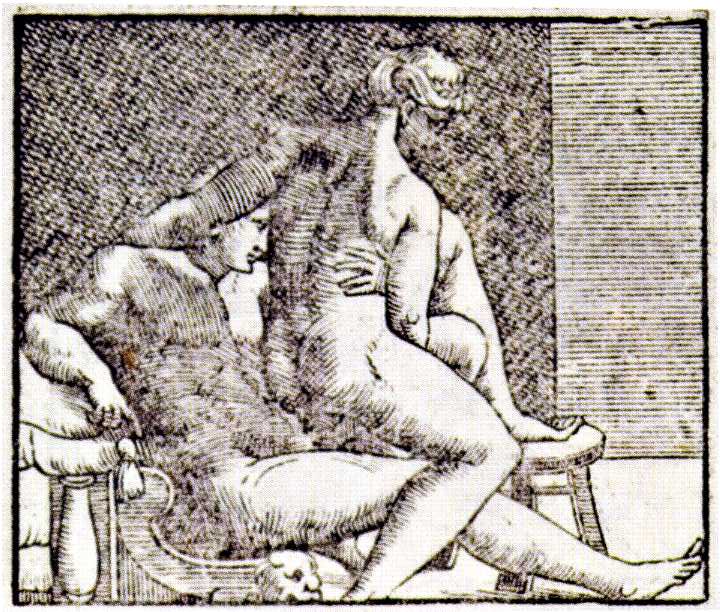
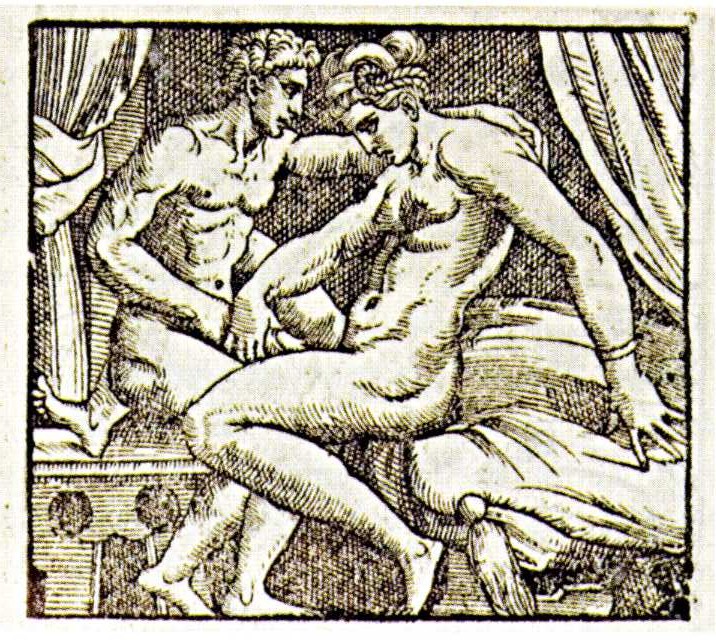
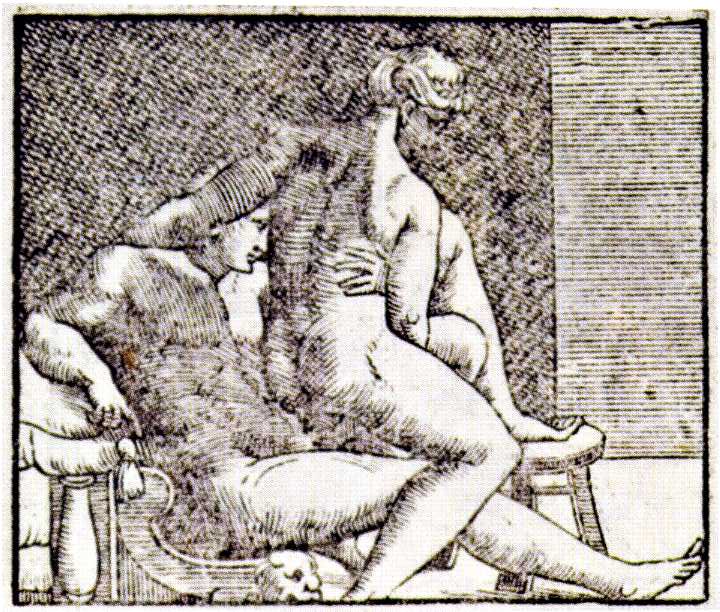
Position 10, from the so-called Toscanini Volume, ca. 1555-1560. After I Modi by Giulio Romano and Marcantonio Raimondi.

In my last post I examined the connections between technology and erotica and emerging discourses of art and pornography through the creation of the Modi, a series of racy prints. I argued that early modern conceptions of art were closely tied to the (male) artist’s ability to depict a beautiful, nude female body. In such a formulation, women were objects either of artistic production or the viewer’s gaze. Today I’d like to suggest that objectification was not the only way in which women might have experienced the Modi. In fact, in both their visual and textual content the series opened up spaces for women’s active participation and pleasure in sexual intercourse.

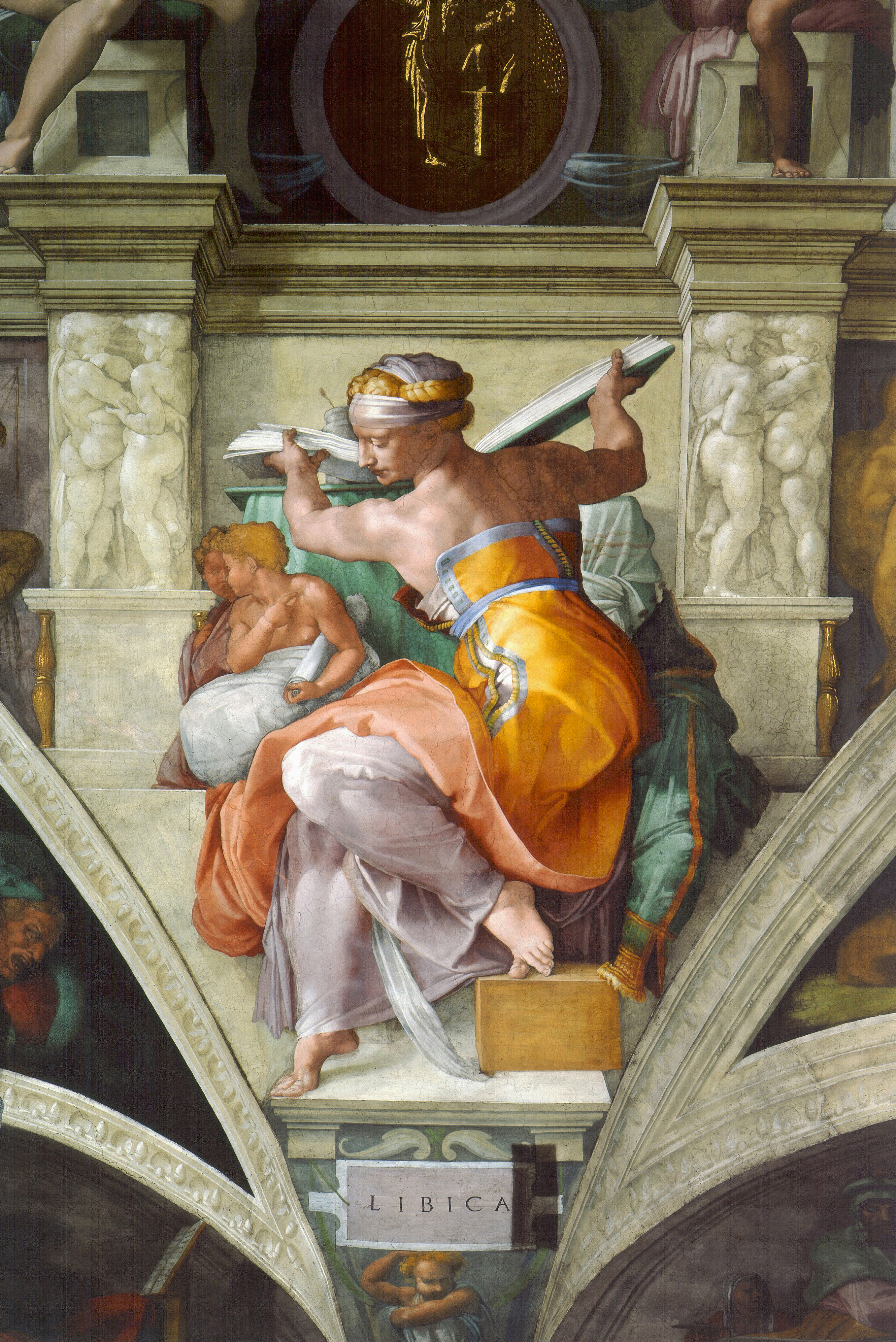
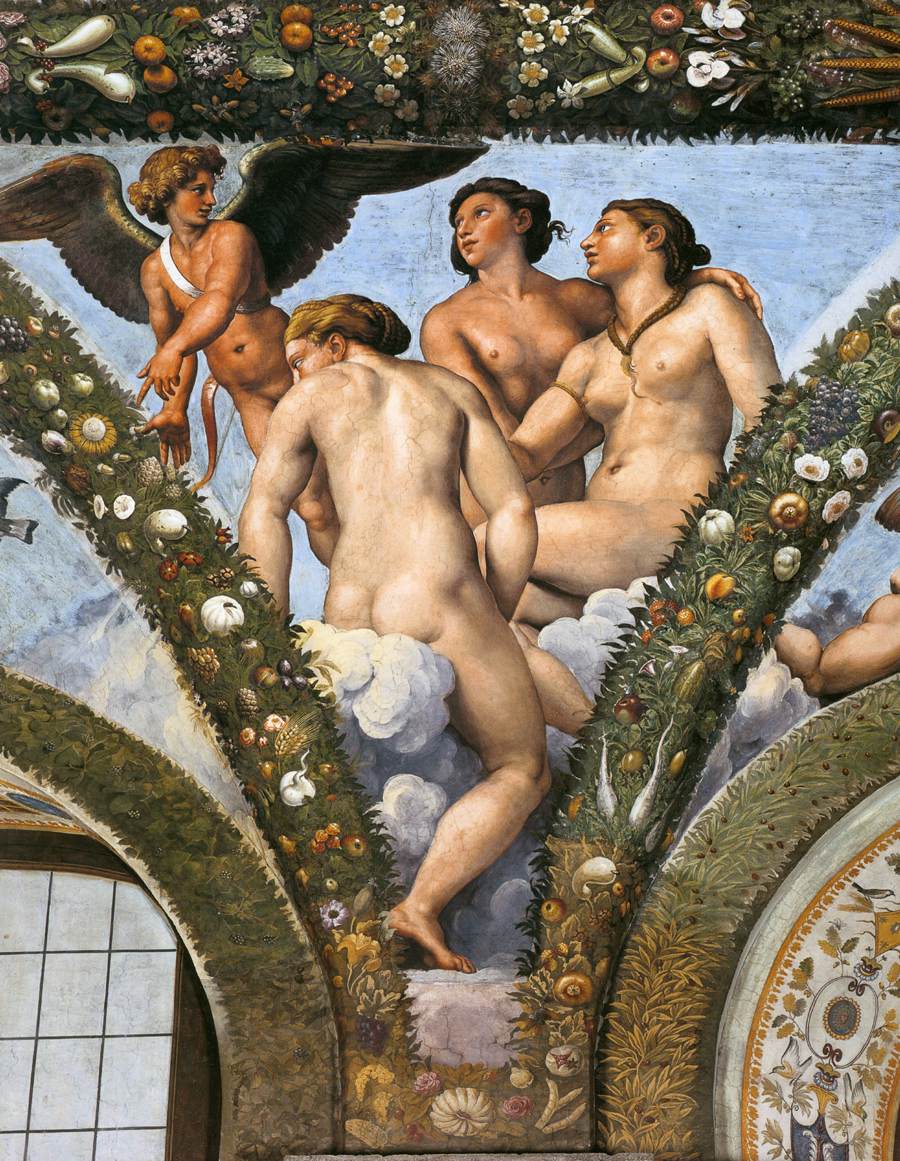
The image above is a case in point. Here, a woman sits atop her male partner in what we might today call a reverse cowgirl position. The couple is a graceful tangle of limbs and twisted bodies, allowing us both frontal and rear views of the sex act. The precariously balanced woman reaches between her legs, guiding her partner’s penis to its proper place. The relatively low quality of this woodcut copy might obscure that fact that the composition is realized in high Renaissance style. The couple have idealized and toned physiques; and their straight noses, long, slender limbs and hairstyles are all based upon ancient Roman and Greek types, as is the furniture in the room. The interwoven body parts of the pair and slight torsion of the female figure are also reminiscent of the latest developments in Rome, including Raphael’s work at the Villa Chigi (below left) and Michelangelo’s frescoes for the Sistine Chapel ceiling (below right).

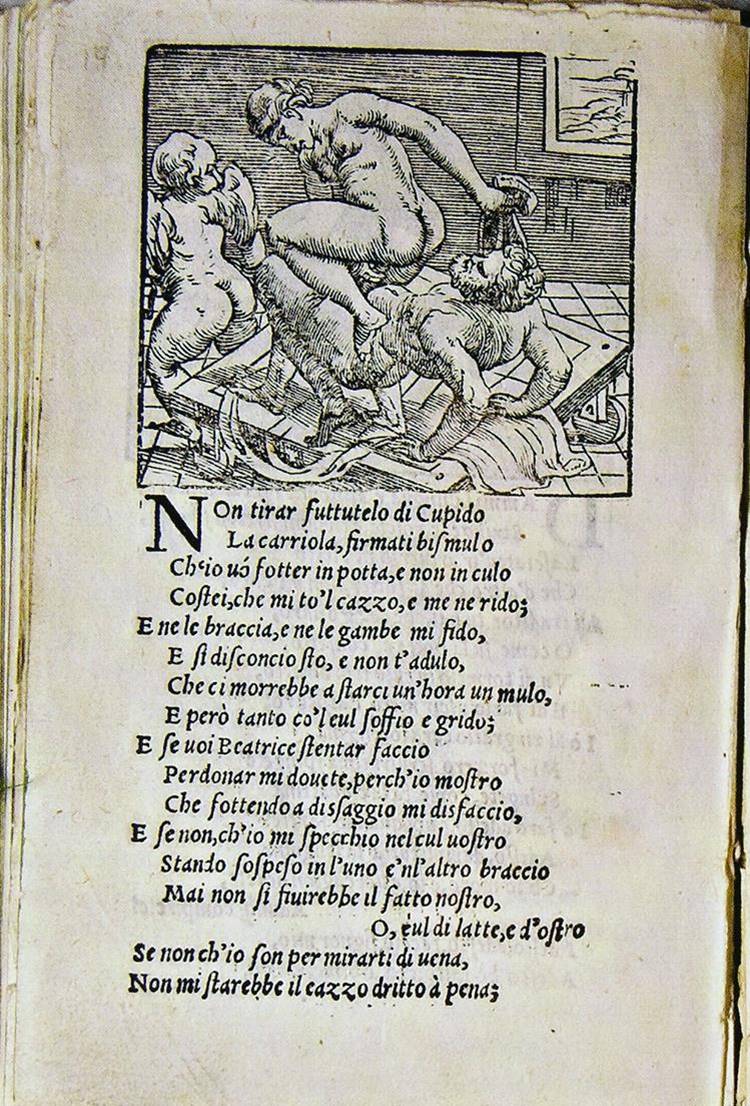
Coupled with each of the images in this woodcut edition of the Modi are sonnets written by Pietro Aretino, who is perhaps best known for his lascivious poetry, books and plays. Like the printed images, the form of the sonnet is decidedly high brow. But in his Sonetti lussuriosi (Licentious Sonnets) Aretino’s word choice is purposefully coarse and vulgar: words like cazzo (dick), potta (pussy) and cul or culo (usually ass, but also pussy or perhaps snatch) feature in nearly every poem. I often read these sonnets aloud to my students, and even I, serious scholar that I am, struggle not to giggle at the titillating language.

What’s interesting here, though, it that women are often the primary speakers, exhorting their partners to take and give pleasure. The tenth sonnet, that which accompanies the image above, begins, “You’ll pardon me, I want it up my ass.” The male partner protests that such a position is sinful. She explains that while the two could have sex in potta “it’s far more agreeable to have a cock in behind that in front.” As her partner joins in by eagerly acceding to her wishes, she further commands “push it from the side, over more, down farther, there.” In other sonnets women describe orgasm, request specific positions or actions, and generally describe their affection for the male member.

Perhaps it goes without saying that few other visual or textual representations from this period show women in such an active sexual role. Church authorities dictated that couples assume the “missionary position.” Nor do Renaissance depictions focus on sexual pleasure as the primary goal of intercourse. Believing that both men and women contributed “seed,” some medical treatises recommended that couples seeking to conceive achieve both male and female orgasm. The role of orgasm was procreative in such texts. While Renaissance satiric poetry and literature described the pleasures of sexual intercourse, meaning was sometimes veiled by the use of fruits or flowers as stand-ins for sensual delight.

What is remarkable about the Modi and the accompanying Sonetti lussuriosi is the leading role they give to female partners. The sonnets do uphold masculine superiority, for the women almost universally declare their desire for, and even reliance upon, the male cazzo. Women are thus placed in a dependent position. At the same time, men often place themselves under the command of their female partners, or declare their dependence upon the female body. In Sonnet 14 (left) the man speaks a brief ode to his partner’s rump: “O, ass of milk white, and iridescent oyster, if I weren’t looking at you with such pleasure, my cock wouldn’t hold up worth a measure.” We know that women purchased copies like the one above, for a sixteenth-century French book-seller complained of all the ladies who flooded his shop looking for the lascivious images and poems.

Together, the Modi and the Sonetti created a discourse in which women could direct their sexual experiences, either by physical manipulation or by asking for specific positions or actions. While it’s hard to gauge what impact the Modi had the sexual practices of actual couples, I do think that the prints opened a space in which women could acknowledge pleasure and partners could discuss their sexual preferences. While some men might have seen women on top as threatening to social order, the success of the Modi suggests that many men and women were interested in exploring alternatives in the realm of fantasy if not in the realm of flesh.

The past few weeks have been pretty racy, and it is literally getting hot down here (a high of 95 in Tulsa today, with 100 degrees or more forecast over the weekend). Time to cool things down. Next week we’ll look at Renaissance nuns and the art that they produced.

Translations from the Modi above are based upon those in Appendix B of Bette Talvacchia’s Taking Positions: On the Erotic in Renaissance Culture (Princeton University Press, 1999. Out of print.). I have made slight changes to the translation of Sonnet 10. The Modi and the Sonetti lussuriosi have also been discussed at length in a series of publications by James Grantham Turner, including his recent book Eros Visible (Yale University Press, 2017).

Erotic Technologies

Printing, Piracy and Porn

Attributed to Agostino Veneziano, after Marcantonio Raimondi and Giulio Romano, Nine Fragments from I modi, before 1531. Pieces cut from seven engravings. London: The British Museum.

New technologies have played an active role in the form and dissemination of modern pornography. In the 19th century photography allowed for the production of supposedly ‘real’ images. Advances in media technologies such as color printing and moving pictures similarly facilitated the spread of erotic imagery. The advent of streaming video in the early 21st century changed the pornography industry as we know it, making the material more accessible and interactive, while also obscuring the relationships between sex, money and exploitation. Technology also played a key role in the birth of erotica in the sixteenth century.

As I’ve written before, the concept of pornography did not exist during the period commonly known as the Renaissance (c. 1300-1580 for art historians). Yet, it is precisely during this time that we begin to see something akin to modern pornography: mass-produced content aimed at sexual stimulation with a side of social taboo. And, it should come as no surprise that the production of such content was facilitated by a new technology: the printing press.

Movable type existed in what are today South Korea and China as early as the 9th century, and woodblock prints were made throughout the medieval world in Africa, Asia and Europe. But the printing press wasn’t born until around 1450 when it was invented by Johannes Gutenberg. The printing press enabled writers and artists to quickly and (somewhat) more cheaply produce and sell their work. It also facilitated a process known as engraving, whereby the print-maker uses a burin to create lines on the surface of a copper plate. In contrast to woodblock printing, which relies on a subtractive process, engraving allows for a greater range of tones and textures in the finished print. In terms of rendering flesh, engraving allowed artists like Marcantonio Raimondi to create voluptuous folds, muscles gleaming with the sheen of sweat, and light and shadow that could conceal or reveal parts of the body.

Marcantonio Raimond, after Raphael, The Judgement of Paris, c. 1510-1520. Engraving. The Metropolitan Museum of Art.

In the early 1520s Raimondi and the artist Giulio Romano collaborated on a project known as I modi (‘the ways’ or ‘the positions’). Giulio Romano, Raphael’s star pupil and heir, had taken over part of his master’s workshop, which included a fruitful partnership with the engraver Marcantonio Raimondi. Raphael had an early appreciation of print’s ability to facilitate the spread of his compositions (and his fame) throughout Europe, and routinely provided Raimondi with drawings and designs. The Raphael-Raimondi partnership included the production of many male and female nudes, often based on Greek and Roman mythology. In The Judgement of Paris (above), Marcantonio’s controlled, fine lines give form to bare flesh, creating sculpted male muscles and remarkably buoyant female breasts.

But the prints engraved by Raimondi after Giulio Romano’s designs were quite another thing. Explicit, licentious, and fully human, the Modi quickly stirred the passions of Renaissance viewers.

Unknown engraver, after Marcantonio Raimondi, reversed copy of Position 2. Engraving. Vienna, Albertina.

Not all of those passions were erotic. The Catholic Church moved quickly to suppress I modi. Giulio Romano had already left Rome to take up a position in Mantua, but Marcantonio was jailed for his role in the production and sale of the prints. These were not the first, or even the most lewd, images produced in Renaissance Italy, and it seems that all involved were quite shocked at the speed and severity of the negative response. So, why the Modi? Firstly, the use of print played a large role. Unlike earlier drawings, paintings or sculptures, print was meant to be replicated and sold to a large audience. And that audience could not be regulated by the Church, or even by the artists who produced the work. Erotica was no longer restricted to a small audience of elite men. Now working class men, foreigners and even women could purchase these images. It probably didn’t help that the prints were produced in Rome, the seat of the Catholic Church, and that many of the series’ earliest clients were likely churchmen.

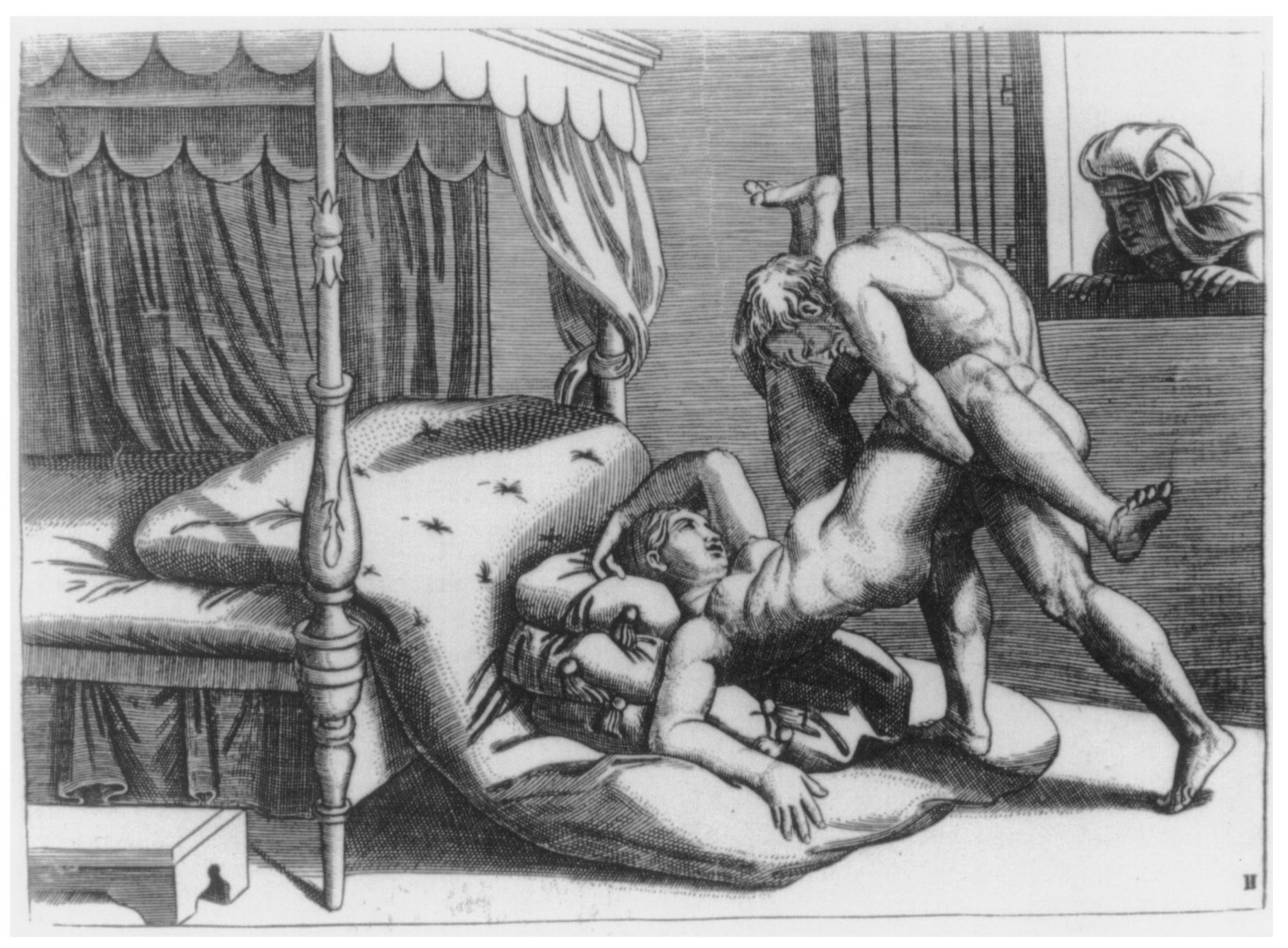
And, contrary to previous erotica, the Modi do not purport to depict gods, goddesses or historical figures. Instead, we see mere mortals engaged in (and enjoying) sex. These acts do not lead to the birth of gods or kings. They lead only to physical pleasure. The prints flagrantly flout sexual mores by eschewing the Church-approved ‘missionary position’ in favor of a series of acrobatic postures. They also depict women as active, even eager, partners. In this woodcut copy of to the left the woman reaches out, guiding her partner toward coitus.

A few original prints survive in fragments, but most of what we know about the prints comes from copies, appropriations and downright theft. And this brings me back to the modern pornography industry. Piracy is one of the primary ways that current porn tube sites generate profit, a practice made even easier by streaming video capabilities. The printing press also led to piracy: the first case of copyright infringement was brought by Albrecht Dürer against our very own Marcantonio Raimondi.

On the left we have Dürer’s Anna and Joachim at the Golden Gate (1504); on the right is Raimondi’s copy of several years later. The sticking point seems to have been Raimondi’s use of Dürer’s AD monogram, visible on a tablet in the lower left of each print. Compositions could be easily copied by oiling or pricking an original print or drawing, and then transferring it to a copper plate. All the engraver needed to do was follow the lines or dots produced during the transfer, and, voila – a perfect copy.

I’m not saying that the Modi should be categorized as pornography, especially since the word didn’t exist in the 16th century. But, a lot of scholarly ink has been spilled in order to demonstrate that the Modi were art, despite the fact that modern conceptions of art didn’t exist at this time either. When Giorgio Vasari, the great-great grandfather of modern art history, wrote his collection of artistic biographies in 1550 he called it The Lives of the Most Excellent Painters, Sculptors and Architects, not, as it is sometimes mistranslated, The Lives of the Artists. Vasari was describing practices and works that would later be recognized as Art, but that were mostly categorized by use and medium during the Renaissance.

I modi are not easily labeled precisely because they are the product of a radically new technology, and thus the germs of what would become new ways of thinking about images. They are not pornography or art, but they are the precursors of both. The concept of art, as it developed during the Renaissance, involved the skillful rendering of nude flesh along with varied, appealing compositions that nodded toward Greek and Roman antiquity. The rendering of a beautiful female nude was synonymous with artistic ability. Erotica and nudity, especially female nudity, are caught up in the idea of what art is.

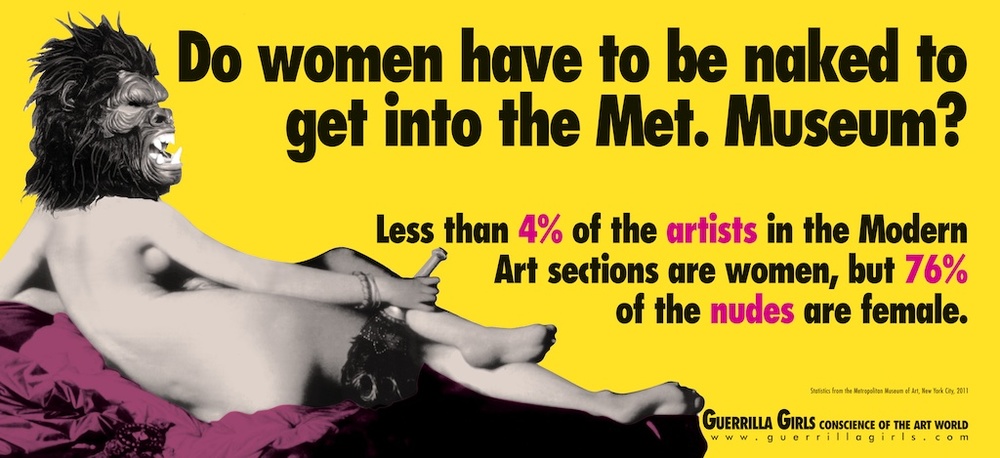
Guerrilla Girls, Do Women Have to Be Naked to Get into the Met. Museum? 2012. https://www.guerrillagirls.com/naked-through-the-ages

It is, thus, not surprising that one can still find more nude women hanging on the walls of the Metropolitan Museum of Art than works of art by women artists. I don’t think we can change the way in which women and their bodies are represented until we acknowledge and work through the very definition of what qualifies as art.

Like the Modi? I’m not done yet. This week focused on ideas of technology and nudity, with some not so nice consequences for representations of women. Next week I’ll investigate ways in which the Modi might have been experienced and used by women in more productive ways.

For more on I modi and pornography, see: Bette Talvacchia, Taking Positions: On the Erotic in Renaissance Culture (Princeton University Press, 1999); James Grantham Turner, Eros Visible: Art, Sexuality and Antiquity in Renaissance Italy (Yale University Press, 2017); Shirra Turrant, The Pornography Industry (Oxford University Press, 2016).

The Enchantress of Art History

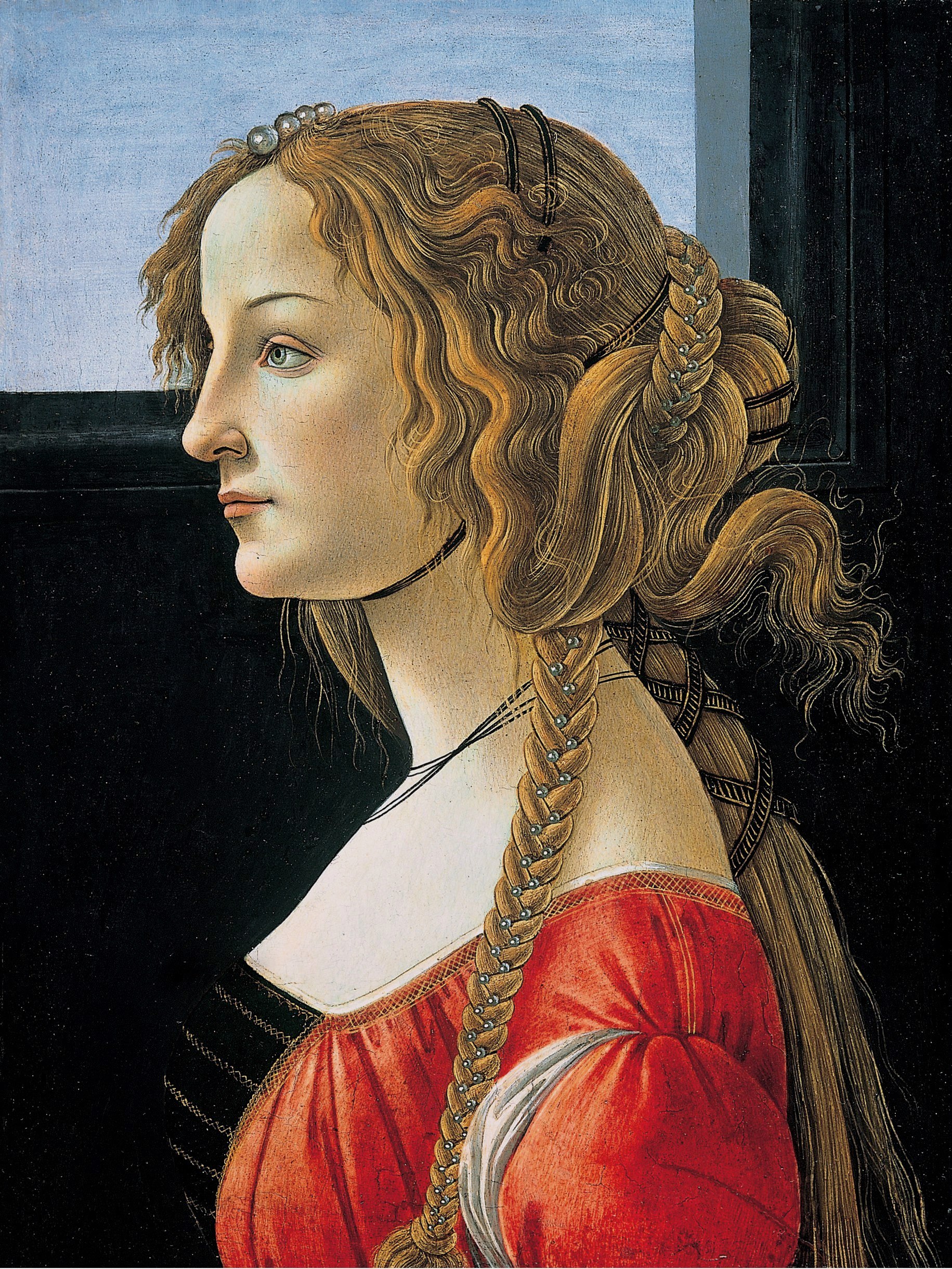
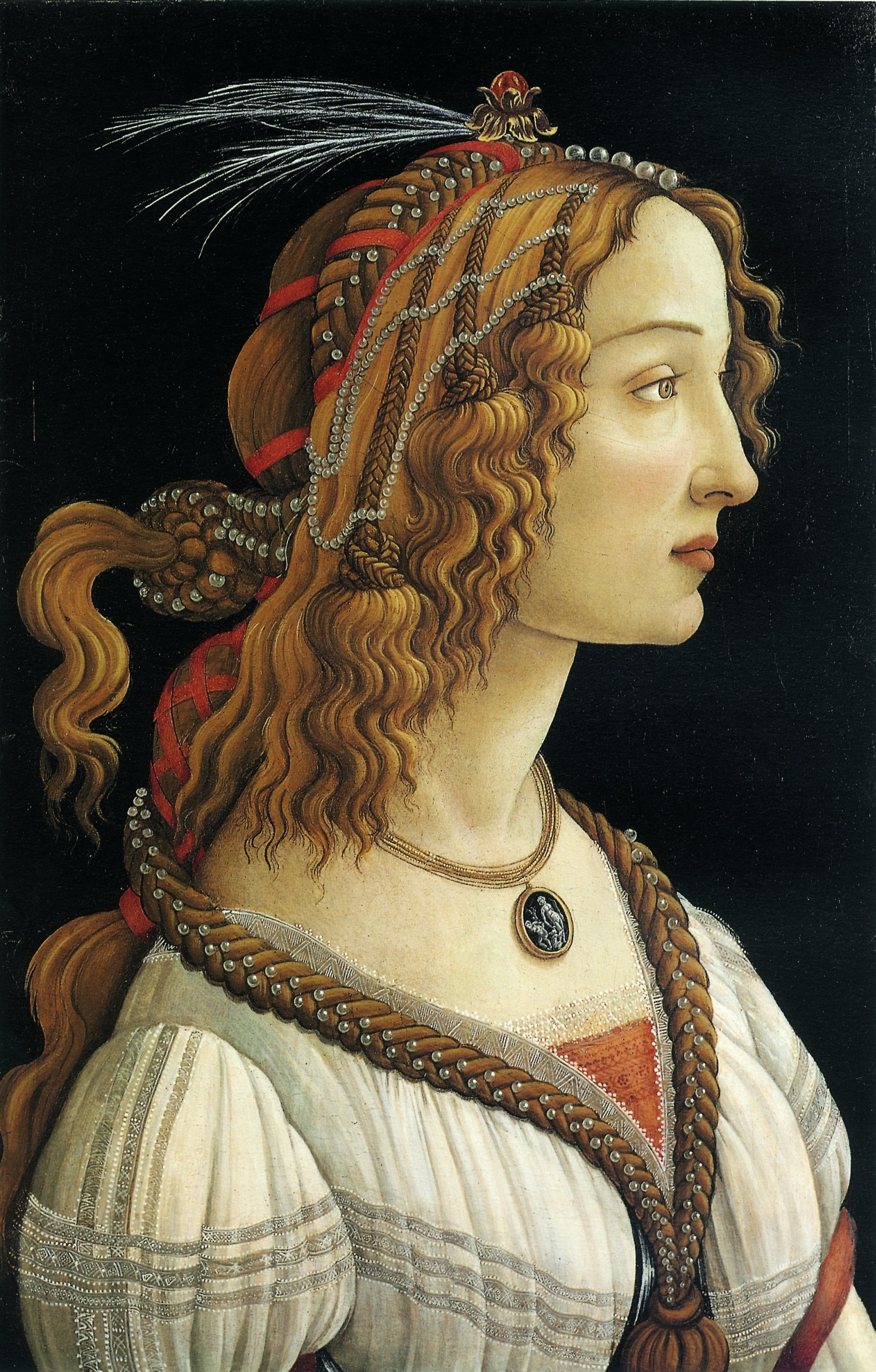
Sandro Botticelli, Portrait of a Lady, c. 1475-1485. Gemäldegalerie, Berlin

Who was Simonetta Vespucci? Why does she continue to beguile us?

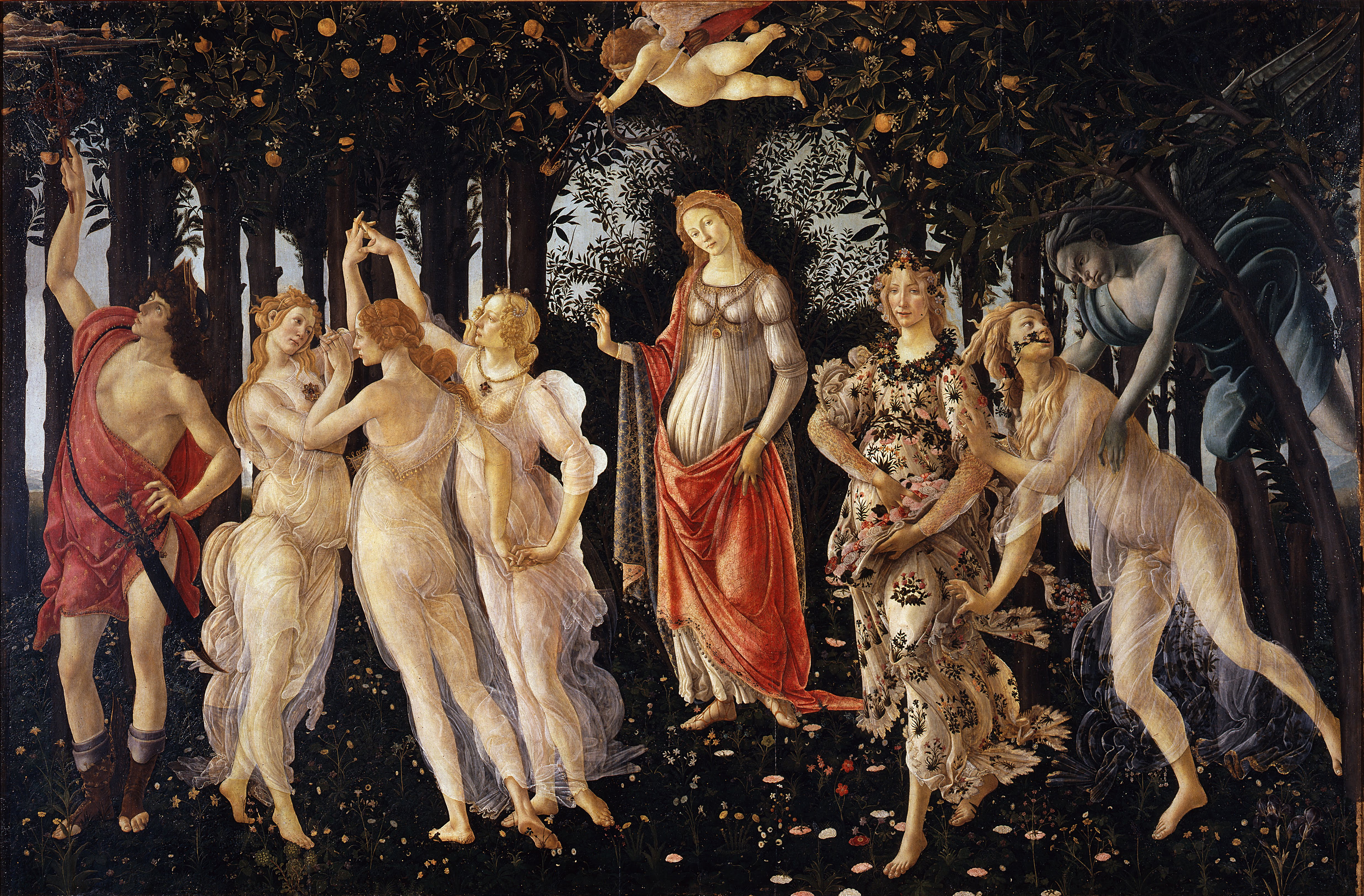
In 1469 a sixteen-year-old girl named Simonetta Cattaneo married Marco Vespucci. Her beauty earned her a host of admirers, including Lorenzo and Giuliano de’ Medici. These men wrote her poetry, fought in jousts to win her favor, and watched as she performed as a nymph in courtly entertainments. 550 years later the idea of Simonetta and her storied beauty still fascinates historians and museum-goers. She has been proposed as the model for Botticelli’s Birth of Venus and Primavera, as well as portraits by Sandro Botticelli, Piero di Cosimo and Andrea del Verrocchio, and has been woven into historical fiction, including Salman Rushdie’s The Enchantress of Florence (2008) and the most recent season of Medici: The Magnificent on Netflix (2018).

Do any of these images actually depict Simonetta? If not, who are they? Whose history are we telling? To begin, let us visually compare a few of the images said to depict Simonetta:

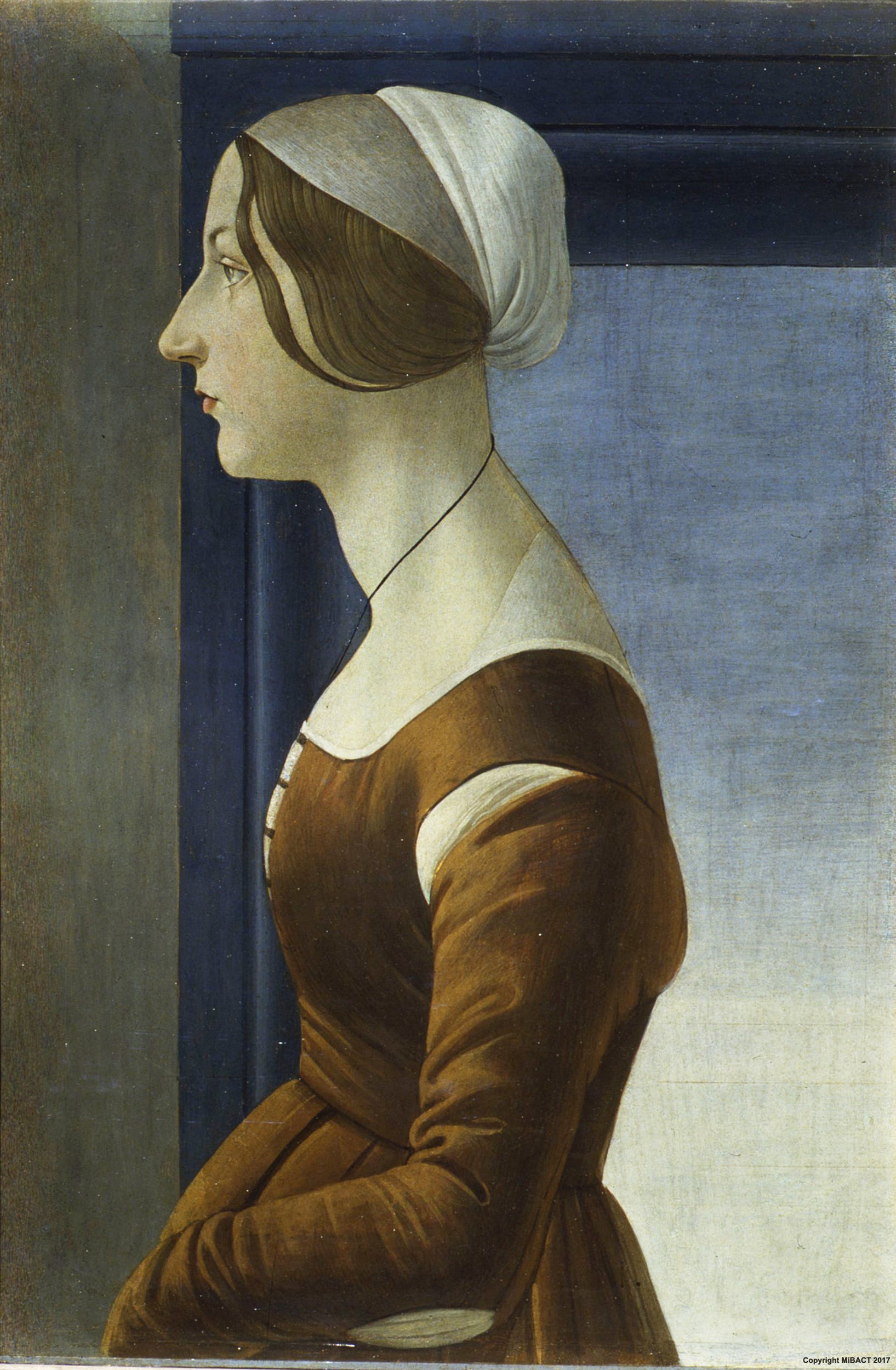
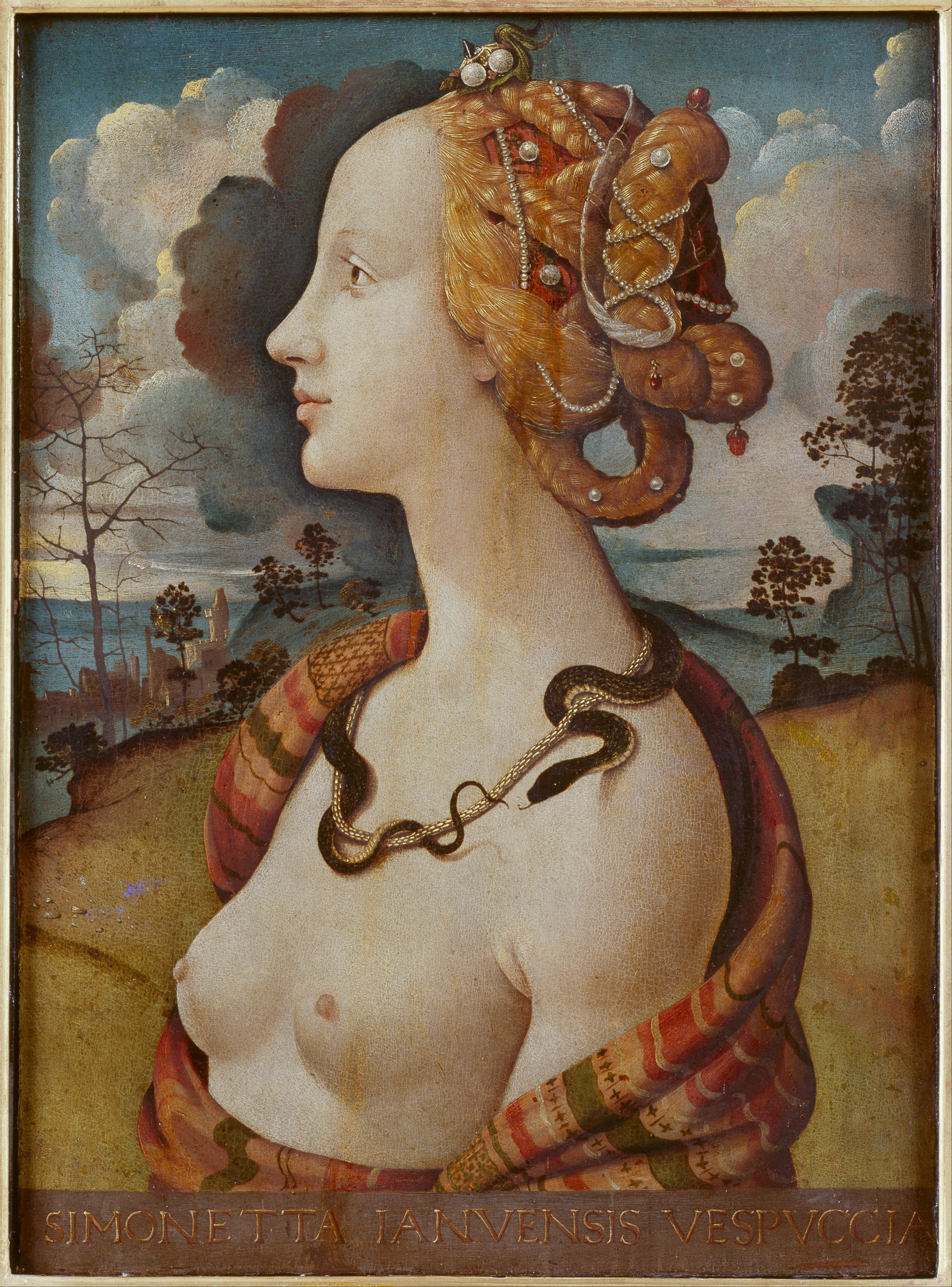
Beyond marble-white skin, an impossibly long neck, a high forehead and a pointed, slightly jutting chin, there’s not much that unites these images. In Botticelli’s Pitti portrait, the Uffizi Birth of Venus and Piero di Cosimo’s painting, the women appear to have oval faces, while in the Botticelli paintings from Frankfurt and Berlin and the Verrocchio bust, the faces of the sitters appear more square. Noses, hair style, and even hair color differ across the images, as do the dress (or undress) of the women.

To complicate matters further, Simonetta Vespucci died in 1476, before most of the images said to depict her were made. Though posthumous portraits of women were created in the Renaissance, they tended to be based upon earlier portraits or death masks. The inscription on Piero’s painting, SIMONETTA IANVENSIS VESPUCCIA, was added in the late sixteenth century, about one hundred years after it was painted. Associations between Venus and Simonetta didn’t surface until the nineteenth century. So why have museums, art historians and a host of bloggers identified these and other images as portraits of la bella Simonetta?

Firstly, I think we want to know who these captivating, often surprising images depict. The fantastic hair style comprised of coiled braids, pearled hairnets, and flowing locks of blond hair is unusual in Renaissance portraiture, as is the inclusion of the sitter’s hands, a feature we see in the Verrochio sculpture. Nudity is virtually unknown in female portraiture of this period. Simonetta seems to fit the bill. She, too, was captivating. Her extraordinary beauty would lend itself to such idealized (and impossible) imagining. She died young, a fact that is said to explain the wistful quality of some of the paintings. Most of the images are connected to the Medici family, and both Lorenzo and Giuliano were infatuated with her.

Secondly, it makes a good story. In our era of click-bait, what will bring in more web traffic: an image of an unknown woman, or a portrait of Simonetta Vespucci, fabled beauty of Renaissance Florence? The average person spends 27 seconds in front of a work of art. What is more likely to hold a viewer’s attention: a discourse about ideal beauty and the objectification of the female body, or a story about Simonetta’s affair with Giuliano de’ Medici and her role as muse to Botticelli?

Yet, there is no evidence that Simonetta appears in any of these images. In 2008 art historian Ross Brooke Ettle published a document that mentions a single image of Simonetta present in the Vespucci household several years after her death. Yet, as Ettle herself acknowledges, that image may have been a death mask, a portrait medal or cameo, or a painted work that no longer exists.

To be fair, there is a scholarly tradition that examines these and other images of unknown women as “ideal beauties.” In this analysis, idealized representations of women might import moral lessons about the fleetingness of outer beauty, attest to the painter’s ability to stop time by preserving that beauty, prompt intellectual discussions of Renaissance and ancient poetry and philosophy, or provoke a more corporeal and sensual response.

What I find interesting is our need to label, our urge to make sense of these paintings as either portraits of a specific person whom we can identify, or images that were only ever intended to depict an unreachable ideal. The amount of ink spilled in an attempt to identify the sitters in Renaissance portraits is immense. We come to know these paintings by connecting them with histories that we already recognize.

Of course, most of the unknown sitters are women.

Portraits of men are far more likely to have a name attached to them, either as an inscription left by the artist, or through recognizable facial or iconographical features. Even paintings that contain portrait-like specificity, such as the bump on the nose of the lady to the right, tend to be identified simply as Portrait of a Lady. While the lady’s relatives would likely have recognized her, no care was taken to ensure that her identity would be known to posterity, a fact which suggests the interchangeability of women, in the 15th century and beyond.

I remain unconvinced by the Simonetta hypothesis. The body of images is simply too diverse to refer to a single person. In addition, many of the representation are highly idealized, and even stylized: all of the women in Botticelli’s Primavera have pointed chins, strong noses and jawlines, perfectly arched brows, and ghostly pale skin. Their limbs, necks and fingers are incredibly long in a way that gives Barbie a run for her money. At the same time, demoting the women in the (seeming) portraits to mere ideals also leaves me unsatisfied. In the latter analysis the women are objects cooked up by male fantasy in order to feed male ego.

I have to wonder what Renaissance women made of these images. Did they see aunt Simonetta in the Frankfurt painting or daughter Ginevra in the Bargello bust? Were they silent as their male relatives wove poems, philosophies and myths around the images? Did they seek to model themselves after the ideal beauties represented on the walls around them? Could women have seen these paintings as a kind of license to explore and even deploy their own sexuality?

I don’t have the answers (yet), but I think these are questions that need to be asked. I also think we need to consider the life of the object. As the inscription on Piero di Cosimo’s painting demonstrates, the meaning and significance of these images changed over time, and depended upon who was doing the looking and the interpreting. Rather than seeing these enigmatic paintings as either images of (in)famous women or paintings of ideal beauties with no identity of their own, I think we need to examine them as both, neither and more than. Our present culture may reward click-bait, but Renaissance works of art reward sustained looking, continual questioning and the embrace of ambiguity.

Next week we’ll take a look at the role of a new technology, the printing press, in Renaissance erotica, focusing on a series of racy prints known as I Modi, or The Positions.

Want to know more about the works of art in this blog and how art historians have interpreted them? Check out: Ross Brooke Ettle, “The Venus Dilemma: Notes on Botticelli and Simonetta Cattaneo Vespucci,” Source: Notes in the History of Art 27 (Summer 2008): 3-10; Alison Luchs, “Verrocchio and the Bust of Albiera degli Albizzi: Portraits, Poetry and Commemoration,” Artibus et Historiae 33 (2012): 75-97; Edward J. Olszewski, “Piero di Cosimo’s Lady Fiammetta,” Source: Notes in the History of Art 21 (Winter, 2002): 6-12. See also the essays in Ana Debenedetti and Caroline Elam (eds.), Botticelli Past and Present (UCL Press, 2019), available for free download here.

There’s Something About Mary

Workshop of Rogier van der Weyden, Virgin and Child, c. 1460. Art Institute of Chicago.

Why were Renaissance Europeans so obsessed with the Virgin Mary’s breasts?

If you know anyone with an infant, you may be aware of current debates surrounding breastfeeding in public. Breast feeding was also a major preoccupation of Renaissance artists and viewers. Publicly visible in churches and found in many homes, images of the Virgin’s breast abounded in Europe from the 13th through the 15th centuries.

The type, known to art historians as the Madonna lactans, depicts the Virgin exposing one breast and proffering it to the Christ-child, often squeezing it gently between two fingers. In the painting above, a clearly delighted infant reaches toward his mother’s breast, and his mouth upturned and crinkled eyes demonstrate his delight at the meal that awaits him. This and other images of the nursing Virgin produced and reinforced Renaissance concepts of motherhood and the female body by ascribing them to the ideal woman, the Virgin Mary.

Now, if we think about medieval and early modern Catholicism, the prevalence of the Madonna lactans might start to make sense. As today, Renaissance Catholics believed that during the mass the bread and wine were transubstantiated into the flesh and blood of Christ. This change had first been enacted during the Last Supper, when Jesus offered his body and blood to the Apostles as part of his promise of ever-lasting life. In both religious and medical traditions, blood was literally the stuff of life. And in this period, physicians and philosophers believed that women’s breast milk was composed of unshed menstrual blood. This explained why women didn’t menstruate during lactation, and provided images of the breast-feeding Virgin with a powerful religious significance.

These tender paintings of mother and child depict a idealized fiction. Even though Renaissance medical authorities often urged mothers to breastfeed, many women did not nurse their own infants.

Before the advent of reliable infant formula, families often employed wet nurses, women who were paid to breast-feed children. Wet nurses became something of a status symbol, meaning that elite as well as middle-class families engaged in the practice. Attempting to fashion patrician roots, Michelangelo proudly boasted that he had been fed by a wet nurse. Believing that the fetid city air could cause illness, families often chose wet nurses who lived in the countryside. Well-to-do infants thus lived away from their parents for the first two years of their lives. Mary’s proffered breast not only held the Virgin up as a paragon of motherhood; the paintings also allowed Renaissance mothers to experience a touching closeness to their absent infants.

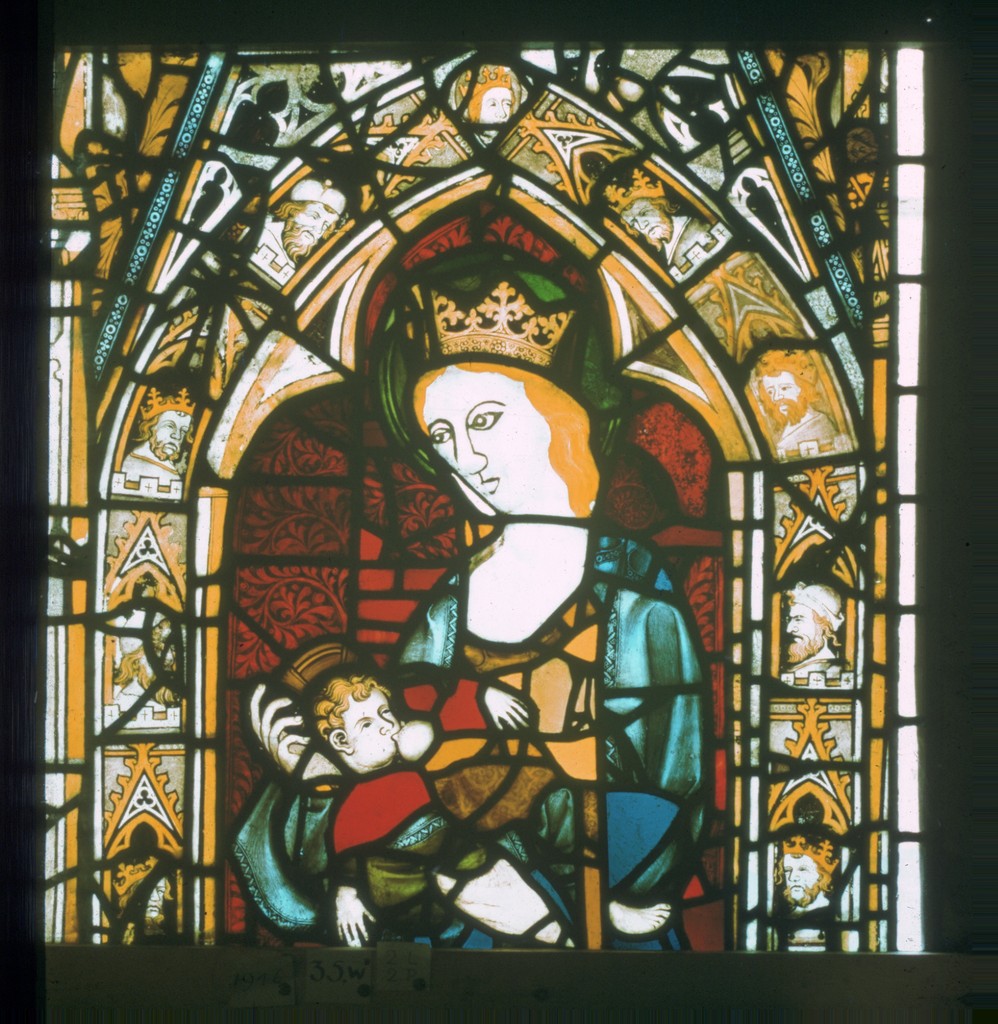
Part of the current debate around public breastfeeding seems to be the perceived eroticism of bared breasts. Renaissance artists guarded against similar criticisms by de-naturalizing the Virgin’s breast. In a 14th-century stained glass window from York Minster Cathedral, Mary’s breast pops neatly out of her tunic and is located close to her navel (left). Round and apple-like, the Virgin’s bare breast often appears to sit on her collar bone, as in the the 12th-century mosaic from Santa Maria in Trastevere, located in Rome (center). Mary might also appear to have only one perfect, plumply rounded breast sitting close to her sternum. In a painting by Joos van Cleve, the Madonna’s engorged breast sprouts from the center of her body (right); no accompanying protuberance is visible underneath her tunic.

What I find interesting about these images is the way that they graft Renaissance concepts of motherhood and female sanctity onto the body of the Virgin. Mary served as a role model and ideal for women, especially mothers. Yet, like any ideal figure, Mary’s spiritual and earthly perfection could not be attained by actual women. Concerns about the care of infants and the role of mothers in feeding and nurturing their children merged with medical concepts of breast milk and the religious import of blood, crystallizing into an impossible image of a one-breasted Mary tenderly feeding her plump and healthy infant.

While the Virgin Mary no longer serves as a ideal, a host of television and movie stars have stepped in to fill the void. Images of women with perfect hair and makeup nursing docile infants grace magazine covers and flood social media platforms. To be clear, I think breast-feeding is great for those women who can make it work, and I fully endorse initiatives to support breast-feeding moms. But, in a strange historical flip-flop, nursing your own child is now a status symbol, and has been shown to be closely linked to class. Wet-nursing has even re-appeared in modern form: lactating mothers can sell their milk as part of the 21st-century gig economy. One thing that has remained constant is the way that we manifest anxieties about motherhood by projecting them onto idealized and unattainable female bodies, whether those are the Virgin Mary’s or Gisele Bündchen’s.

Like this post? Want to know more about Renaissance gender and sexuality? Follow this blog! Next week, we’ll take a look at Simonetta Vespucci, a Florentine noblewoman famed for her beauty, who has recently appeared as a character in the second season of the Netflix series “Medici.”

For more on the Virgin Mary, her breasts, and Renaissance wet nurses, see: Margaret Miles, A Complex Delight: The Secularization of the Breast, 1350-1750 (University of California Press, 2008); Jutta Sperling (editor), Medieval and Renaissance Lactations: Images, Rhetorics, Practices (Ashgate, 2013).

Sexual Healing

Maolica drug jar with a winged phallus, mid-16th century, Emilia-Romagna.

Before the advent of the little blue pill, Renaissance men and women turned to apothecaries and folklore in order to attain sexual satisfaction.

The ceramic drug jar above depicts a phallus complete with testicle haunches, bird’s feet and wings, a rabbit’s ears and face, and sporting a bell around its neck. This jar is one of several surviving examples of phallic maiolica related to Renaissance health and virility, and, like the current popularity of Viagra and associated products, poses questions about human health and sexuality.

Following ancient authorities such as Aristotle, Galen and Avicenna, Renaissance physicians believed that male bodies were warm and dry, while female bodies were cold and moist. The superior heat of the male body lead to, among other things, the extrusion of facial hair and reproductive organs, making men active and erect. Women’s frigidity caused both sexual and social passivity, and meant that they needed regular doses of male fluids to maintain a healthy balance. Women who did not have intercourse regularly might become too dry, giving rise to the stereotype of the dried up old crone. At the same time, if men had sex too frequently, they might be drained of their vital fluids and thus become ill. In his Lives of the Artists (1568) Giorgio Vasari claimed that Raphael died from a fever brought on after he indulged “beyond measure in the pleasures of love.”

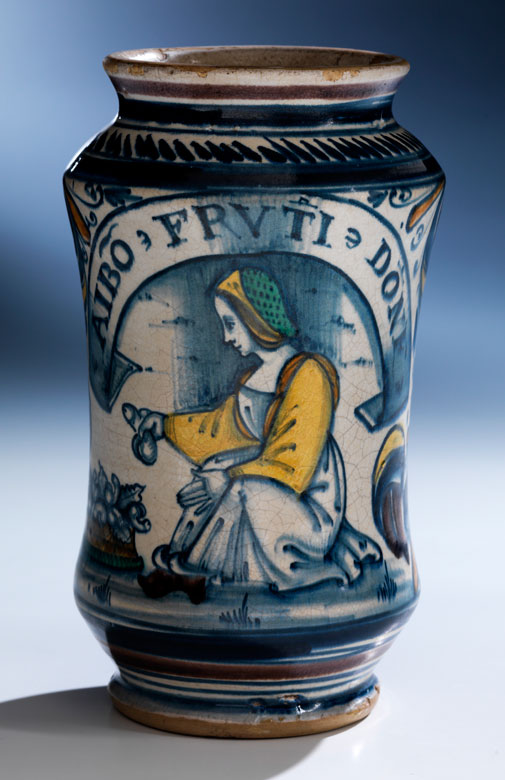
On this late sixteenth-century drug jar from Faenza a woman harvests phalli, plucking them from the field and placing them in a full basket at her feet. The inscription above invites women to “Come get your good fruits.” It therefore echoes the advice of physicians that women routinely seek out men and the healthful fluids they could supply.

This particular motif must have been fairly common, as a remarkably similar image and inscription appear on a plate from about fifty years earlier manufactured in Deruta, a town about 150 miles south of Faenza. What interests me about this scene is its tongue-in-cheek humor. On the one hand, it depicts women’s dependence on the male body, while at the same time suggesting that what women want or need is not men themselves, but only their heated members.

While medical discourses stressed the importance of sexual activity to human health, deep-rooted Mediterranean cultural traditions similarly hailed the male body as a source of fertility and protection. In ancient Rome, winged phalli known as tintinabuli graced the entryways of businesses and homes. They might also be hung with bells to form wind chimes, as in this example from the British Museum. Phalli were associated with fertility and plenty; the agricultural god Priapus possessed a gigantic penis that produced the many “seeds” necessary to grow the bounty of the earth. The male member could also avert the evil eye, a malevolent glare that could cause ill fortune and bodily harm. In combination with the tinkling bells that frightened off evil spirits, the phallic tintinabulum protected the Roman household.

Our jar therefore combines the winged phallus of ancient Rome with two other popular sexual motifs, both of which survive to the current day: the bird and the rabbit. In Italian the word for bird, uccello, is a euphemism for the penis, similar to the English cock. Rabbits likewise retain their Renaissance associations with abundant fertility, and the modern practice of carrying a rabbit’s foot for good luck echoes the ancient Roman use of the fertile phallus to ward off evil.

The jar is also a rather low-cost attempt to mimic Chinese porcelain, which had attained popularity throughout Europe. While it does not have the characteristic luminosity of the original, this jar uses the colors and vegetal and floral motifs that Italians associated with Chinese ceramics.

I have to wonder, then, if this jar held ginseng or “China root,” a species of smilax used to treat syphilis. Renaissance physicians believed that ginseng stimulated the male libido (a quick Google search will reveal that similar beliefs persist today). Syphilis was the first disease that Europeans recognized as being sexually transmitted. Its appearance in Naples in 1495 caused well-placed anxiety; many of the crowned heads of Europe battled the disease, not to mention legions of sailors, soldiers and prostitutes. Other supposed cures for the “French disease,” as it was known, included mercury, which could be applied to the skin, taken orally, or inhaled as a steam; and the wood or gum of guaiacum, a tree native to Hispanola. Neither were very effective, and mercury had the added advantage of driving people mad before it poisoned them.

Moreover, the spout on our jar means that it held liquid contents, and both ginseng and smilax could be prepared as teas or broths. The evil-deflecting and virility-inducing winged phallus and Asian style of this jar would therefore have advertised its healing contents. And you thought that the Trojan condoms commercials were racy.

Like early modern art? Want to know more about the Renaissance body and its bits? Looking for stimulating table talk for your next family dinner? Check back next week! I’ll be looking into the Renaissance fascination with the Virgin Mary and her breasts. Yep, you read that correctly. Madonna mia!

For more on the male body, racy maiolica, and China root check out the following: Patricia Simons, The Sex of Men in Premodern Europe: A Cultural History (Cambridge University Press, 2011); Catherine Hess, “Pleasure, Shame and Healing: erotic imagery on maiolica drug jars,” in Sex Acts in Early Modern Italy, ed. A. Levy (Ashgate, 2010); Anna Winterbottom, “Of the China Root: A Case Study of the Early Modern Circulation of Material Medica,” Social History of Medicine 28:1 (2014).

Full Frontal

What did Renaissance people see when they looked at nude bodies, voluptuous flesh and sexual acts?

This question is more complex than you might think. Today, we would label images of the eroticized body and coitus as pornography, but in the early 16th century the modern pornography industry had not yet been born. The word pornography didn’t even exist until the 18th century.

I don’t mean to say that images such as the one above didn’t sexually arouse their viewers, but that was not their only purpose. Instead, sexually explicit imagery allowed artists and beholders to explore the relationship between images and their viewers, and the consequences of looking.

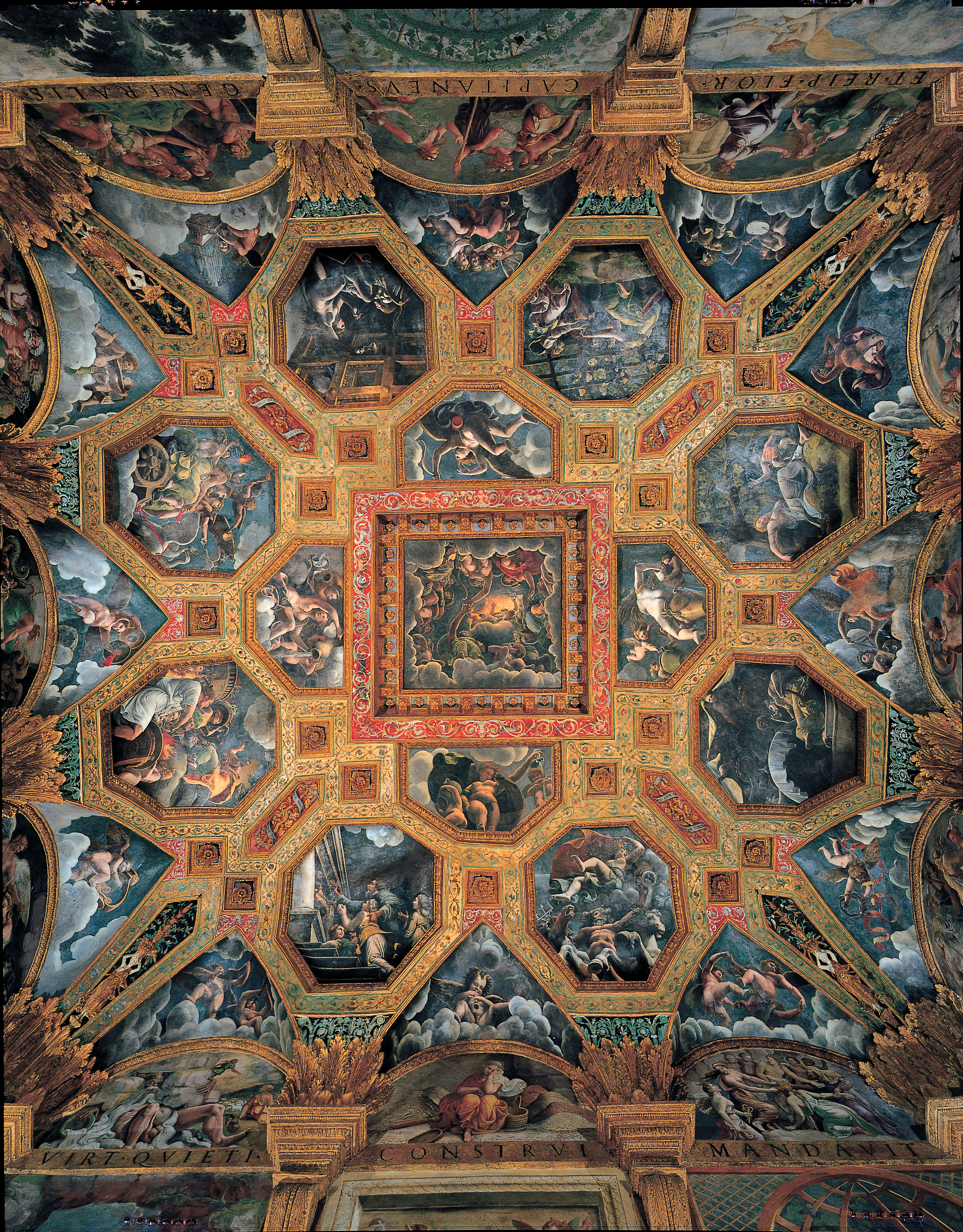
So, just what is it that we’re looking at here? This is the eastern wall of the Chamber of Psyche, just one of over twenty frescoed rooms at the Palazzo Te, a villa located in Mantua, Italy. The palace was constructed by Giulio Romano for his patron, Federico II Gonzaga, in the mid-sixteenth century. This particular room is named after the ceiling frescoes, which depict the story of Cupid and Psyche.

Giulio Romano and assistants, Labors of Psyche, c. 1526. Chamber of Psyche, Palazzo Te, Mantua.

After falling in love with the beautiful mortal, Cupid hides his true identity, coming to her bed only after nightfall. When Psyche has the temerity to sneak a peek at her lover, he flees (upper left octagon). Psyche then undertakes a series of dangerous tasks in order to win him back. She is ultimately successful, and the central scene in the image above depicts Jupiter blessing their union and deifying Psyche. While the story has a happy ending, the lesson here is that looking can be dangerous, especially for a woman.

Located just below the images of Cupid and Psyche, Giulio Romano’s Jupiter and Olympia similarly investigates the role of looking in Renaissance art and culture. The fresco doesn’t leave much to the imagination. This is one of the most explicit images from the sixteenth century, and certainly the most explicit painting from the period. A fully erect Jupiter turns Olympia’s head towards himself, as he prepares to have sex with Olympia, the act that supposedly fathered Alexander the Great. Olympia obligingly hooks her left leg around his torso. Her body is turned outward toward the viewer, and she grips the fictive frame of the painting, perhaps in the throes of ecstasy. Jupiter sports a snake’s tale – he was in the habit of donning various disguises in a vain attempt to hide his adulterous liaisons from his wife, Juno. To the right Olympia’s husband, Philip of Macedon, spies on the couple. For the offense of daring to look upon a god Philip’s eyes are put out by Jupiter’s eagle.

Giulio Romano and assistants, Jupiter and Olympia, c. 1526. Chamber of Psyche, Palazzo Te, Mantua.

What’s interesting to me here is the way that the image solicits the very act it punishes. It asks us to gaze upon a god in the flesh, as it were. The figures are incredibly sculptural, and the presence of Olympia’s hand on the painted frame only strengthens the feeling that this scene is taking place in the space of the room, right in front of us. In looking at the fresco, we commit the same voyeuristic act as Philip, and we might, therefore, expect to be punished for it. Well, perhaps only if we were men. Jupiter himself seems to license the feminine erotic gaze by turning Olympia’s head so that she looks up at him.

Pietro Bertelli (attributed to),

Olympia’s upward gaze counters Renaissance advice to married women and girls, who were admonished to keep their eyes lowered, especially in the company of men. In contrast, Renaissance prostitutes and courtesans were characterized by their bold, inviting gazes. Pietro Bertelli’s Roman courtesan is part of a series of prints depicting the costumes of Roman women. Unlike his images of a maiden, matron or widow, the courtesan gazes enticingly out of the print, acknowledging her beholders. In Bertelli’s print, the courtesan’s visual contact with her beholders licenses their own voyeuristic and erotic looking.

In contrast, Jupiter and Olympia punishes the male gaze, potentially upending the gender norms of the Renaissance. Giulio Romano and Federico II Gonzaga were far from championing women’s rights or equality, but, in practice, the fresco facilitated women’s erotic gazing. Scholars have generally assumed that the viewers of these and other erotic works of art were men, but letters and accounts demonstrate that women were frequent visitors to the Palazzo Te throughout the sixteenth and seventeenth centuries. So, while Olympia is certainly objectified in this image – her nude body is laid bare for the viewer – she also engages in erotic viewing. Her gaze positions Jupiter as sexually alluring, perhaps encouraging Renaissance women to take up a little erotic peeking of their own.

Like this post? If so, check out my book, Gender, Space and Experience at the Renaissance Court. Performance and Practice at the Palazzo Te published with Amsterdam University Press.

You can also sign-up for email notifications. Next week, we’ll probe the Renaissance fascination with the male phallus. Che cazzo!

Introducing the OK Art Historian

Who is the OK Art Historian?

My name is Maria Maurer, and, you guessed it, I live and work in the state of Oklahoma. I research, write and teach about gender and sexuality in Renaissance art. I’m particularly interested in art that upsets our preconceptions about the Renaissance, so I write about women as viewers of early modern erotica, mistresses who built chapels in convents, and men who depicted themselves as ardent and tormented lovers. Quite simply, I love the seamy side of the Renaissance.

I started this blog because I wanted to share my love of Renaissance art and erotica with a broader audience. But I’m an also educator, and so I also want to help people understand the past through its images and practices. So many of our own modern preconceptions are rooted in the art and culture of this period, and so I think it is important to consider just what it was that Renaissance people saw when they looked at a nude David or a reclining Venus.

In movies or on TV this period is often characterized as one of refined taste and noble pursuits in which everyone spoke with a polished British accent. On the other hand, infamous families such as the Borgias, the Tudors and even the Medici have been depicted as oversexed libertines who had no compunctions about sleeping with their siblings and murdering anyone who looked at them askance.

But truth is often stranger (and more complicated) than fiction. Read on to see how.

Design a site like this with WordPress.com
Get started