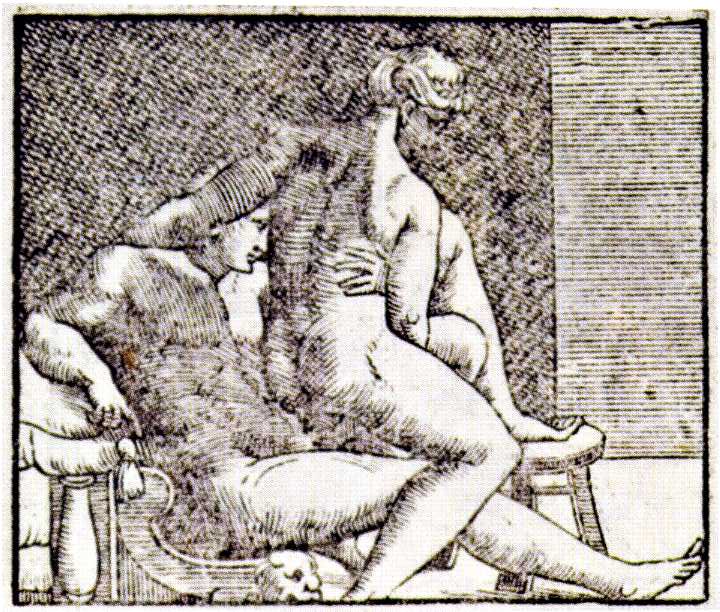
In my last post I examined the connections between technology and erotica and emerging discourses of art and pornography through the creation of the Modi, a series of racy prints. I argued that early modern conceptions of art were closely tied to the (male) artist’s ability to depict a beautiful, nude female body. In such a formulation, women were objects either of artistic production or the viewer’s gaze. Today I’d like to suggest that objectification was not the only way in which women might have experienced the Modi. In fact, in both their visual and textual content the series opened up spaces for women’s active participation and pleasure in sexual intercourse.
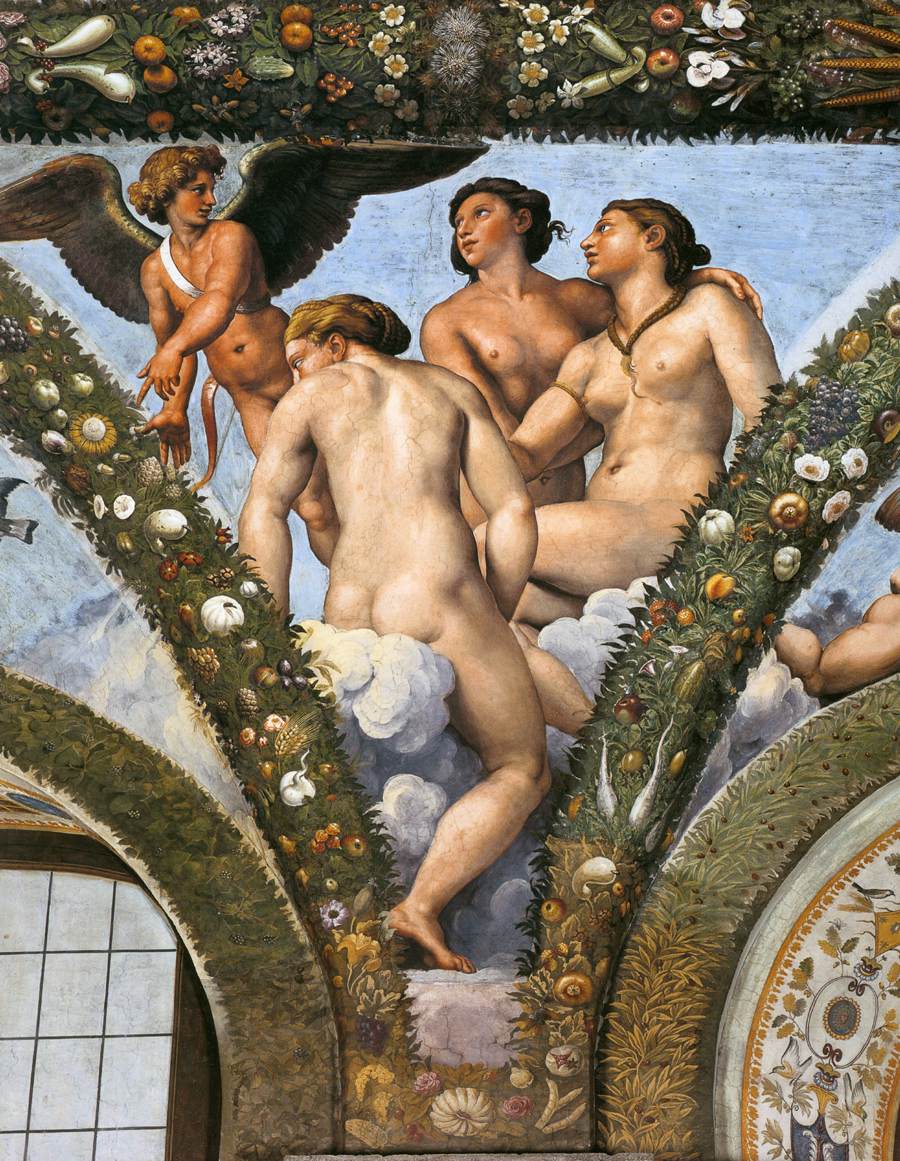
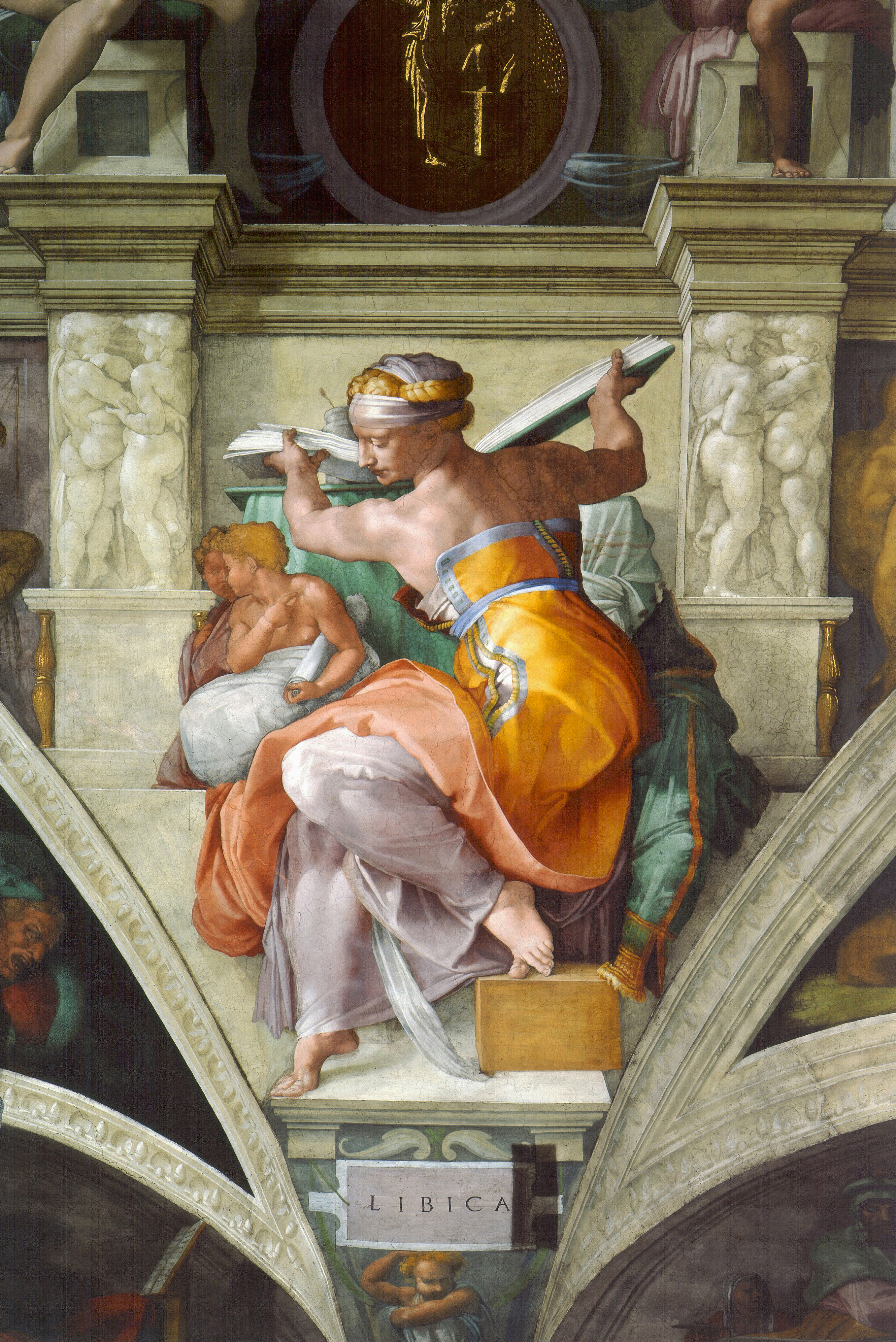
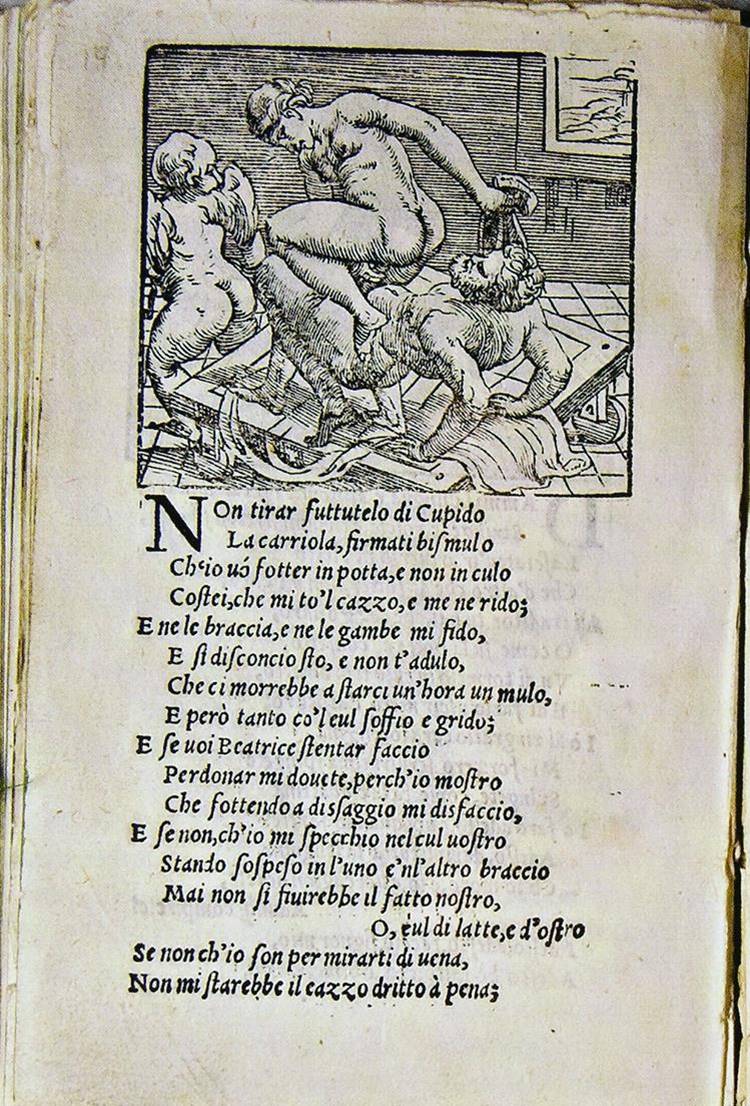
The image above is a case in point. Here, a woman sits atop her male partner in what we might today call a reverse cowgirl position. The couple is a graceful tangle of limbs and twisted bodies, allowing us both frontal and rear views of the sex act. The precariously balanced woman reaches between her legs, guiding her partner’s penis to its proper place. The relatively low quality of this woodcut copy might obscure that fact that the composition is realized in high Renaissance style. The couple have idealized and toned physiques; and their straight noses, long, slender limbs and hairstyles are all based upon ancient Roman and Greek types, as is the furniture in the room. The interwoven body parts of the pair and slight torsion of the female figure are also reminiscent of the latest developments in Rome, including Raphael’s work at the Villa Chigi (below left) and Michelangelo’s frescoes for the Sistine Chapel ceiling (below right).
Coupled with each of the images in this woodcut edition of the Modi are sonnets written by Pietro Aretino, who is perhaps best known for his lascivious poetry, books and plays. Like the printed images, the form of the sonnet is decidedly high brow. But in his Sonetti lussuriosi (Licentious Sonnets) Aretino’s word choice is purposefully coarse and vulgar: words like cazzo (dick), potta (pussy) and cul or culo (usually ass, but also pussy or perhaps snatch) feature in nearly every poem. I often read these sonnets aloud to my students, and even I, serious scholar that I am, struggle not to giggle at the titillating language.
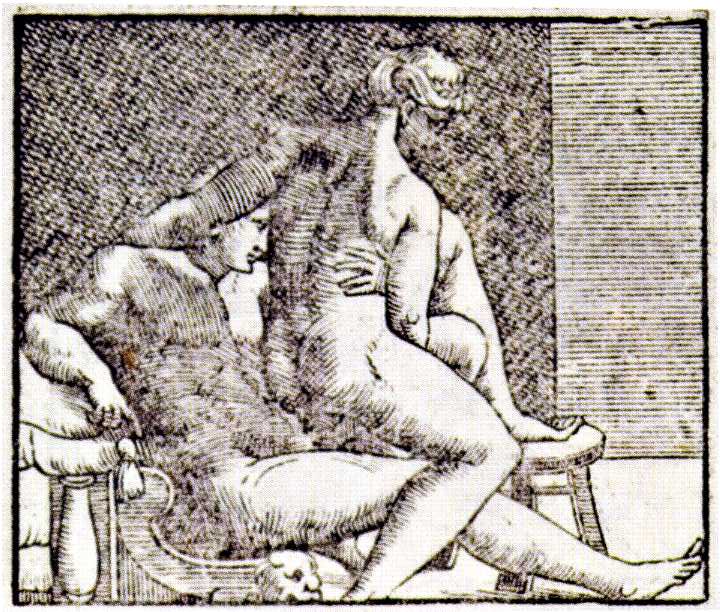
What’s interesting here, though, it that women are often the primary speakers, exhorting their partners to take and give pleasure. The tenth sonnet, that which accompanies the image above, begins, “You’ll pardon me, I want it up my ass.” The male partner protests that such a position is sinful. She explains that while the two could have sex in potta “it’s far more agreeable to have a cock in behind that in front.” As her partner joins in by eagerly acceding to her wishes, she further commands “push it from the side, over more, down farther, there.” In other sonnets women describe orgasm, request specific positions or actions, and generally describe their affection for the male member.
Perhaps it goes without saying that few other visual or textual representations from this period show women in such an active sexual role. Church authorities dictated that couples assume the “missionary position.” Nor do Renaissance depictions focus on sexual pleasure as the primary goal of intercourse. Believing that both men and women contributed “seed,” some medical treatises recommended that couples seeking to conceive achieve both male and female orgasm. The role of orgasm was procreative in such texts. While Renaissance satiric poetry and literature described the pleasures of sexual intercourse, meaning was sometimes veiled by the use of fruits or flowers as stand-ins for sensual delight.
What is remarkable about the Modi and the accompanying Sonetti lussuriosi is the leading role they give to female partners. The sonnets do uphold masculine superiority, for the women almost universally declare their desire for, and even reliance upon, the male cazzo. Women are thus placed in a dependent position. At the same time, men often place themselves under the command of their female partners, or declare their dependence upon the female body. In Sonnet 14 (left) the man speaks a brief ode to his partner’s rump: “O, ass of milk white, and iridescent oyster, if I weren’t looking at you with such pleasure, my cock wouldn’t hold up worth a measure.” We know that women purchased copies like the one above, for a sixteenth-century French book-seller complained of all the ladies who flooded his shop looking for the lascivious images and poems.
Together, the Modi and the Sonetti created a discourse in which women could direct their sexual experiences, either by physical manipulation or by asking for specific positions or actions. While it’s hard to gauge what impact the Modi had the sexual practices of actual couples, I do think that the prints opened a space in which women could acknowledge pleasure and partners could discuss their sexual preferences. While some men might have seen women on top as threatening to social order, the success of the Modi suggests that many men and women were interested in exploring alternatives in the realm of fantasy if not in the realm of flesh.
The past few weeks have been pretty racy, and it is literally getting hot down here (a high of 95 in Tulsa today, with 100 degrees or more forecast over the weekend). Time to cool things down. Next week we’ll look at Renaissance nuns and the art that they produced.
Translations from the Modi above are based upon those in Appendix B of Bette Talvacchia’s Taking Positions: On the Erotic in Renaissance Culture (Princeton University Press, 1999. Out of print.). I have made slight changes to the translation of Sonnet 10. The Modi and the Sonetti lussuriosi have also been discussed at length in a series of publications by James Grantham Turner, including his recent book Eros Visible (Yale University Press, 2017).
 The Renaissance Uncensored