Printing, Piracy and Porn

New technologies have played an active role in the form and dissemination of modern pornography. In the 19th century photography allowed for the production of supposedly ‘real’ images. Advances in media technologies such as color printing and moving pictures similarly facilitated the spread of erotic imagery. The advent of streaming video in the early 21st century changed the pornography industry as we know it, making the material more accessible and interactive, while also obscuring the relationships between sex, money and exploitation. Technology also played a key role in the birth of erotica in the sixteenth century.
As I’ve written before, the concept of pornography did not exist during the period commonly known as the Renaissance (c. 1300-1580 for art historians). Yet, it is precisely during this time that we begin to see something akin to modern pornography: mass-produced content aimed at sexual stimulation with a side of social taboo. And, it should come as no surprise that the production of such content was facilitated by a new technology: the printing press.
Movable type existed in what are today South Korea and China as early as the 9th century, and woodblock prints were made throughout the medieval world in Africa, Asia and Europe. But the printing press wasn’t born until around 1450 when it was invented by Johannes Gutenberg. The printing press enabled writers and artists to quickly and (somewhat) more cheaply produce and sell their work. It also facilitated a process known as engraving, whereby the print-maker uses a burin to create lines on the surface of a copper plate. In contrast to woodblock printing, which relies on a subtractive process, engraving allows for a greater range of tones and textures in the finished print. In terms of rendering flesh, engraving allowed artists like Marcantonio Raimondi to create voluptuous folds, muscles gleaming with the sheen of sweat, and light and shadow that could conceal or reveal parts of the body.

In the early 1520s Raimondi and the artist Giulio Romano collaborated on a project known as I modi (‘the ways’ or ‘the positions’). Giulio Romano, Raphael’s star pupil and heir, had taken over part of his master’s workshop, which included a fruitful partnership with the engraver Marcantonio Raimondi. Raphael had an early appreciation of print’s ability to facilitate the spread of his compositions (and his fame) throughout Europe, and routinely provided Raimondi with drawings and designs. The Raphael-Raimondi partnership included the production of many male and female nudes, often based on Greek and Roman mythology. In The Judgement of Paris (above), Marcantonio’s controlled, fine lines give form to bare flesh, creating sculpted male muscles and remarkably buoyant female breasts.
But the prints engraved by Raimondi after Giulio Romano’s designs were quite another thing. Explicit, licentious, and fully human, the Modi quickly stirred the passions of Renaissance viewers.
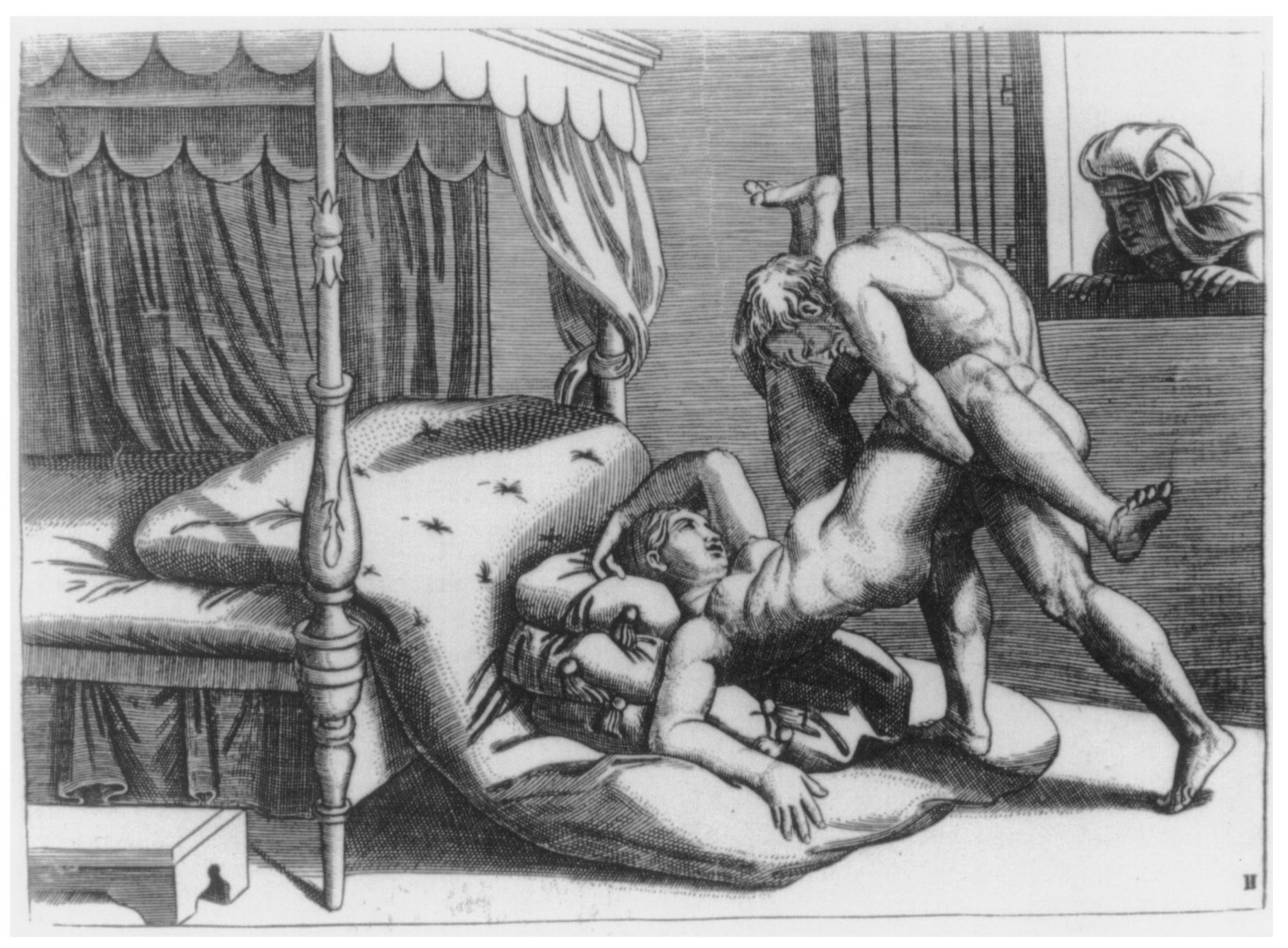
Not all of those passions were erotic. The Catholic Church moved quickly to suppress I modi. Giulio Romano had already left Rome to take up a position in Mantua, but Marcantonio was jailed for his role in the production and sale of the prints. These were not the first, or even the most lewd, images produced in Renaissance Italy, and it seems that all involved were quite shocked at the speed and severity of the negative response. So, why the Modi? Firstly, the use of print played a large role. Unlike earlier drawings, paintings or sculptures, print was meant to be replicated and sold to a large audience. And that audience could not be regulated by the Church, or even by the artists who produced the work. Erotica was no longer restricted to a small audience of elite men. Now working class men, foreigners and even women could purchase these images. It probably didn’t help that the prints were produced in Rome, the seat of the Catholic Church, and that many of the series’ earliest clients were likely churchmen.
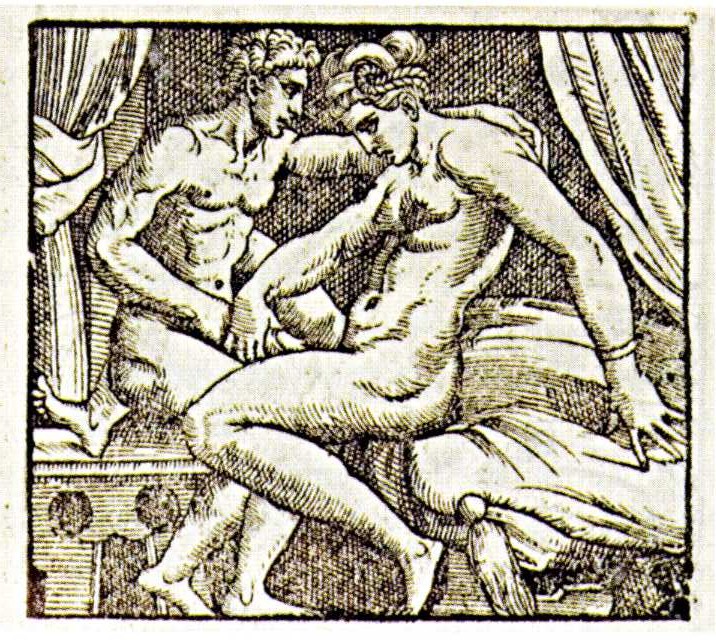
And, contrary to previous erotica, the Modi do not purport to depict gods, goddesses or historical figures. Instead, we see mere mortals engaged in (and enjoying) sex. These acts do not lead to the birth of gods or kings. They lead only to physical pleasure. The prints flagrantly flout sexual mores by eschewing the Church-approved ‘missionary position’ in favor of a series of acrobatic postures. They also depict women as active, even eager, partners. In this woodcut copy of to the left the woman reaches out, guiding her partner toward coitus.
A few original prints survive in fragments, but most of what we know about the prints comes from copies, appropriations and downright theft. And this brings me back to the modern pornography industry. Piracy is one of the primary ways that current porn tube sites generate profit, a practice made even easier by streaming video capabilities. The printing press also led to piracy: the first case of copyright infringement was brought by Albrecht Dürer against our very own Marcantonio Raimondi.


On the left we have Dürer’s Anna and Joachim at the Golden Gate (1504); on the right is Raimondi’s copy of several years later. The sticking point seems to have been Raimondi’s use of Dürer’s AD monogram, visible on a tablet in the lower left of each print. Compositions could be easily copied by oiling or pricking an original print or drawing, and then transferring it to a copper plate. All the engraver needed to do was follow the lines or dots produced during the transfer, and, voila – a perfect copy.
I’m not saying that the Modi should be categorized as pornography, especially since the word didn’t exist in the 16th century. But, a lot of scholarly ink has been spilled in order to demonstrate that the Modi were art, despite the fact that modern conceptions of art didn’t exist at this time either. When Giorgio Vasari, the great-great grandfather of modern art history, wrote his collection of artistic biographies in 1550 he called it The Lives of the Most Excellent Painters, Sculptors and Architects, not, as it is sometimes mistranslated, The Lives of the Artists. Vasari was describing practices and works that would later be recognized as Art, but that were mostly categorized by use and medium during the Renaissance.
I modi are not easily labeled precisely because they are the product of a radically new technology, and thus the germs of what would become new ways of thinking about images. They are not pornography or art, but they are the precursors of both. The concept of art, as it developed during the Renaissance, involved the skillful rendering of nude flesh along with varied, appealing compositions that nodded toward Greek and Roman antiquity. The rendering of a beautiful female nude was synonymous with artistic ability. Erotica and nudity, especially female nudity, are caught up in the idea of what art is.
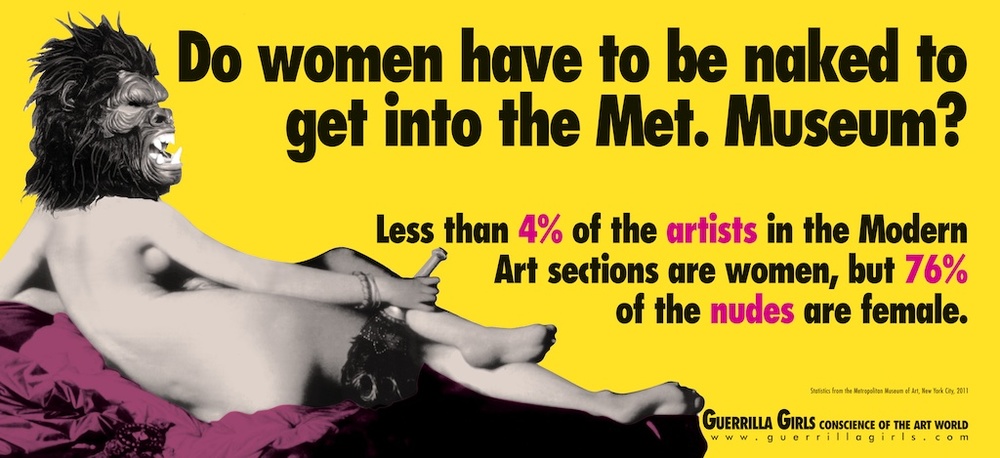
It is, thus, not surprising that one can still find more nude women hanging on the walls of the Metropolitan Museum of Art than works of art by women artists. I don’t think we can change the way in which women and their bodies are represented until we acknowledge and work through the very definition of what qualifies as art.
Like the Modi? I’m not done yet. This week focused on ideas of technology and nudity, with some not so nice consequences for representations of women. Next week I’ll investigate ways in which the Modi might have been experienced and used by women in more productive ways.
For more on I modi and pornography, see: Bette Talvacchia, Taking Positions: On the Erotic in Renaissance Culture (Princeton University Press, 1999); James Grantham Turner, Eros Visible: Art, Sexuality and Antiquity in Renaissance Italy (Yale University Press, 2017); Shirra Turrant, The Pornography Industry (Oxford University Press, 2016).
 The Renaissance Uncensored